Vitamin B12 Absorption: Why the Form You Take Matters More Than the Dose
Quick Answer: A 1,000 mcg B12 tablet and a 100 mcg B12 tablet can deliver nearly identical amounts of B12 to your bloodstream — because the bottleneck isn't the dose, it's your stomach's intrinsic factor protein, which maxes out at absorbing roughly 1.5–2 mcg per dose through the normal gut pathway. At doses of 500–1,000 mcg, approximately 1–2% is absorbed through passive diffusion, bypassing that ceiling entirely. This means someone taking a high-dose sublingual tablet correctly may absorb 10–15 mcg, while someone swallowing the same tablet whole with coffee absorbs closer to 1–2 mcg. B12 form, delivery method, and a handful of common habits determine whether your supplement actually works. If you've been taking B12 for months without noticing a difference in energy or cognition, one of three fixable factors is almost certainly the reason.
Why Don't B12 Supplements Always Work?
The intrinsic factor problem is the single most important thing to understand about B12.
Your stomach produces a protein called intrinsic factor (IF), which binds to B12 and escorts it into your small intestine for absorption. The problem: IF receptors saturate at just 1.5–2 mcg per meal. Take 500 mcg, and your gut still absorbs roughly the same 1.5–2 mcg through this pathway — the rest is wasted.
The workaround is passive diffusion — a low-efficiency backup mechanism that absorbs about 1% of whatever dose you take, with no ceiling. At 1,000 mcg, that's 10 mcg absorbed passively, on top of the 1.5–2 mcg from intrinsic factor. This is why high-dose supplementation (500–1,000 mcg) actually does work for most people — just not for the reason they think.
Two groups cannot rely on this system at all: people over 50 (stomach acid production drops, which impairs intrinsic factor activation) and anyone taking proton pump inhibitors or metformin. These individuals need either sublingual B12 or confirmed high-dose oral supplementation.
The Form Question: Cyanocobalamin vs. Methylcobalamin
You'll see two forms of B12 in most supplements. Here's what actually differentiates them.
Cyanocobalamin is the synthetic, shelf-stable form. Your body converts it to methylcobalamin and adenosylcobalamin — the two active forms it actually uses. This conversion step is efficient in healthy individuals, making cyanocobalamin a reliable, cost-effective option for most people.
Methylcobalamin is the pre-converted, bioactive form. It skips the conversion step and is retained in tissues longer — studies show it stays in the liver roughly twice as long as cyanocobalamin. For people with MTHFR gene variants or impaired methylation, methylcobalamin is meaningfully superior because the conversion step is compromised.
For the average healthy adult, cyanocobalamin at 1,000 mcg works well. For anyone with a genetic methylation issue, neurological symptoms, or a diagnosed deficiency, methylcobalamin is the stronger choice.
Common Mistakes That Gut Your B12 Supplement
Most people make at least one of these errors. All of them are easy to fix.
- Swallowing a sublingual tablet. Sublingual B12 is designed to dissolve under your tongue, where it absorbs directly into the bloodstream — bypassing the gut entirely. Swallowing it routes it through the same limited intrinsic factor pathway as a regular tablet.
- Taking it with coffee. Caffeine speeds gastric motility, reducing the time B12 has to bind to intrinsic factor. Wait at least 30 minutes after your morning coffee.
- Taking it with other B vitamins competitively. High-dose folic acid supplementation can mask B12 deficiency symptoms, allowing a neurological deficiency to progress undetected. If you're taking both, monitor B12 blood levels annually.
- Assuming one dose per day is optimal. Splitting your dose — 500 mcg in the morning, 500 mcg at midday — engages the intrinsic factor pathway twice, not once, meaningfully increasing total absorption.
- Skipping it for weeks then doubling up. B12 doesn't work like that. The liver stores 2–5 mg of B12, but daily consistent supplementation maintains those stores far better than erratic high doses.
Related Product
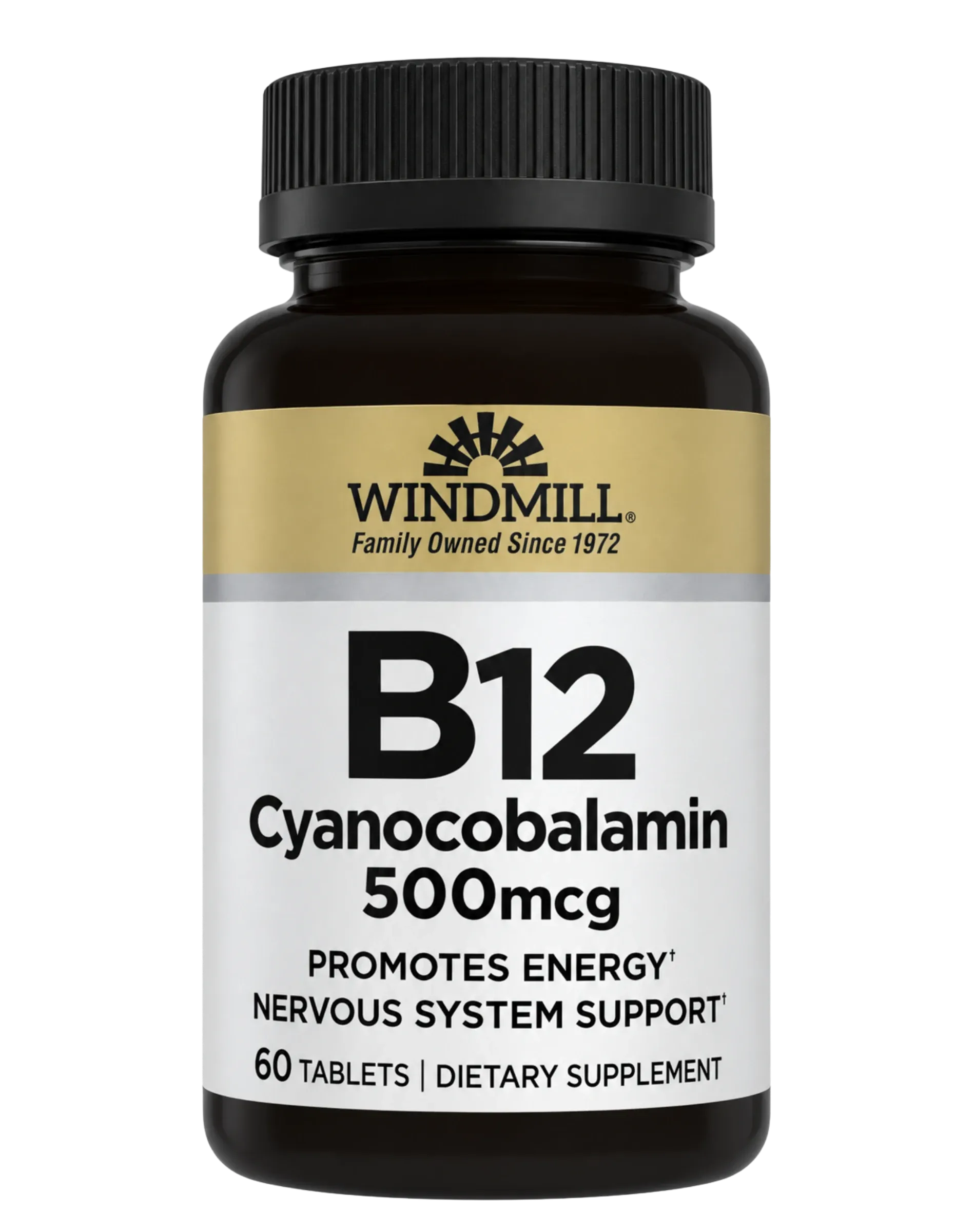
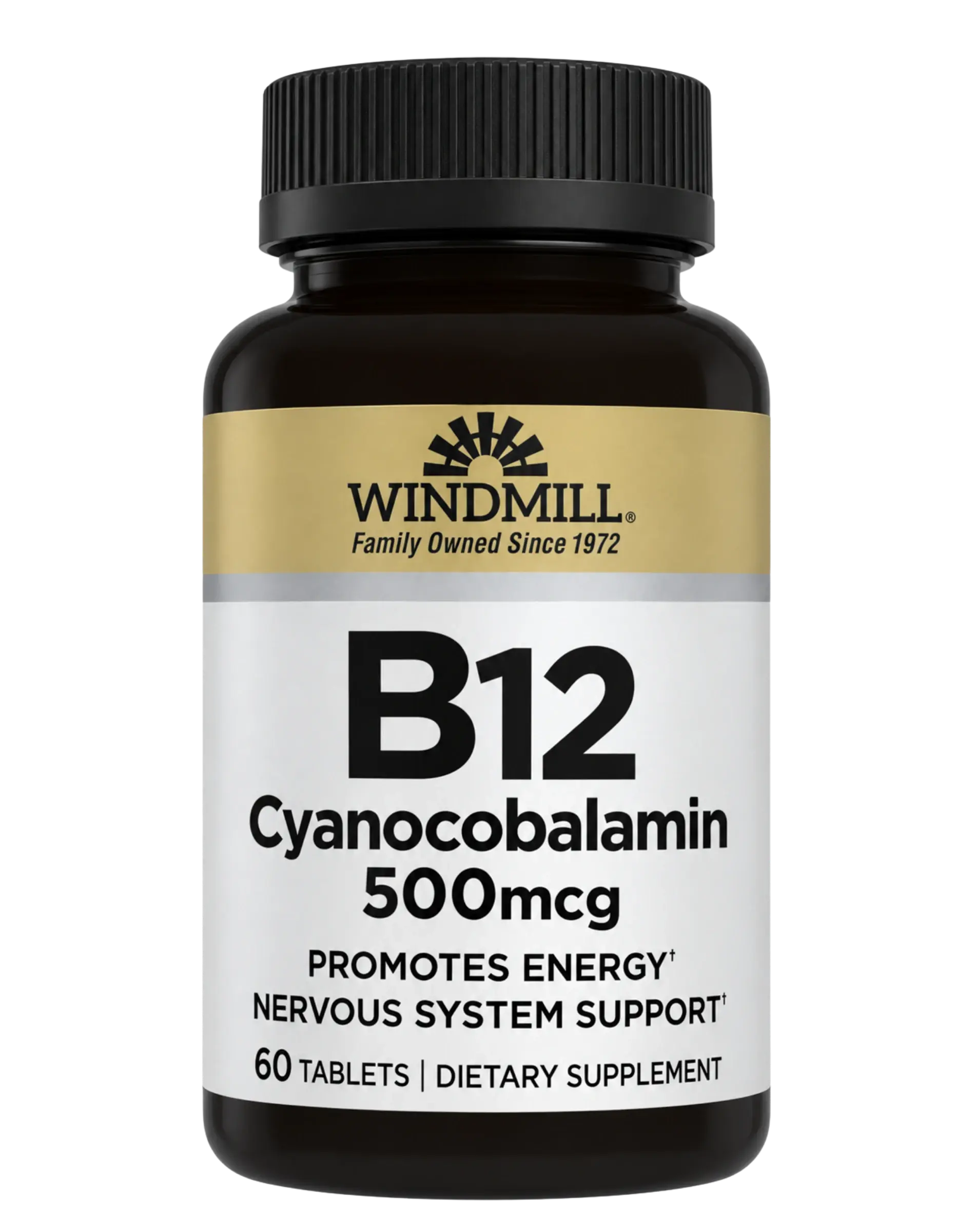
Windmill B12 500mcg Energy Support Tablets 60ct
$8.99
How to Actually Take B12 for Maximum Effect
Follow these steps starting today.
- Choose 1,000 mcg. This dose activates both intrinsic factor absorption and passive diffusion simultaneously — the most effective oral strategy available without a prescription.
- Take it sublingually if possible. Let the tablet dissolve under your tongue for 60–90 seconds before swallowing any residue. This delivers B12 directly into the sublingual blood vessels.
- Time it away from coffee. Morning is ideal — 30+ minutes after your first cup, before or with breakfast.
- Consider splitting the dose. If you're correcting a deficiency, take 500 mcg at breakfast and 500 mcg at lunch for the first 60–90 days, then drop to once-daily maintenance.
- Test, don't guess. A serum B12 blood test costs under $50 and tells you definitively where you stand. Optimal range is 400–900 pg/mL — not merely "above the deficiency threshold" of 200 pg/mL. Many people with levels of 200–350 pg/mL still experience fatigue and cognitive symptoms.
- Retest at 90 days. If your levels haven't moved at least 100–150 pg/mL after 90 days of consistent 1,000 mcg supplementation, discuss B12 injections with your doctor — your intrinsic factor production may be significantly impaired.
Frequently Asked Questions
Q: How long does it take for B12 supplements to work?
A: Most people with mild-to-moderate deficiency notice improvements in energy and mental clarity within 4–8 weeks of consistent daily supplementation at 1,000 mcg. Neurological symptoms (tingling, numbness) take longer — sometimes 3–6 months — and may require higher doses or injections under medical supervision.
Never run out.
Subscribe to any product and save 10% on every order. Pause or cancel anytime.
Subscribe & Save 10%Q: Can you take too much B12?
A: B12 has no established tolerable upper limit because excess is excreted in urine — it's water-soluble. Doses up to 2,000 mcg daily are considered safe for healthy adults. That said, very high doses aren't more effective than 1,000 mcg for most people, so higher isn't necessarily better.
Q: Is B12 deficiency really that common?
A: More common than most people realize. Research estimates that 6% of adults under 60 and nearly 20% of adults over 60 are deficient. Vegetarians, vegans (B12 exists almost exclusively in animal products), people on metformin, and those with GI conditions like Crohn's disease are at significantly elevated risk.
Find the Right Supplement at Moore Vitamins
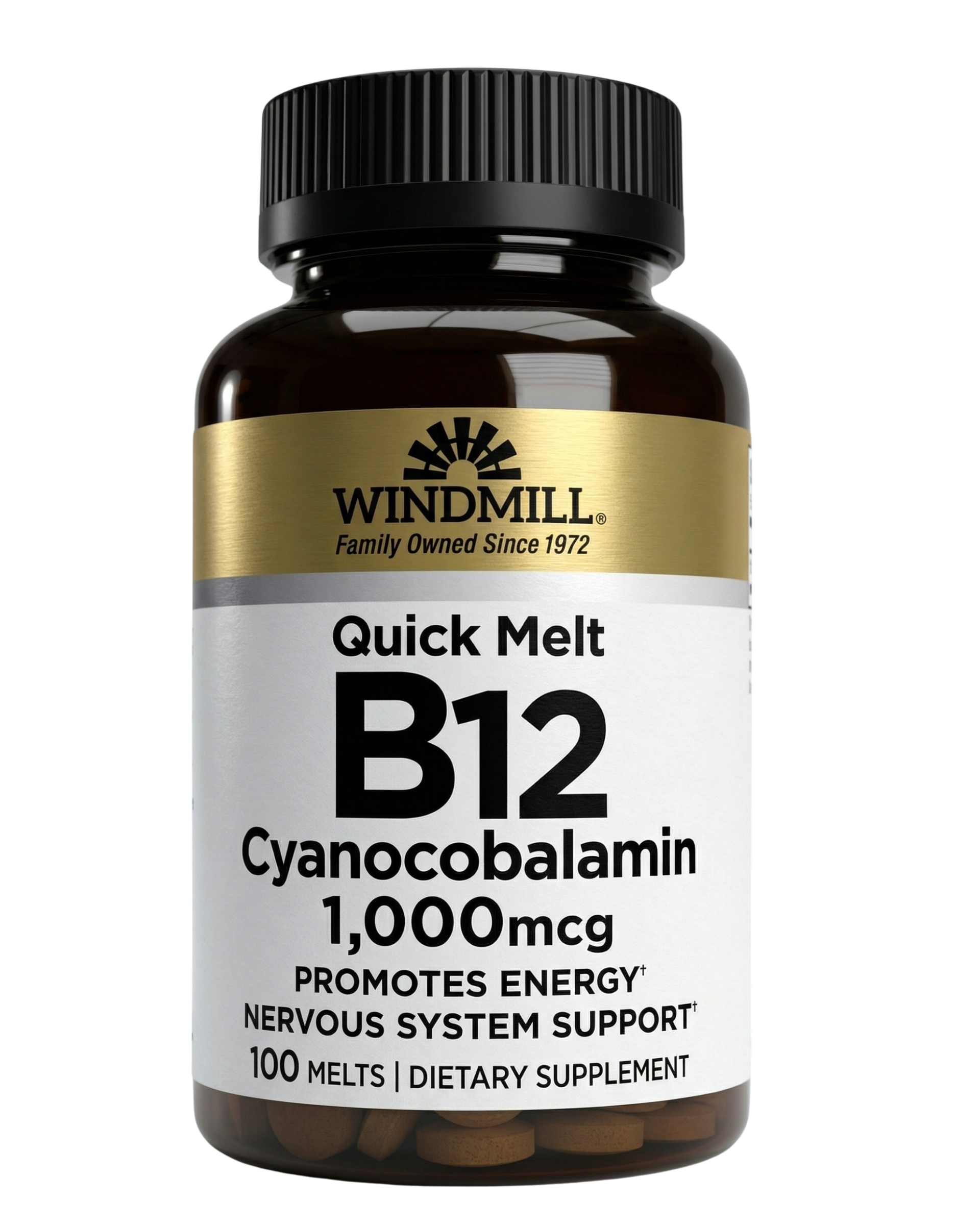
For a reliable, high-dose option that works with both the intrinsic factor and passive diffusion pathways, Windmill Vitamin B12 1000mcg Energy Support Tablets 100ct delivers the clinically relevant 1,000 mcg dose that makes oral supplementation effective.
Moore Vitamins offers same-day fulfillment and a Subscribe & Save option — ideal for B12, where daily consistency over 90+ days is what actually moves the needle on your blood levels.
Never miss a dose.
Evidence-based wellness guides like this one, in your inbox. No hype, no spam — unsubscribe anytime.