Resveratrol Supplements vs. Red Wine: What the Bioavailability Research Actually Shows
You would need to drink roughly 667 bottles of red wine per day to match the resveratrol dose used in the most-cited longevity studies — and that single fact dismantles the most popular argument against taking it as a supplement.
Resveratrol is a polyphenol found in grape skins, berries, and Japanese knotweed. A standard glass of red wine contains 0.3–1.9 mg of resveratrol. Clinical trials exploring cardiovascular and metabolic effects typically use 150–500 mg daily doses — sometimes up to 2,000 mg. The math isn't close. What's more nuanced is the absorption story: resveratrol has notoriously poor oral bioavailability regardless of the source — a landmark 2004 human pharmacokinetic study in Drug Metabolism and Disposition (Walle et al.) found that despite high absorption, extensive gut and liver metabolism leaves the oral bioavailability of unchanged resveratrol considerably below 1%. The form you choose — and what you take it with — determines how much of that dose your body actually uses. If you've been skeptical about resveratrol supplements because you figured a glass of Cabernet covered you, this is worth understanding clearly.
The "Just Drink Red Wine" Myth Has a Numbers Problem
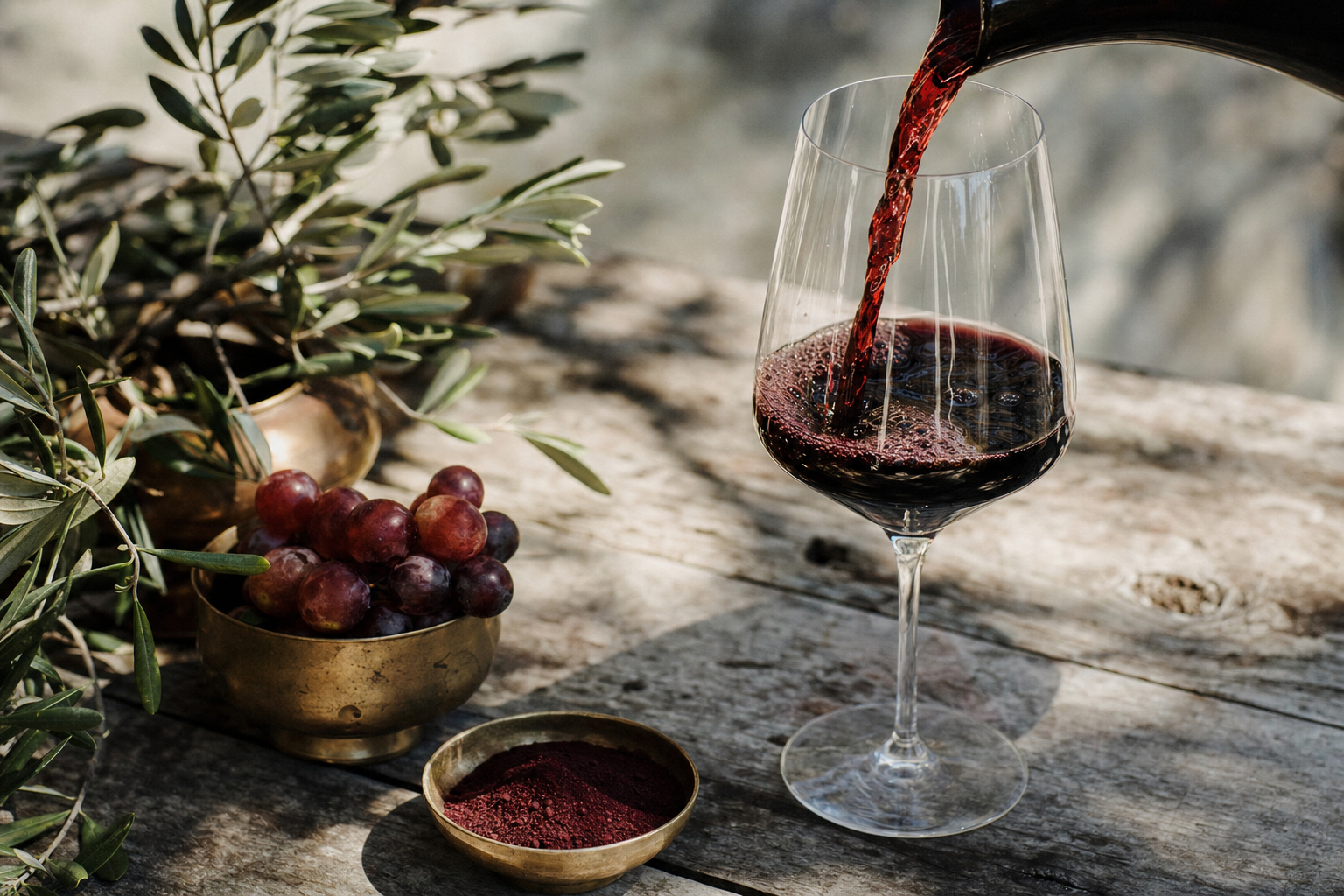
The romance around red wine and longevity traces back to the "French Paradox" observation from the early 1990s — the puzzling finding that French populations eating high-saturated-fat diets had surprisingly low rates of cardiovascular disease. Resveratrol got credit. The media ran with it.
The problem is that the resveratrol content of wine was never the plausible mechanism at those amounts. A glass of red wine delivers less than 2 mg. Even enthusiastic consumption gives you 5–10 mg on a good day. The compounds that researchers actually study for longevity pathways — particularly SIRT1 activation and AMPK modulation — require concentrations that food sources simply cannot achieve.
This doesn't mean red wine is useless. It contains hundreds of other polyphenols that may contribute to observed benefits. But attributing those benefits specifically to resveratrol, at wine-drinking doses, is a stretch the evidence doesn't support.
What the Research Actually Shows
Here's where honesty matters. Resveratrol research is simultaneously exciting and frustrating.
The promising findings: Multiple meta-analyses of randomized controlled trials have associated resveratrol supplementation with modest reductions in fasting blood glucose and markers of inflammation, and — particularly in people with metabolic conditions — in blood pressure. Reviews have also noted associations with improved insulin sensitivity in type 2 diabetics at doses of roughly 250–500 mg daily.
The bioavailability wall: Even at those doses, resveratrol is rapidly metabolized by the gut and liver into sulfate and glucuronide conjugates. These metabolites are less active than the parent compound. Studies consistently show peak plasma concentrations are low and short-lived — roughly 30–60 minutes post-ingestion. This is why some researchers argue the observed clinical benefits are puzzling given how little unmodified resveratrol actually circulates.
The form factor: Trans-resveratrol is the biologically active isomer. Cis-resveratrol, which degrades from heat and light exposure, shows far weaker activity. This distinction matters enormously on a supplement label and is frequently ignored by lower-quality products.
The honest verdict on evidence strength: Resveratrol research is promising but not definitive. It is not a proven longevity drug. Human trials are often small, short in duration, and inconsistent in dosing. Animal studies — particularly in yeast and mice — are far more dramatic than what human trials have replicated. Keep that context.
The Bioavailability Gap — and How to Close It
This is where supplement form separates useful products from expensive placebos.
Fat solubility matters. Resveratrol is lipophilic — it absorbs better in the presence of dietary fat. Taking it with a meal containing healthy fats (avocado, olive oil, nuts) can meaningfully improve absorption compared to taking it on an empty stomach. Some studies show a 2–3x improvement in plasma concentrations with food.
Piperine co-administration. Black pepper extract (piperine) inhibits enzymes responsible for rapid resveratrol metabolism. A 2011 mouse study in Molecular Nutrition & Food Research (Johnson et al.) found that adding piperine increased resveratrol exposure (AUC) to 229% of resveratrol taken alone. Direct human data on the combination is more limited, but piperine remains one of the more plausible bioavailability enhancers.
Micronized and liposomal forms. Micronized resveratrol particles have a dramatically larger surface area, improving dissolution rate. Liposomal delivery encases resveratrol in phospholipid vesicles that partially bypass first-pass liver metabolism. Both show absorption advantages in preliminary research — liposomal in particular is becoming a more credible delivery method, though it typically comes at a price premium.
Japanese knotweed vs. synthetic. Most resveratrol supplements derive their active compound from Polygonum cuspidatum (Japanese knotweed), which is a cost-effective, high-concentration natural source. Synthetic resveratrol is chemically identical but offers no demonstrated advantage. The source matters less than the purity and standardization percentage on the label.
What to Look For When Buying
Navigating the resveratrol shelf requires attention to a few specific details.
Specify trans-resveratrol. The label should state "trans-resveratrol" — not just "resveratrol." This signals that the manufacturer has standardized for the active isomer. If it just says "resveratrol extract," that's a yellow flag.
Standardization percentage. Look for a standardized extract — typically 50–98% trans-resveratrol. Higher standardization means less filler, more active compound per capsule.
Dose range. Most clinical research falls in the 150–500 mg trans-resveratrol daily range. Products below 100 mg are likely underdosed for anything beyond baseline antioxidant support. Products above 1,000 mg daily are moving into territory with limited human safety data, though short-term studies at 2,000–3,000 mg haven't flagged serious adverse effects.
Piperine inclusion. If the product includes black pepper extract at 5–10 mg, that's a meaningful formulation decision — not a marketing add-on.
Third-party testing and GMP certification. Resveratrol is prone to degradation from heat and light. A manufacturer who invests in proper storage protocols and third-party purity verification is protecting the product's potency from capsule to consumer. NSF, USP, or Informed Sport certifications are meaningful quality signals.
Avoid: Gummy forms (sugar content and heat processing degrade resveratrol), proprietary blends that obscure trans-resveratrol content, and products that don't disclose source or standardization.
The Honest Verdict
Never run out.
Subscribe to any product and save 10% on every order. Pause or cancel anytime.
Subscribe & Save 10%Resveratrol is one of the more scientifically interesting polyphenols in the longevity space — but its evidence base in humans is real yet incomplete. The strongest signals are in metabolic health: blood sugar, blood pressure, and inflammation markers, particularly for people who already have metabolic risk factors. For healthy adults hoping for anti-aging effects, the data is thinner. Choose trans-resveratrol standardized to at least 50%, take it with food and fat, and consider a formulation that includes piperine. Skip the wine as your "dose."
Frequently Asked Questions
Q: Can I get enough resveratrol from food without supplementing?
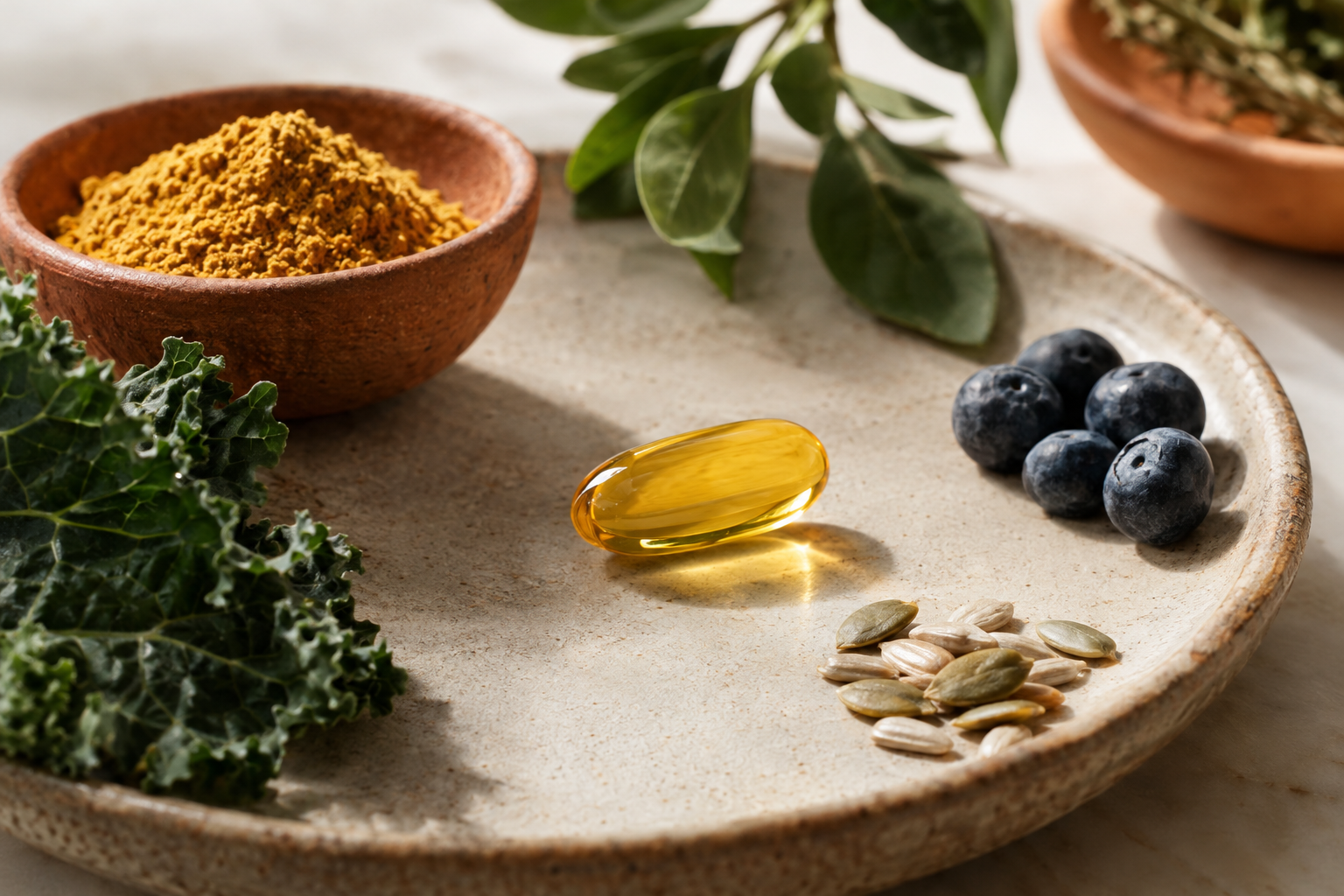
A: Not at the doses studied in clinical trials. Whole food sources like grapes, blueberries, and peanuts provide measurable resveratrol, but typical dietary intake lands well under 5 mg daily. Researchers use doses of 150–500 mg — a gap that diet alone cannot bridge if therapeutic-level intake is the goal.
Q: Is resveratrol safe to take long-term?
A: Short-term human studies up to 12 months at doses of 250–1,000 mg daily haven't flagged serious safety concerns in healthy adults. At very high doses (above 2,500 mg), some studies have reported mild GI side effects. People on blood thinners should consult a physician, as resveratrol may have mild antiplatelet activity.
Q: Does resveratrol actually activate sirtuins and extend lifespan in humans?
A: This is where enthusiasm runs ahead of evidence. Resveratrol activates SIRT1 in cell and animal models convincingly. Human trials have shown some metabolic benefits consistent with sirtuin activity, but direct lifespan extension in humans is unproven. The mechanism is biologically plausible; the human outcome data isn't there yet.
Never miss a dose.
Evidence-based wellness guides like this one, in your inbox. No hype, no spam — unsubscribe anytime.