Vitamin D3 vs D2: Which Form Is Actually More Effective?
Quick Answer
Vitamin D3 (cholecalciferol) is more effective than D2 (ergocalciferol). A 2012 meta-analysis in the American Journal of Clinical Nutrition analyzing 7 randomized controlled trials found that D3 is approximately 87% more potent at raising and maintaining blood levels of 25(OH)D (the marker your doctor tests) compared to D2.
Choose D3. The evidence is clear.
Why Are There Two Forms?
Vitamin D2 (ergocalciferol) comes from fungi and yeast exposed to UV light. It was the first form commercially produced and has been used in supplements since the 1930s.
Vitamin D3 (cholecalciferol) is the form your skin produces when exposed to sunlight. It's also found in animal sources — fatty fish, egg yolks, and liver. Supplement D3 typically comes from lanolin (sheep wool oil) or lichen (vegan D3).
Both are converted in your liver to 25-hydroxyvitamin D (calcidiol), then in your kidneys to the active form 1,25-dihydroxyvitamin D (calcitriol). The difference is in how efficiently each form gets there.
What the Research Shows
D3 Is 2-3x Better at Raising Blood Levels
The landmark study most cited is Heaney et al., 2011 in the Journal of Clinical Endocrinology & Metabolism. It gave participants either 50,000 IU of D2 or D3 weekly for 12 weeks. Results:
- D3 group: 25(OH)D levels increased by 75%
- D2 group: 25(OH)D levels increased by 33%
A 2017 randomized trial published in The BMJ confirmed these findings, showing D3 was significantly more effective at raising total 25(OH)D over the winter months.
D3 Stays in Your System Longer
D2 has a shorter half-life in the bloodstream. Armas et al., 2004 in the Journal of Clinical Endocrinology & Metabolism found that after a single large dose, D3 maintained elevated blood levels for approximately 14 days longer than D2.
This matters for consistency. D3 provides a more stable baseline, especially if you occasionally miss a dose. For optimal results, consider our Vitamin D3 5000 IU supplement for daily maintenance.
Both Are Safe at Normal Doses
At standard supplemental doses (600-4000 IU daily), both D2 and D3 have excellent safety profiles. The toxicity threshold is estimated at chronic intake above 10,000 IU/day (NIH Office of Dietary Supplements).
How Much Vitamin D Do You Need?
| Group | RDA | Upper Limit | What Most Experts Recommend |
|---|---|---|---|
| Adults 19-70 | 600 IU | 4,000 IU | 1,000-2,000 IU daily |
| Adults 71+ | 800 IU | 4,000 IU | 1,000-2,000 IU daily |
| Pregnant women | 600 IU | 4,000 IU | 1,000-2,000 IU daily |
The Endocrine Society's 2011 clinical practice guidelines suggest that the RDA of 600 IU may be insufficient for many adults and recommends 1,500-2,000 IU daily to maintain optimal blood levels (30-50 ng/mL).
Who Needs More?
- People with darker skin — Melanin reduces UV-triggered D3 production by up to 99%
- People who spend most time indoors — Office workers, night shift employees
- Those living above 37th parallel (north of Richmond, VA) — Winter sun angle is too low for D synthesis from October to March
- Overweight individuals — Vitamin D is fat-soluble and can be sequestered in adipose tissue
- People over 65 — Skin produces ~75% less D3 with age
When to Take Vitamin D
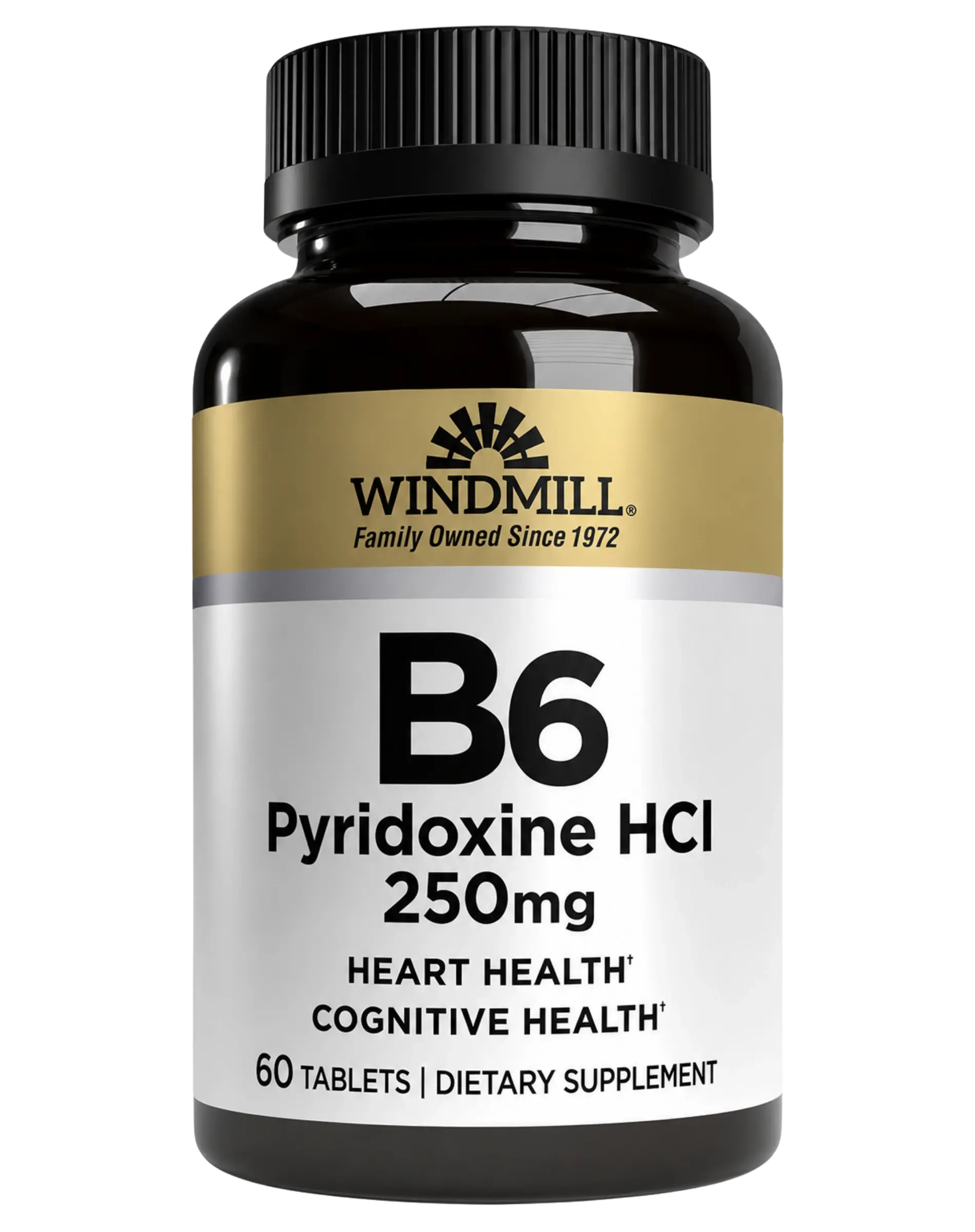
Related Product
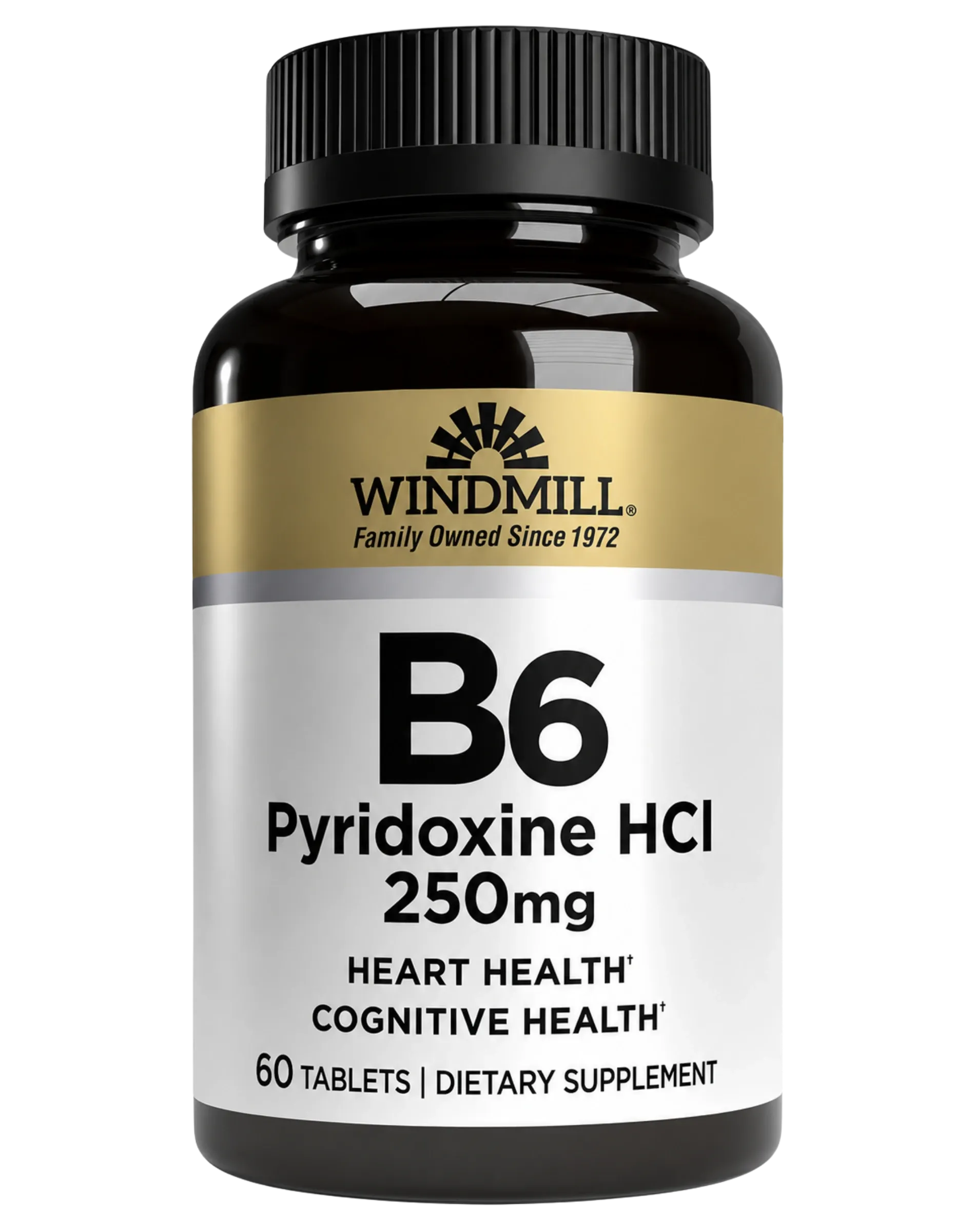
Windmill Vitamin B6 Pyridoxine HCl 250mg Tablets 60ct
$9.99
Vitamin D is fat-soluble, so take it with a meal containing fat for optimal absorption. A 2010 study in the Journal of the Academy of Nutrition and Dietetics found that taking vitamin D with the largest meal of the day increased blood levels by approximately 50% compared to taking it on an empty stomach.
Morning or afternoon is fine — unlike B vitamins, vitamin D doesn't affect sleep.
The K2 Connection
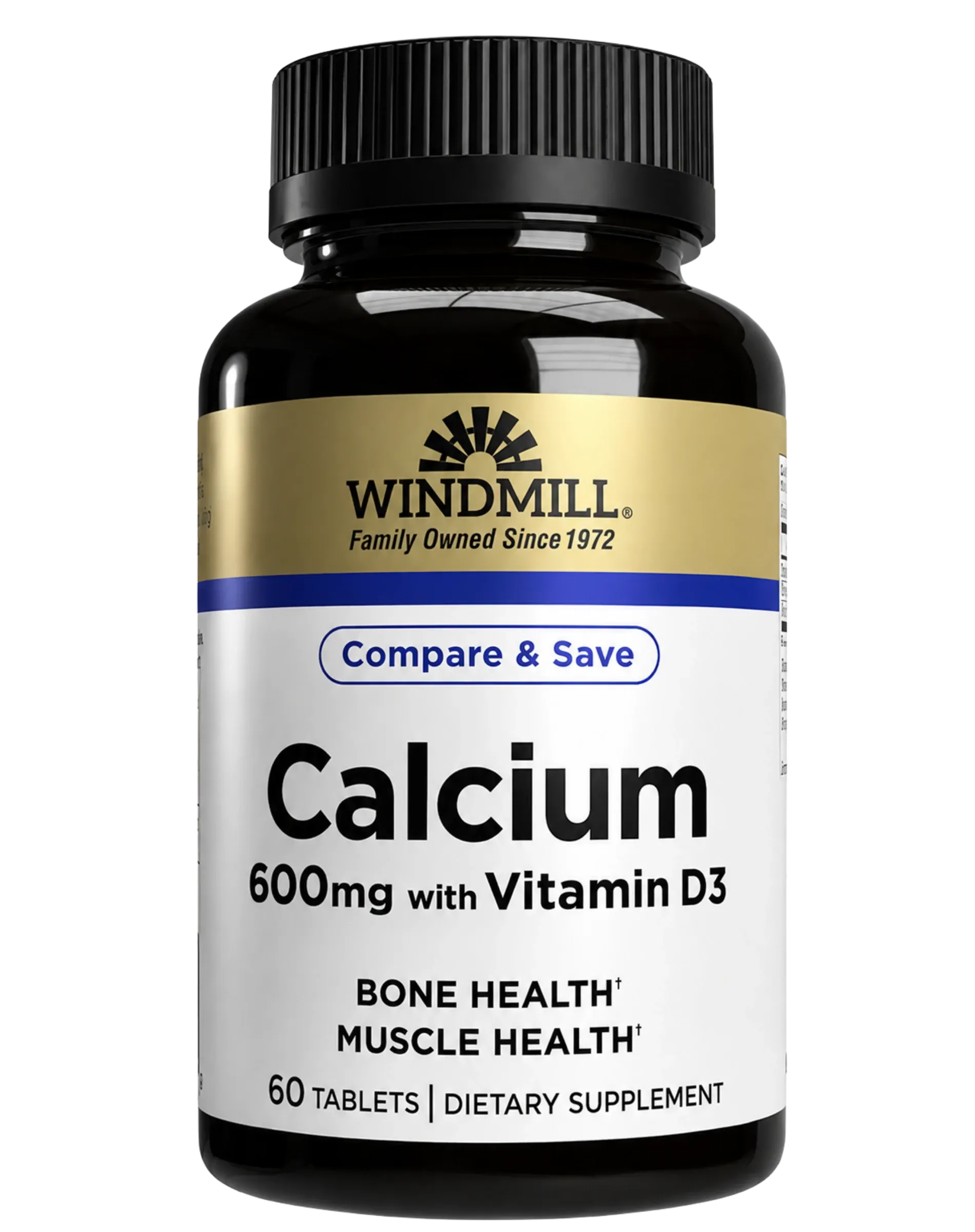
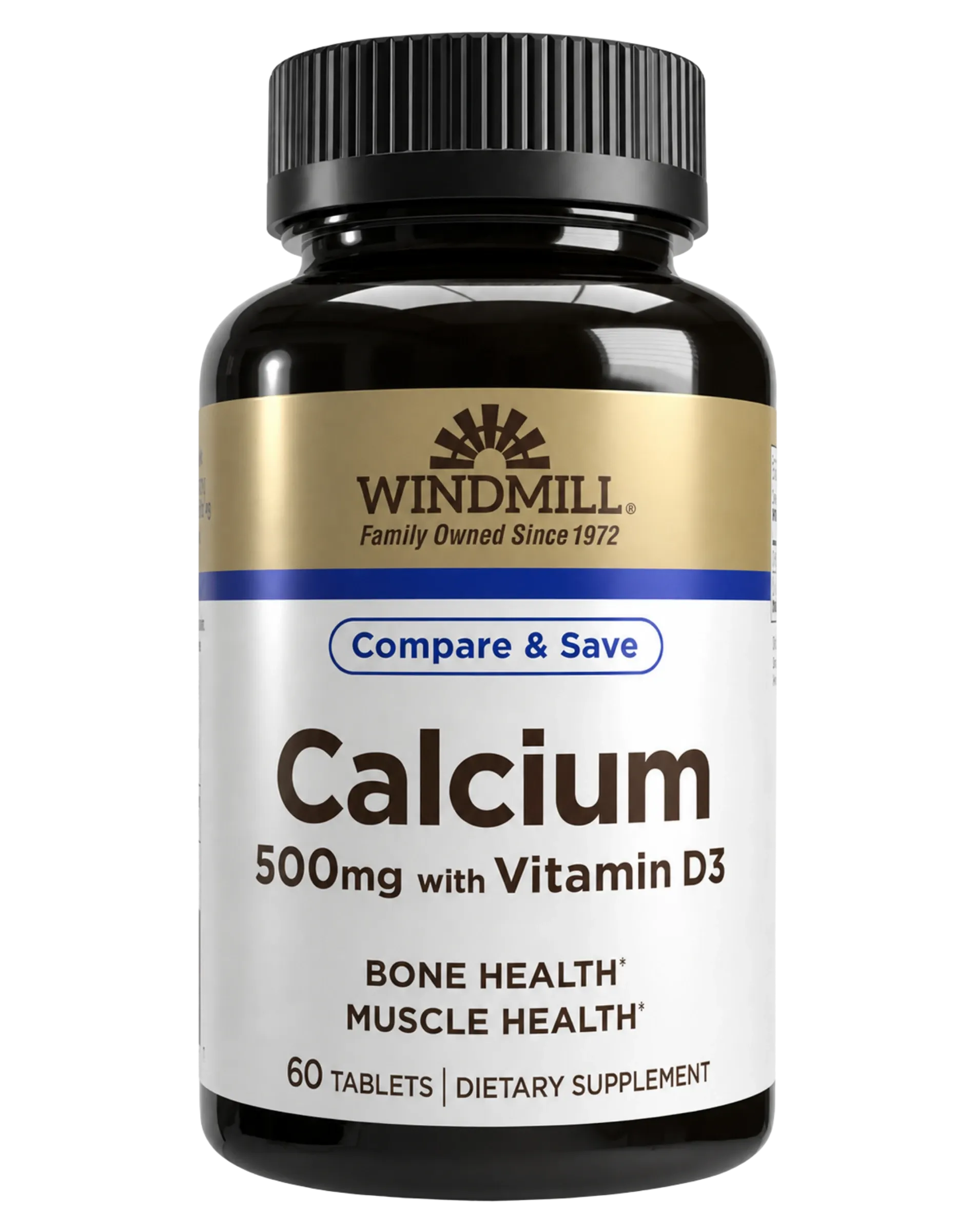
Vitamin D increases calcium absorption. Vitamin K2 directs that calcium to your bones instead of your arteries. Taking D without K2 long-term could theoretically contribute to arterial calcification, though the evidence is still emerging. Many experts recommend pairing D3 with K2 (MK-7 form) for this reason. Consider combining a high-quality vitamin D3 supplement with calcium support for comprehensive bone health.
FAQ
What's a good vitamin D blood level?
Most labs define deficiency as below 20 ng/mL and insufficiency as 20-29 ng/mL. The Endocrine Society recommends targeting 30-50 ng/mL for optimal health. A simple 25(OH)D blood test (available through your doctor or at-home test kits) is the only way to know your actual level.
Can I get enough vitamin D from food alone?
Very difficult. A 3.5oz serving of salmon provides about 600 IU — one of the richest food sources. You'd need to eat salmon daily to meet the 1,000-2,000 IU most experts recommend. Fortified milk provides about 100 IU per cup. Supplements are the most practical way to maintain adequate levels for most people.
Is vegan vitamin D3 available?
Yes. Lichen-derived D3 is chemically identical to animal-sourced D3 and equally effective. Most D2 supplements are vegan by default (sourced from yeast/fungi), but D3 is the better choice regardless of source.
Never run out.
Subscribe to any product and save 10% on your first order, 5% after. Pause or cancel anytime.
Subscribe & Save 10%Can I take too much vitamin D?
Yes, but it requires very high doses sustained over months. The tolerable upper limit is 4,000 IU/day. Vitamin D toxicity typically occurs above chronic intake of 10,000-40,000 IU/day and manifests as hypercalcemia (dangerously high blood calcium). At standard supplemental doses of 1,000-2,000 IU daily, toxicity is essentially impossible.
How long does it take to correct a vitamin D deficiency?
With consistent daily supplementation of 2,000-4,000 IU of D3, most people reach optimal blood levels within 8-12 weeks. Your doctor may prescribe a higher loading dose (50,000 IU weekly for 6-8 weeks) for severe deficiency, followed by a maintenance dose.
Bottom Line
D3, not D2. Take 1,000-2,000 IU daily with a fatty meal. Pair with K2 if you're supplementing long-term. Get a blood test to know your actual level — 42% of Americans are deficient, and you might be one of them.
Browse our full collection of vitamin D supplements — all D3 form, GMP-certified.
Shop the Products Mentioned
- Vitamin D3 5000 IU Bone & Immune Support - High-potency D3 for optimal blood levels
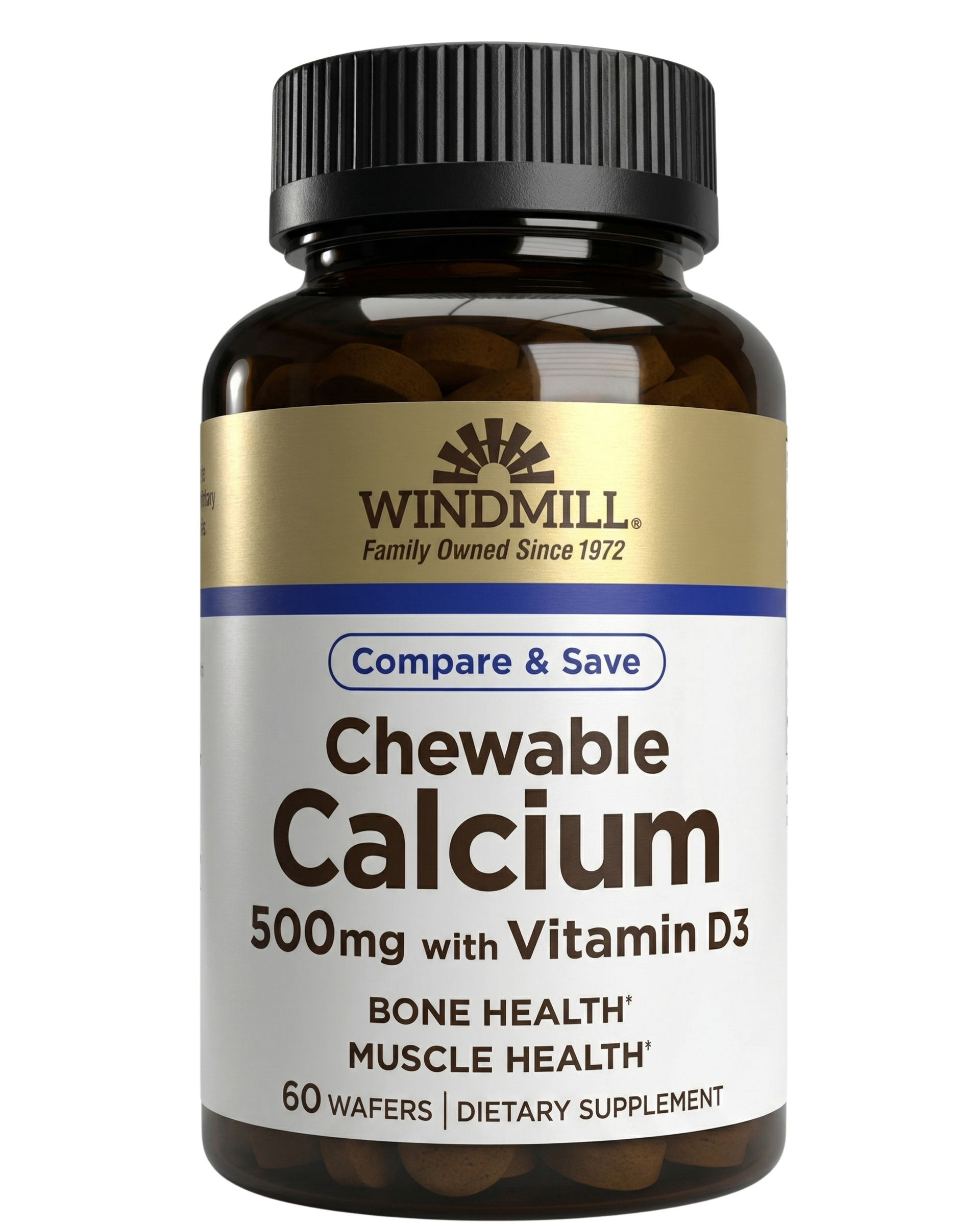
- Chewable Calcium 500mg + D3 - Complete bone health support
These statements have not been evaluated by the Food and Drug Administration. These products are not intended to diagnose, treat, cure, or prevent any disease.
Never miss a dose.
Evidence-based wellness guides like this one, in your inbox. No hype, no spam — unsubscribe anytime.