Can You Take Iron With Coffee or Tea?
Quick Answer: You can, but it's not the best idea. Coffee and tea contain polyphenols, plant compounds that bind to iron in your gut and lower how much your body absorbs, especially the "non-heme" iron found in plants and in most supplements. The simple fix is spacing: take your iron at least an hour before or a couple of hours after your coffee or tea. Pairing iron with vitamin C, like a glass of orange juice or a supplement that includes it, helps your body absorb more. Most adults need 8 to 18 mg of iron a day from all sources, and the upper limit for adults is 45 mg.
Does coffee really block iron?
It doesn't block it completely, but it can cut it a lot.
Coffee and tea are rich in polyphenols, including tannins and chlorogenic acid. In your gut, these compounds latch onto iron and form complexes your body can't easily absorb. The NIH Office of Dietary Supplements iron fact sheet lists polyphenols in tea and coffee among the things that lower non-heme iron absorption.
Studies that measured this directly found a cup of coffee or tea with a meal reduced the iron absorbed from that meal substantially, with tea generally having the bigger effect. Decaf isn't a loophole either: the polyphenols are still there, even without the caffeine.
Heme vs non-heme iron
There are two kinds of iron, and coffee affects them differently.
- Heme iron comes from meat, poultry and fish. Your body absorbs it more easily, and it's less affected by what you drink with it.
- Non-heme iron comes from beans, lentils, spinach, fortified cereals and most iron supplements. It's absorbed less easily, and it's the kind coffee and tea interfere with most.
That's why vegetarians are advised to get almost twice as much iron as people who eat meat, and why timing matters more if most of your iron comes from plants or a supplement.
How long should you wait?
There's no single official number, but a common, practical rule is:
- Take iron at least 1 hour before coffee or tea, or
- Wait about 2 hours after your cup before taking it.
If your mornings revolve around coffee, the easiest switch is to move your iron to lunch or mid-afternoon, away from your cup.
What helps iron absorb better
Vitamin C. It's the most useful partner iron has. Vitamin C helps convert non-heme iron into a form your body takes up more easily. A glass of orange juice, a few strawberries, or a supplement that combines the two all work.
Meat, poultry or fish in the same meal. Even a small amount helps your body absorb the non-heme iron eaten alongside it.
An empty stomach, if you can handle it. Iron absorbs best without food, but it can upset some stomachs. If it does, taking it with a light snack is better than skipping it.
What else gets in the way

Related Product
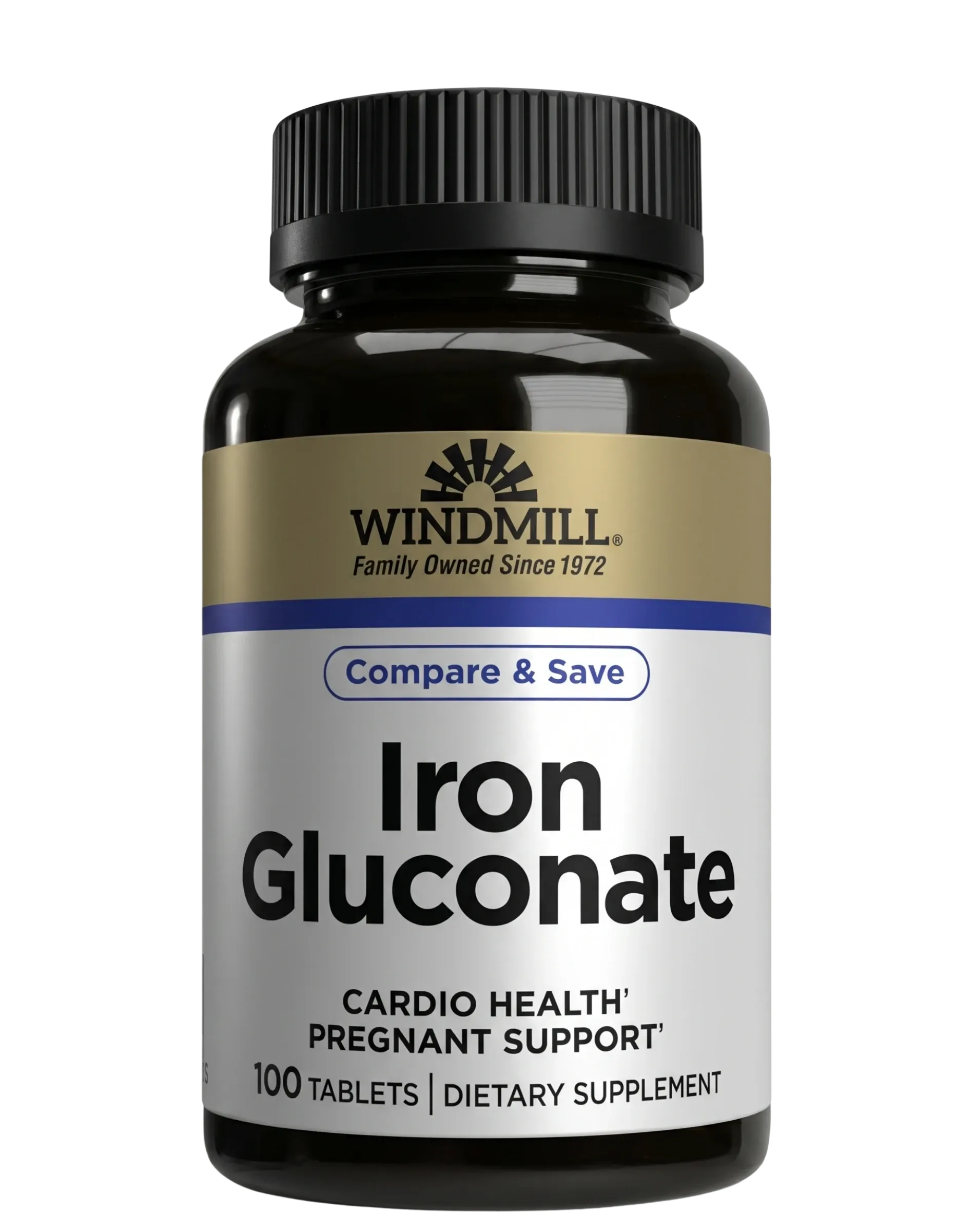
Windmill Iron Gluconate Tablets 100ct
$8.49
Coffee and tea aren't the only things that compete with iron:
- Calcium. Dairy, calcium supplements and calcium-fortified foods can lower iron absorption. Space your calcium and iron supplements apart.
- Phytates. Found in whole grains, beans and nuts. Soaking, sprouting and cooking reduce them.
- Some medicines. Antacids and acid-reducing medicines can lower iron absorption, and iron can reduce how well some antibiotics and thyroid medicines work.
How much iron do you need?
| Daily need (all sources) | |
|---|---|
| Men 19+ | 8 mg |
| Women 19–50 | 18 mg |
| Women 51+ | 8 mg |
| During pregnancy | 27 mg |
| Upper limit for adults | 45 mg |
More isn't better with iron. Your body has no easy way to get rid of extra, so most men and postmenopausal women don't need an iron supplement unless a blood test shows low levels.
Who should check with a doctor first
Ask your doctor before taking iron if you haven't had your levels tested, if you take prescription medicine, or if iron overload runs in your family. And keep iron supplements locked away from children: an accidental overdose of iron is dangerous for kids under 6.
Frequently Asked Questions

Subscribe & Save
Never run out.
Subscribe to any product and save 10% on every order. Pause or cancel anytime.
Subscribe & Save 10%Q: Can I take iron with my morning coffee if I wait a bit?
A: Yes. Taking iron an hour before your coffee, or a couple of hours after, avoids most of the effect.
Q: Does tea affect iron more than coffee?
A: Generally, yes. Black tea is especially rich in tannins. Herbal teas vary.
Q: Is it OK to take iron with orange juice?
A: Yes, it's one of the best things to take it with. The vitamin C in the juice helps your body absorb more of the iron.
Q: Can I take iron and a multivitamin together?
A: Check the label first. Many multivitamins already contain iron, and they often contain calcium too, which competes with it. Add up your total before taking both.
Shop Iron at Moore Vitamins
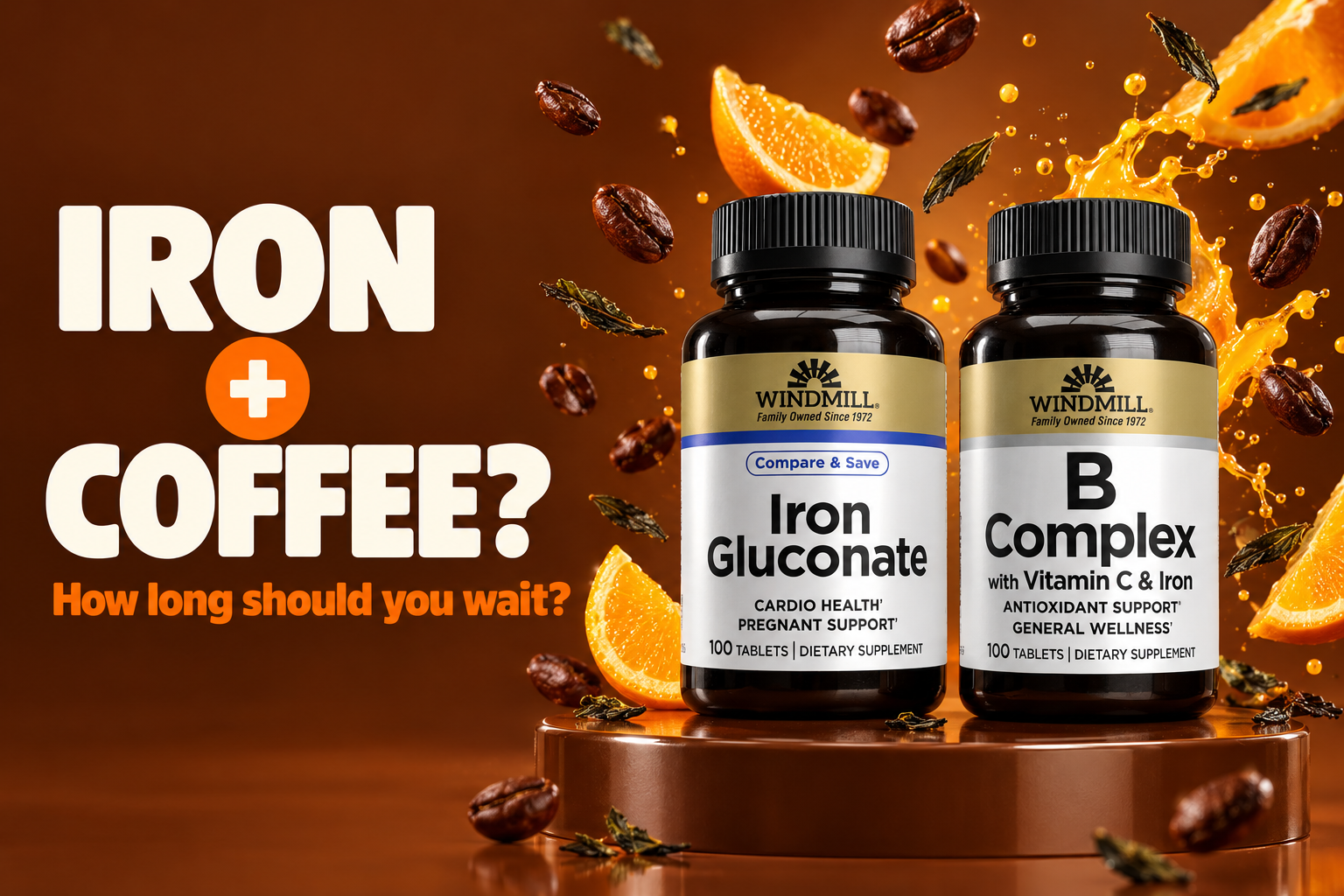
Our house-brand Windmill Iron Gluconate Tablets give you 27 mg of iron as ferrous gluconate in one tablet, a form known for being gentle on the stomach.
Prefer an all-in-one? Windmill B Complex with Vitamin C & Iron pairs 20 mg of iron with 150 mg of vitamin C in every tablet, so iron's best partner is already built in, along with a full set of B vitamins.
Taking B12 as well? Read Can You Take B12 and Iron Together?
Never miss a dose.
Evidence-based wellness guides like this one, in your inbox. No hype, no spam — unsubscribe anytime.