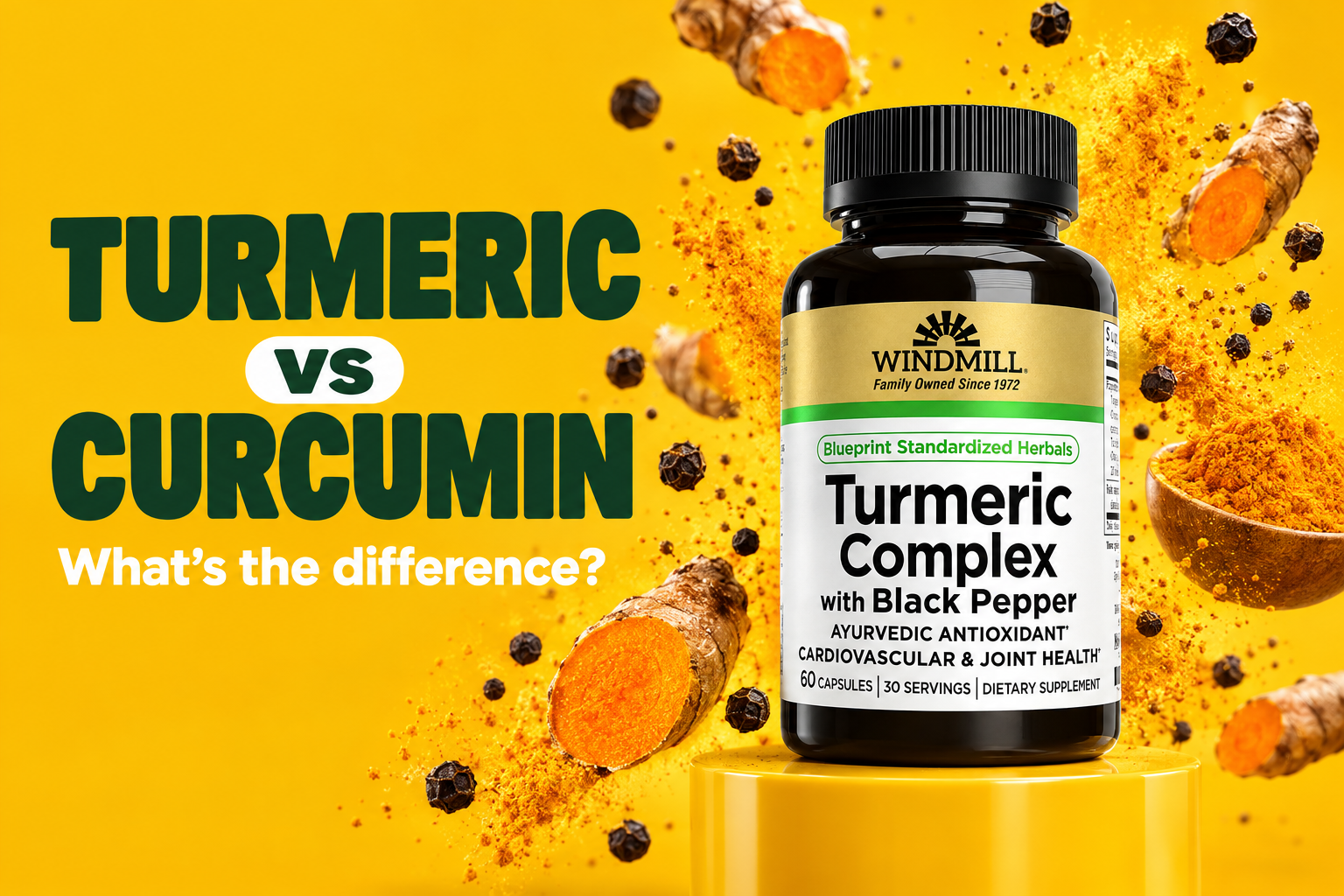
Turmeric vs Curcumin: What's the Difference?
Quick Answer: Turmeric is the bright yellow root. Curcumin is the main active compound inside it, and it makes up only about 3% of turmeric powder by weight. That's the whole difference, and it matters when you shop. A capsule of plain turmeric root powder gives you mostly root, while a turmeric extract "standardized to 95% curcuminoids" is almost pure active compound. Curcumin also absorbs poorly on its own. Most of it passes through without reaching your bloodstream, which is why good formulas add black pepper extract (piperine) and why you should take turmeric with a meal that contains fat. If you want the research-studied compound, look for a standardized extract. If you want the whole root as a food-style supplement, powder is fine. Either way, read the label for how many milligrams of curcuminoids you actually get. That number tells you far more than the big "1,000 mg" on the front.
What is the difference between turmeric and curcumin?
Turmeric (Curcuma longa), often misspelled "tumeric", is a root in the ginger family. It's dried and ground into the spice you know from curry.
Curcumin is the most studied of a group of compounds in that root called curcuminoids. They give turmeric its colour, and they're behind most of the research interest.
Think of it like coffee and caffeine. Coffee is the whole drink. Caffeine is the compound most people buy it for, and a cup holds only a little of it.
Why the label matters more than the name
Two bottles can both say "Turmeric 1,000 mg" and deliver very different amounts of curcuminoids:
- 1,000 mg of plain root powder gives roughly 30 mg of curcuminoids (about 3%).
- 1,000 mg of extract standardized to 95% gives about 950 mg.
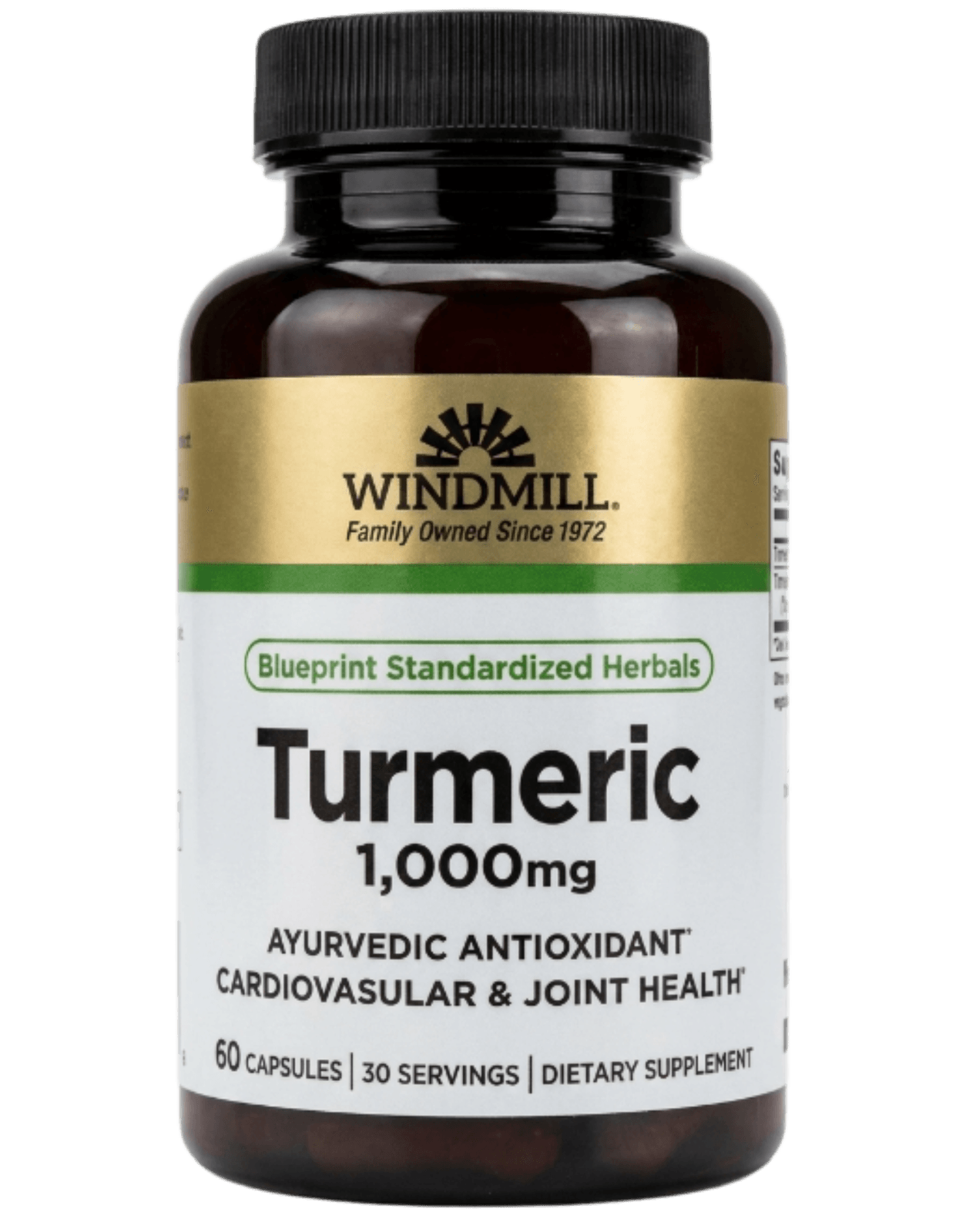
Many products blend both. Our Windmill Turmeric 1000mg Capsules combine 900 mg of root powder with 100 mg of extract standardized to 95% curcuminoids per serving. That's about 95 mg of curcuminoids from the extract alone, plus the whole-root powder.
What to look for: the word "extract", a standardization percentage, and ideally a milligram figure for curcuminoids.
The absorption problem, and how black pepper helps
Curcumin is poorly absorbed. On its own, it's broken down quickly in the gut and liver, so blood levels stay low.
Two things help:
- Black pepper extract (piperine). An often-cited early study found that 20 mg of piperine taken with curcumin raised its absorption dramatically. That's why many formulas include it. We go deeper in why turmeric needs black pepper.
- Fat. Curcumin is fat-soluble. Taking it with a meal that contains some fat, such as eggs, avocado, olive oil or yogurt, helps.
Some brands use special formulations instead, like phospholipid complexes or nanoparticles, to boost absorption. These can work well but cost more.
What the research shows
Curcumin has been studied for joint comfort, for supporting a healthy inflammatory response after exercise, and for general wellness. Several reviews of joint studies have found curcumin extracts associated with improved comfort and mobility. Many of those trials are small, and results vary with the formula and dose used. Doses in studies commonly range from about 500 to 1,500 mg of curcuminoids a day.
The NIH National Center for Complementary and Integrative Health turmeric page gives a balanced summary of what's known and what isn't.

Related Product
Windmill Turmeric 1000mg Capsules 60ct
$9.99
Turmeric vs curcumin: which should you buy?
| If you want… | Choose |
|---|---|
| The compound most studies use | A standardized curcumin extract (95% curcuminoids) |
| Better absorption | A formula with black pepper extract, taken with food |
| The whole root, food-style | Turmeric root powder |
| An easy, tasty daily habit | A turmeric gummy |
Who should be careful
Turmeric in food is safe for almost everyone. Concentrated supplements are different:
- Blood thinners and diabetes medications. Curcumin may add to their effects. Ask your doctor first.
- Gallbladder problems. Turmeric can stimulate bile, so check with your doctor.
- Before surgery. Many surgeons ask you to stop turmeric supplements a couple of weeks before.
- Rare liver reactions have been reported with high-dose and enhanced-absorption products. Stop and see a doctor if you notice unusual tiredness, dark urine or yellowing skin.
If you take prescription medication, a quick check with your pharmacist is the safest step.
Frequently Asked Questions
Q: Is curcumin stronger than turmeric?

Subscribe & Save
Never run out.
Subscribe to any product and save 10% on every order. Pause or cancel anytime.
Subscribe & Save 10%A: Per milligram, yes. A standardized curcumin extract delivers far more curcuminoids than the same weight of plain turmeric powder, which is about 3% curcumin.
Q: Can I just eat more turmeric spice instead?
A: Cooking with turmeric is a good habit, but a teaspoon of the spice holds only around 60 to 100 mg of curcuminoids. That's well below the amounts used in most studies.
Q: When is the best time to take turmeric?
A: With a meal that contains fat, at whatever time you'll remember it daily. Many people split it between two meals.
Q: Does turmeric need black pepper to work?
A: It isn't required, but black pepper extract (piperine) is one of the simplest ways to help your body absorb more curcumin.
Shop Turmeric at Moore Vitamins
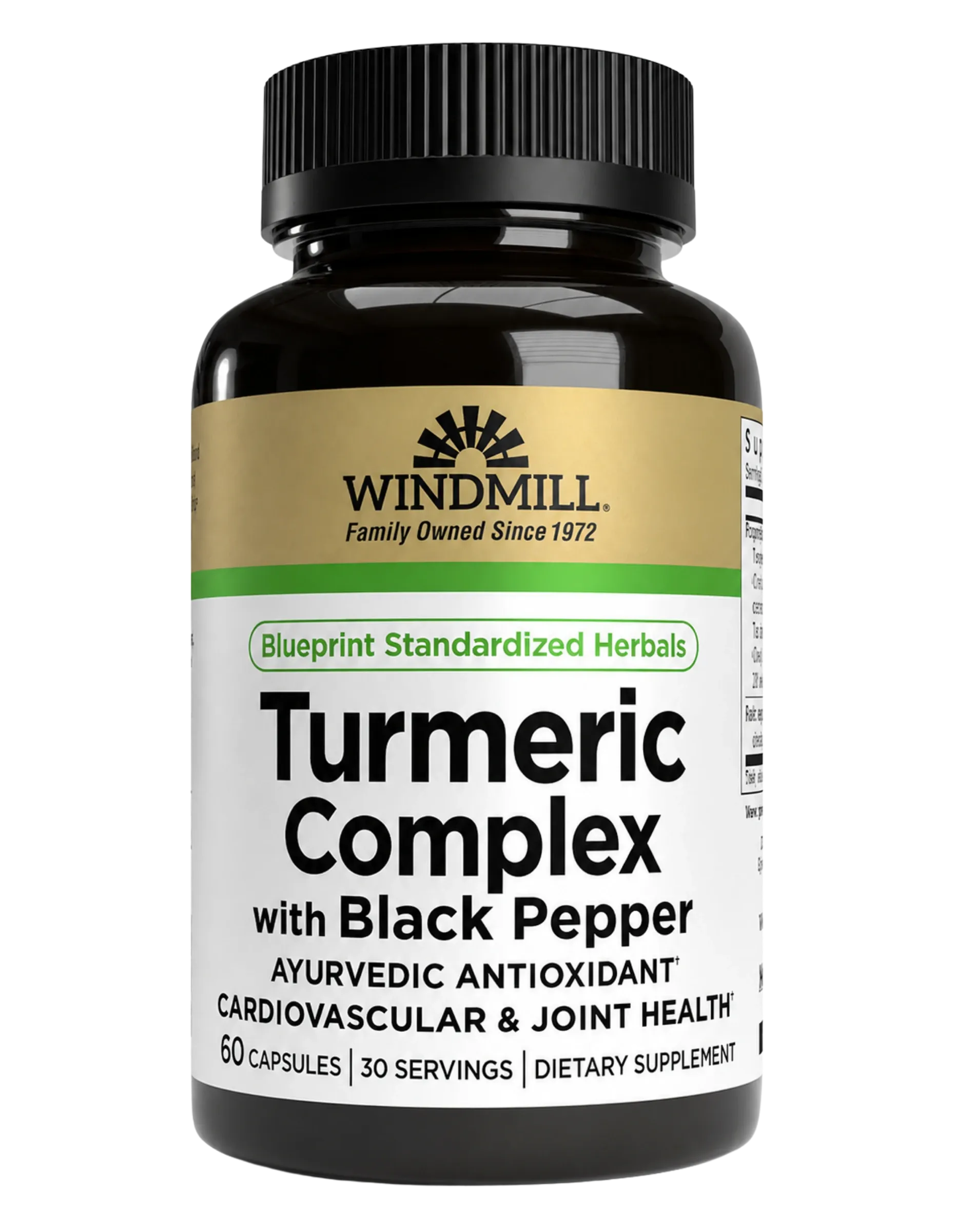
For a standardized extract with black pepper in one capsule, our house-brand Windmill Turmeric Complex with Black Pepper combines turmeric root and extract (standardized to 95% curcuminoids) with tart cherry, olive leaf and black pepper extract. Take 2 capsules daily with meals.
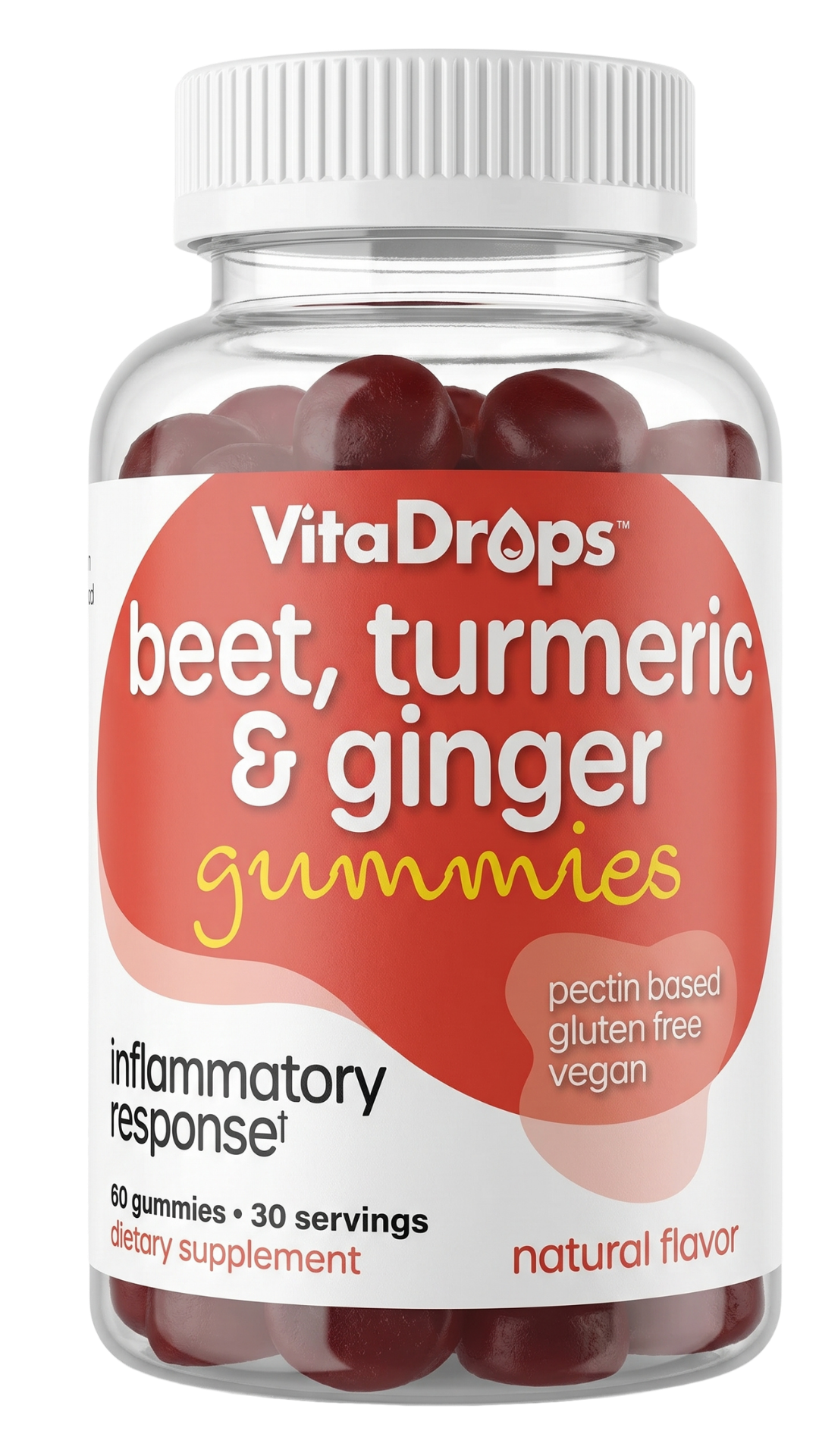
Prefer the classic? Windmill Turmeric 1000mg Capsules pair whole-root powder with a 95% curcuminoid extract. And if you'd rather chew, VitaDrops Beet, Turmeric & Ginger Gummies add turmeric extract and ginger to a two-gummy daily habit.
All three qualify for Subscribe & Save. Read more: peer-reviewed research on curcumin bioavailability.
Never miss a dose.
Evidence-based wellness guides like this one, in your inbox. No hype, no spam — unsubscribe anytime.