Could Low Magnesium Be Linked to Dementia Risk? What the Research Actually Shows
A graphic circulating on LinkedIn and Instagram this month announces that "one of the main factors behind Alzheimer's disease has been identified: magnesium deficiency." It cites a real paper, in a real journal, with a real finding — and that citation is doing an enormous amount of heavy lifting. The study exists. Its authors did find that people with low blood magnesium went on to develop dementia more often. But the actual result is stranger, more specific, and considerably more interesting than the headline, and it does not say what the graphic claims it says. More than 130,000 adults have now been followed across four major cohort studies. Here is what they actually found.
The Study Behind the Headline
The paper is Kieboom et al., "Serum magnesium is associated with the risk of dementia," Neurology, 2017, drawn from the long-running Rotterdam Study in the Netherlands.
Researchers measured blood magnesium in 9,569 adults who had no dementia at baseline, then followed them for a median of 7.8 years. In that window, 823 were diagnosed with dementia.
Participants in the lowest magnesium group (≤0.79 mmol/L) developed dementia at a 32% higher rate than the middle group — a hazard ratio of 1.32 (95% CI 1.02–1.69).
That is the number in the viral graphic. Here is the number that never makes it into the graphic:
Participants in the highest magnesium group (≥0.90 mmol/L) developed dementia at a 30% higher rate as well — a hazard ratio of 1.30 (95% CI 1.02–1.67).
The relationship isn't a slope. It's a U. Both ends of the magnesium range carried elevated risk, and the middle of the range was the safest place to sit. A finding shaped like that cannot support the claim that deficiency drives the disease — and it certainly cannot support the implied advice to go take more magnesium. The authors' own stated conclusion was that both low and high serum magnesium were associated with increased dementia risk, and that the finding warranted replication in other populations.
Then Three More Cohorts Weighed In
Replication is exactly what happened over the following six years. The results complicated the picture rather than settling it.
| Study | Participants | Follow-up | What it found |
|---|---|---|---|
| Rotterdam Study — Neurology, 2017 | 9,569 | 7.8 years | U-shaped. Both low and high magnesium linked to roughly 30% higher dementia rates |
| ARIC-NCS — Nutrients, 2020 | 12,040 | 24.2 years | Lowest fifth had a 24% higher dementia rate — but no link to the rate of cognitive decline |
| Copenhagen General Population Study — Clinical Chemistry, 2021 | 102,648 | — | U-shaped for vascular and other non-Alzheimer dementia. No association with Alzheimer dementia |
| UK Biobank — European Journal of Nutrition, 2023 | 6,001 | — | Higher dietary magnesium linked to larger brain volumes and fewer white matter lesions |
Three things jump out of that table, and none of them are in the viral post.
The Distinction the Viral Post Erases
The largest study of the four — 102,648 people, roughly ten times the cohort the graphic is built on — specifically separated Alzheimer dementia from non-Alzheimer dementia. It found the magnesium association in the non-Alzheimer group, driven by vascular-related cases. For Alzheimer dementia specifically, it found no association at all.
This matters because the graphic's entire claim is about Alzheimer's. The single best-powered test of that exact question came back negative. "Magnesium deficiency is a main factor behind Alzheimer's disease" is not an overstatement of the evidence so much as a statement the evidence actively pushes back on.
The ARIC finding cuts in a similar direction. Over 24 years — the longest follow-up of the group — low midlife magnesium was associated with more dementia diagnoses, yet researchers found no relationship between magnesium and how fast cognition declined in any tested domain. A deficiency genuinely driving neurodegeneration would be expected to show up in both.
Why Blood Vessels May Be the Real Thread
The Copenhagen team went a step further and ran a mediation analysis, asking how much of the magnesium–dementia link could be explained by other health factors. Diabetes accounted for about 10.4% of the association in the lowest magnesium group. Cumulative smoking accounted for 6.8%, stroke 1.3%, and systolic blood pressure 1.0%.
That's roughly a fifth of the signal traced to cardiometabolic health — and those are only the factors they could measure. Magnesium is genuinely involved in blood pressure regulation, glucose metabolism, and vascular function. The most parsimonious reading of all four studies is not that low magnesium attacks neurons. It's that low blood magnesium is partly a marker of the metabolic and vascular profile that raises dementia risk through better-understood routes.
There's a second, more technical problem with reading too much into any of this. Only about 1% of the body's magnesium circulates in the blood; the rest is held in bone and soft tissue. Serum magnesium is a famously poor proxy for total body magnesium stores, and it moves in response to kidney function, alcohol intake, diuretics and other medications, and acute illness. Several of those things independently affect dementia risk. Observational studies can adjust for what they measure, but they can't adjust for everything.
What Food-Intake Research Adds
The UK Biobank analysis approached the question from a different angle — dietary intake rather than blood levels — in 6,001 adults aged 40 to 73. Higher dietary magnesium was associated with larger brain volumes and fewer white matter lesions, with notable differences between men and women.
That's a genuinely encouraging signal, and it's the closest thing here to a reason to care about magnesium intake for brain health. But brain volume is a surrogate marker, not a diagnosis, and dietary magnesium tracks tightly with overall diet quality — leafy greens, legumes, nuts, whole grains. People eating enough magnesium are usually eating well in general, which is difficult to fully separate out.
What No Study Has Shown
Every finding above is observational. Not one of these studies randomly assigned anyone to take magnesium.
That means no study in this literature has tested whether taking magnesium changes anyone's dementia risk. To know that, you'd need a randomized controlled trial: recruit thousands of adults, assign half to magnesium and half to placebo, and follow both groups for a decade or more. That trial has not been run. Until it is, the honest statement is that low magnesium travels alongside higher dementia rates — not that correcting it moves the outcome.
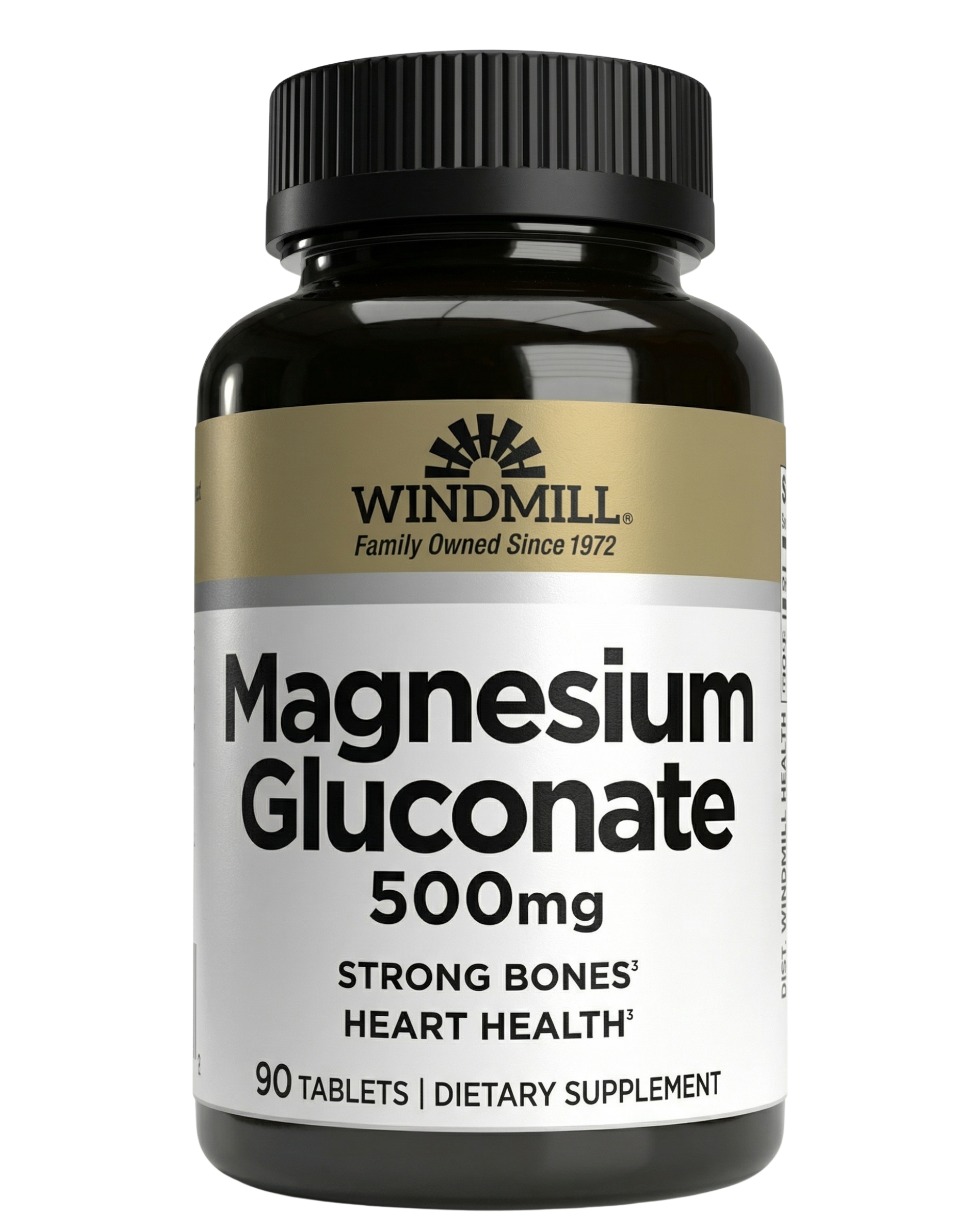
Related Product
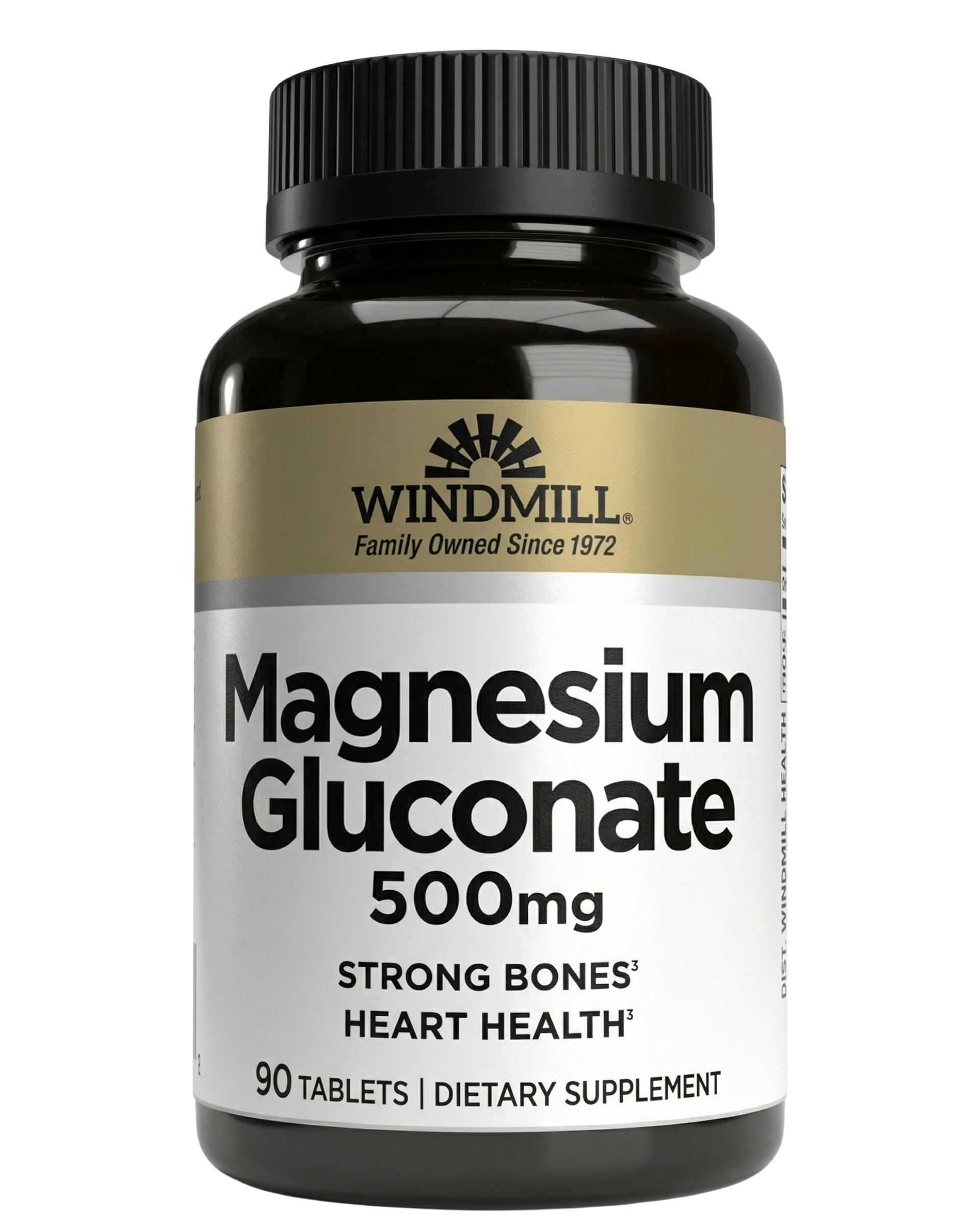
Magnesium Gluconate 500mg Gentle Formula Tablets 90ct
$9.99
This is also worth keeping in mind with magnesium L-threonate, the form marketed most aggressively for cognition. Its selling point is a proposed ability to raise magnesium levels in the brain specifically. The human trial base behind it is small and short-term, and none of it measures dementia outcomes. Promising mechanism, thin clinical evidence.
What This Actually Means for Your Routine
Strip away the overclaim and there's still a reasonable case for paying attention to magnesium — it just isn't the case the graphic is making.
Meeting the recommended intake is worth doing on its own merits. The NIH Office of Dietary Supplements sets the RDA at 400–420 mg daily for adult men and 310–320 mg for adult women, and notes that a substantial share of people in the United States consume less than recommended. Magnesium supports normal muscle and nerve function, bone health, and energy metabolism regardless of what the dementia literature eventually concludes.
More is not better. This is the clearest practical takeaway from the U-shaped curves. Both tails carried elevated risk in two separate cohorts. The tolerable upper intake level for supplemental magnesium is 350 mg per day for adults — that limit applies to supplements only, not to magnesium from food.
Don't go chasing a blood test. Given how poorly serum magnesium reflects total body stores, a normal reading doesn't rule out low intake and a low reading doesn't establish a brain-health problem. Dietary intake is the more useful thing to look at.
Food first is a defensible default. Pumpkin seeds, almonds, spinach, black beans, and whole grains are dense sources, and the intake study that found the most encouraging brain results was measuring dietary magnesium.
Talk to your doctor before adding magnesium if you have kidney disease, take diuretics or certain antibiotics, or manage a condition that affects electrolyte balance. Impaired kidney function is the main circumstance in which magnesium can accumulate to harmful levels.
The Honest Verdict
The research is real, the association is reasonably consistent, and the claim built on top of it is not supported. Low blood magnesium has been linked to higher dementia rates across multiple large cohorts — but so has high blood magnesium, the largest study found no Alzheimer's link at all, a meaningful share of the signal traces back to cardiometabolic health, and no trial has tested whether supplementing changes anything.
Getting enough magnesium is a sound idea backed by decades of nutrition science. Getting enough magnesium to prevent Alzheimer's disease is not something anyone can currently promise you, and a graphic that says otherwise is selling certainty the literature hasn't earned.
Frequently Asked Questions
Never run out.
Subscribe to any product and save 10% on every order. Pause or cancel anytime.
Subscribe & Save 10%Q: Does magnesium prevent Alzheimer's disease?
A: No study has shown that. The largest cohort study on the question — 102,648 people in the Copenhagen General Population Study — found no association between plasma magnesium and Alzheimer dementia specifically, and no randomized trial has tested whether magnesium supplementation changes dementia risk in either direction.
Q: Is the 2017 Neurology study real?
A: Yes. Kieboom et al., Neurology 2017;89(16):1716–1722 is a legitimate paper from the Rotterdam Study. It's the viral graphic's interpretation that's wrong — the study found elevated dementia risk at both low and high magnesium levels, and its authors described the result as requiring replication, not as identifying a cause.
Q: Can you take too much magnesium?
A: Yes. The tolerable upper intake level for supplemental magnesium is 350 mg per day for adults. Above that, the most common effects are diarrhea, nausea, and cramping. People with reduced kidney function are at higher risk of magnesium accumulating, which is why a doctor's input matters in that situation.
Q: Which form of magnesium is best absorbed?
A: Magnesium glycinate and citrate are generally better absorbed and gentler on digestion than magnesium oxide, which has lower bioavailability and is more likely to cause loose stools. Glycinate is often preferred for daily use because it's well tolerated.
Q: Does a normal magnesium blood test mean I'm getting enough?
A: Not necessarily. Roughly 1% of the body's magnesium circulates in blood, with the rest stored in bone and tissue, so serum levels are a weak indicator of overall status. Reviewing your dietary intake is usually more informative than a single blood value.
Where to Find Quality Magnesium
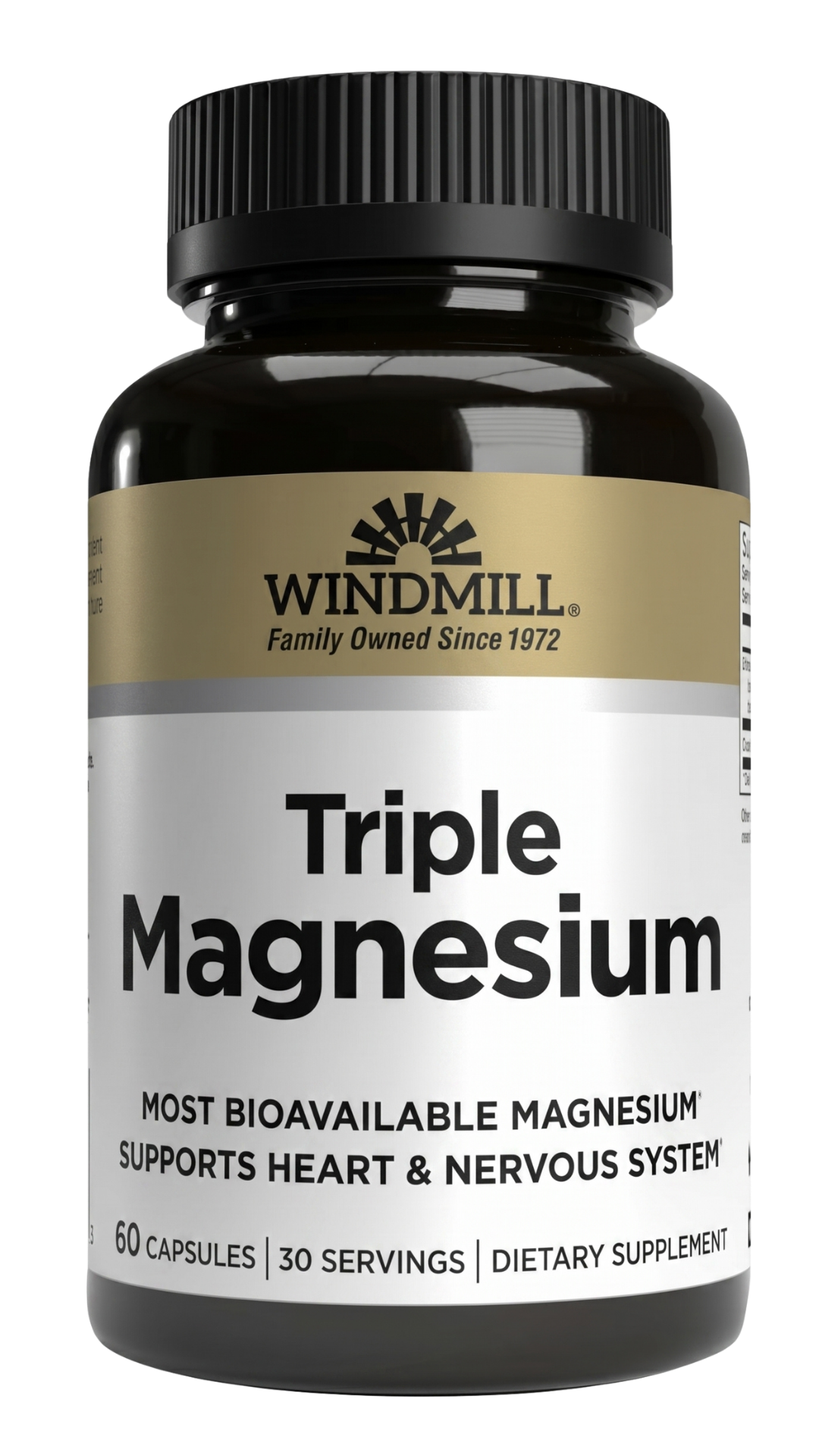
Moore Vitamins carries GMP-certified magnesium in the forms the absorption research actually favors, with same-day fulfillment and Subscribe & Save pricing. Magnesium Glycinate 200mg Capsules is the gentlest option for consistent daily intake, while Triple Magnesium Complex combines multiple forms for broader coverage. Both support normal muscle, nerve, and bone function — the benefits magnesium has the strongest evidence behind.
Never miss a dose.
Evidence-based wellness guides like this one, in your inbox. No hype, no spam — unsubscribe anytime.