When "Natural" Causes Harm: The 6 Most Misunderstood Supplement Side Effects (And Who's Actually at Risk)
Quick Answer: Most supplement side effects happen at the wrong dose, the wrong time, or in the wrong person — not because the supplement itself is inherently dangerous. Fat-soluble vitamins (A, D, E, K) accumulate in tissue and cause toxicity at sustained megadoses; water-soluble ones mostly don't. Magnesium above 350 mg of elemental magnesium from supplements causes loose stools in roughly 20% of users — not from the mineral, but from unabsorbed ions drawing water into the colon. Iron supplements cause GI distress in about 30% of users, almost entirely avoidable with dose timing. Fish oil above 3 g/day may mildly thin blood. The people most at risk aren't healthy adults taking standard doses — they're people on prescription medications, those with kidney or liver conditions, and people self-dosing well above label directions. If any of those apply to you, what follows could save you from a genuinely avoidable problem.
Which Supplements Actually Cause Side Effects?
"Natural" does not mean dose-independent. Every compound — water, oxygen, vitamin C — causes harm above a threshold. The question is always: at what dose, in which person?
The supplements most commonly implicated in side effects aren't obscure compounds. They're the everyday staples sitting in millions of medicine cabinets. The side effects are real, but they're almost always predictable, dose-dependent, and preventable.
Two categories drive almost all the risk: fat-soluble vitamins that accumulate in tissue, and high-dose minerals that disrupt GI motility or compete for absorption. Understanding which category your supplement falls into is the first step to avoiding problems.
The 6 Most Misunderstood Side Effects — And the Exact Doses That Trigger Them
1. Vitamin D — toxicity is real but requires sustained megadosing
Vitamin D toxicity (hypercalcemia) is documented, but the threshold is high. Most cases in the literature involve sustained intake above 10,000 IU/day for months. Standard supplemental doses of 1,000–4,000 IU/day have an excellent safety record. The NIH Office of Dietary Supplements vitamin D fact sheet sets the Tolerable Upper Intake Level at 4,000 IU/day for adults — not because 4,001 IU is dangerous, but as a conservative margin. Symptoms of genuine toxicity: nausea, weakness, frequent urination, kidney stones.
2. Magnesium — the laxative effect is a form, not a dose, problem
Loose stools from magnesium aren't a sign of toxicity. They signal that the form you're taking isn't absorbing well. Magnesium oxide (common in cheap supplements) absorbs poorly; unabsorbed magnesium pulls water into the colon. Magnesium glycinate absorbs significantly better and causes far less GI disruption at equivalent doses. The NIH Office of Dietary Supplements magnesium fact sheet confirms the Upper Limit of 350 mg/day applies to supplemental magnesium specifically, not total dietary intake.
3. Iron — 30% of users experience GI distress, almost entirely preventable
Iron causes nausea, constipation, and stomach cramps most often when taken on an empty stomach. Taking iron with a small amount of food (not calcium-rich food, which blocks absorption) cuts GI side effects dramatically. Ferrous bisglycinate is the form best tolerated. Never supplement iron without confirmed deficiency via blood test — iron overload (hemochromatosis) is a serious condition, and peer-reviewed research on iron overload risks consistently flags unsupervised high-dose use as the primary culprit.
4. Vitamin A — the one fat-soluble vitamin with a genuinely low toxicity ceiling
Unlike vitamin D, vitamin A toxicity (hypervitaminosis A) can occur at doses not astronomically above the RDA. The UL for adults is 3,000 mcg RAE (10,000 IU) per day. Chronic intake above that — especially from preformed vitamin A (retinol) in supplements, not beta-carotene from food — causes headache, bone pain, liver damage, and in pregnancy, birth defects. Beta-carotene (the plant form) doesn't carry the same risk; your body converts only what it needs.
5. Fish Oil — blood thinning is real above 3 g/day
At standard doses (1–2 g/day of combined EPA+DHA), fish oil's anticoagulant effect is minimal. Above 3 g/day, peer-reviewed research on fish oil and bleeding risk shows a measurable effect on platelet aggregation. This matters most for anyone taking warfarin, aspirin, or other blood thinners. Fishy burps are the most common complaint at any dose — taking capsules with meals or choosing enteric-coated formulas eliminates this for most people.
6. B6 (Pyridoxine) — peripheral neuropathy from a water-soluble vitamin
Most water-soluble vitamins have no meaningful toxicity ceiling because excess is excreted. B6 is the exception. Chronic supplementation above 100 mg/day — doses found in some "energy" and "stress" formulas — is associated with peripheral neuropathy (tingling, numbness in hands and feet). The NIH Office of Dietary Supplements vitamin B6 fact sheet sets the UL at 100 mg/day. Most standard B-complex supplements contain 1–10 mg — far below threshold.
Common Mistakes That Turn Safe Supplements Into Problems
- Stacking without reading totals. Taking a multivitamin plus individual vitamin D plus a fortified protein powder can push fat-soluble intake well above the UL without realizing it.
- Assuming "more is better." Dose-response curves plateau. Doubling your vitamin C from 500 mg to 1,000 mg raises plasma levels by roughly 20%, not 100%.
- Ignoring medication interactions. St. John's Wort reduces the effectiveness of birth control, antidepressants, and HIV medications through CYP450 enzyme induction. Calcium blocks thyroid medication absorption when taken within 4 hours.
- Skipping blood work before supplementing iron or vitamin A. Both have meaningful toxicity potential and are best dosed to a confirmed deficit.
- Trusting "natural" as a proxy for safe at any dose. Comfrey is natural. It causes fatal liver damage.
Related Product
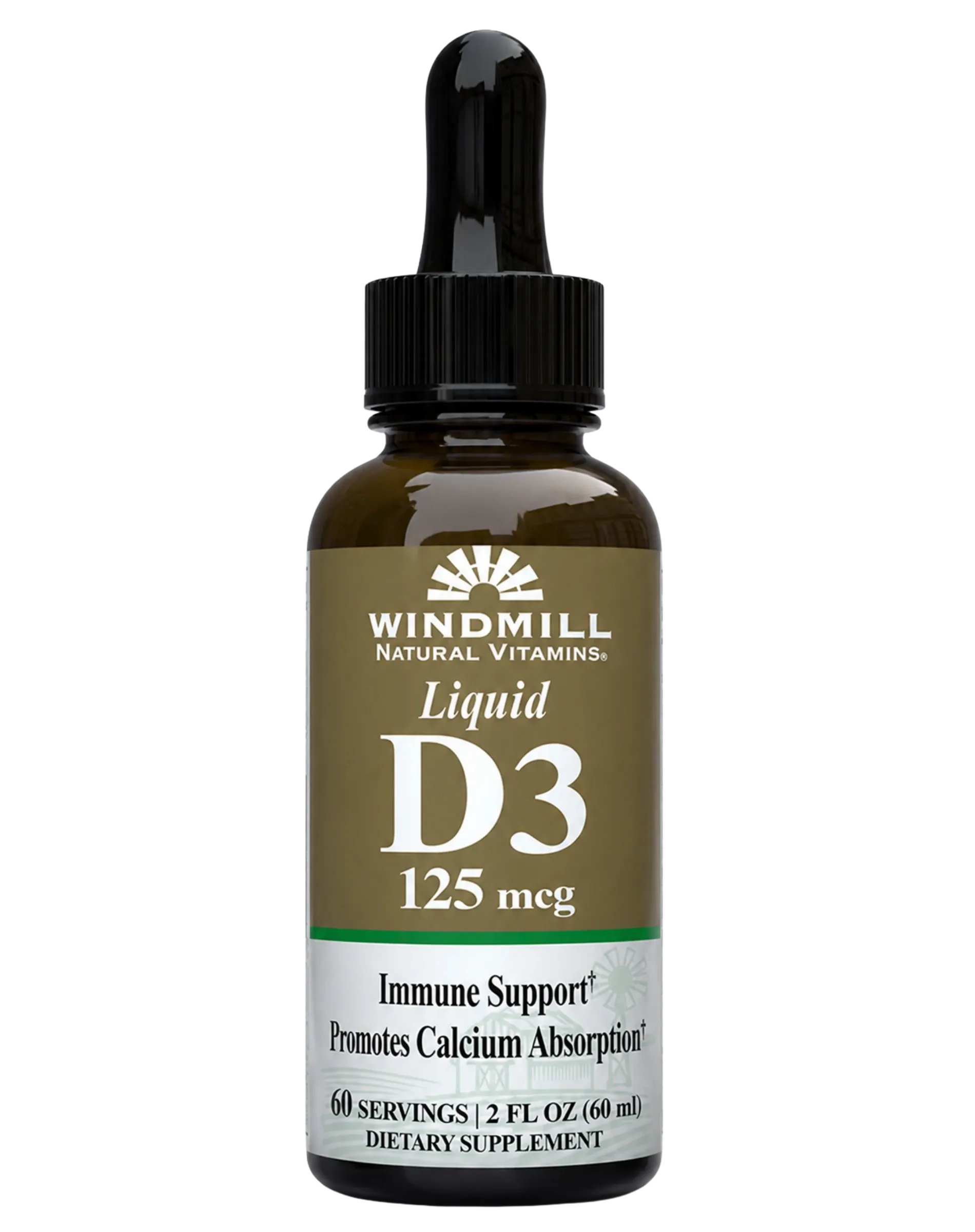
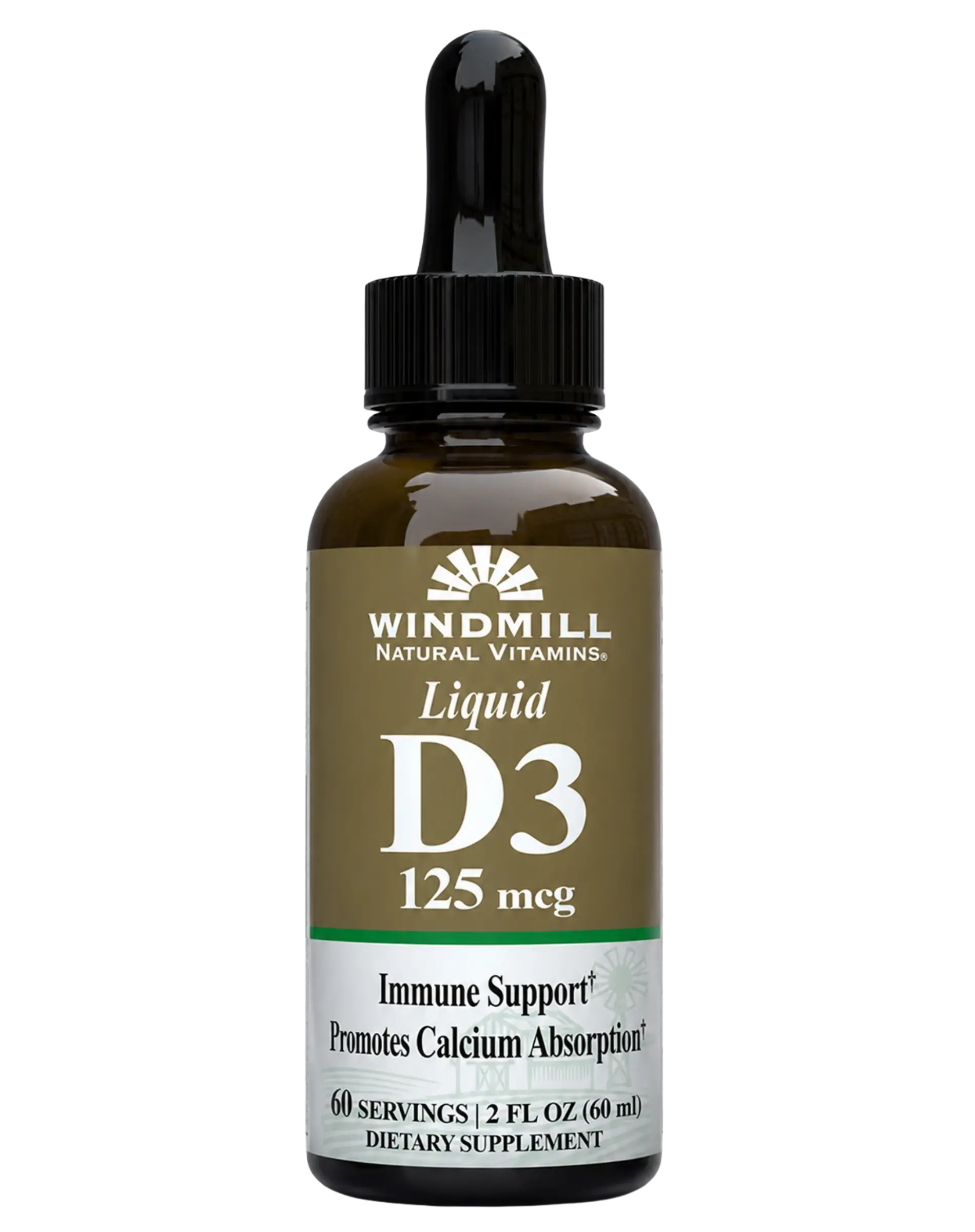
Windmill Natural Vitamins Liquid D3 125mcg Bone & Immune Support Liquid 2oz
$9.99
How to Supplement Without Side Effects: A Practical Protocol
Step 1: Identify your category.
Water-soluble (B vitamins, C)? Generous safety margin. Fat-soluble (A, D, E, K)? Respect the UL. Mineral? Match the form to your GI tolerance.
Step 2: Add up your total intake.
Count your multivitamin, individual supplements, and fortified foods. For vitamin D and A especially, totals matter more than any single product's dose.
Step 3: Time it right.
- Fat-soluble vitamins: take with your largest meal (fat boosts absorption up to 32% for vitamin D)
- Iron: with a small meal, away from calcium and coffee
- Magnesium: evening, with water; glycinate form if GI-sensitive
- Fish oil: with meals to prevent fishy reflux
Step 4: Run a 90-day check.
Most fat-soluble toxicity builds over months, not days. A simple blood panel at 90 days catches problems before they become symptoms.
Step 5: Flag your medications.
Cross-reference any supplement with your prescription list using your pharmacist — this is a free service and catches the most dangerous interactions before they happen.
Never run out.
Subscribe to any product and save 10% on every order. Pause or cancel anytime.
Subscribe & Save 10%Frequently Asked Questions
Q: Can you get side effects from supplements even at label doses?
A: Yes, in specific populations. People with kidney disease can't excrete excess magnesium, potassium, or vitamin C normally — standard doses can accumulate to harmful levels. Always factor in underlying health conditions, not just the label dose.
Q: How quickly do supplement side effects appear?
A: It depends on the type. GI side effects (nausea, loose stools) appear within hours. Fat-soluble vitamin toxicity typically takes weeks to months of consistent megadosing to manifest. Medication interactions can affect drug levels within 24–48 hours of starting a new supplement.
Q: Is it safe to take multiple supplements at the same time?
A: Usually yes, but check for both toxicity stacking (adding up fat-soluble vitamins from multiple products) and absorption competition — calcium and iron, zinc and copper, and iron and magnesium all compete for the same transporters when taken together. Spacing them 2 hours apart eliminates most competition issues.
Find the Right Supplement at Moore Vitamins
Getting the form and dose right from the start is the simplest way to avoid side effects entirely. Moore Vitamins carries a curated selection of high-absorption formulas — including options chosen specifically for tolerability.
Same-day fulfillment and a Subscribe & Save option mean you stay consistent without the guesswork of reordering.
Never miss a dose.
Evidence-based wellness guides like this one, in your inbox. No hype, no spam — unsubscribe anytime.