Fat vs. Empty Stomach: When Each Supplement Wins
> Quick Answer:
> Most supplement packaging says "take with food," but that instruction is doing a lot of heavy lifting for a wildly varied group of nutrients. The real rule is more specific: fat-soluble vitamins — A, D, E, K, and CoQ10 — need dietary fat to absorb at all, with studies showing absorption boosts of 32–62% when taken alongside a fat-containing meal versus a fat-free one. Water-soluble vitamins like C and most B vitamins absorb fine without food, and some — including zinc, iron, and magnesium — actually compete with food components for uptake. Meanwhile, a handful of supplements like melatonin work best closest to an empty stomach. If you've been defaulting to "take everything with breakfast," you're likely getting full value from some supplements and a fraction of the value from others. Knowing which category each of your supplements falls into can meaningfully change what you're actually absorbing each day.
Which Supplements Actually Need Food — and What Kind?
The "take with food" instruction on most labels exists for two separate reasons, and they're often conflated. The first reason is absorption: fat-soluble nutrients require bile acids — released when you eat fat — to form the micelles that carry them into your intestinal cells. No fat, no transport. The second reason is stomach tolerance: some supplements (iron, zinc, magnesium at higher doses) irritate the gastric lining and cause nausea on an empty stomach.
These are completely different problems with different solutions. Vitamin D taken with a fat-free meal still absorbs poorly even though your stomach is full. Iron taken with a large fatty meal absorbs worse because calcium and other food compounds compete with it at the absorption site.
The key insight: what you eat matters as much as whether you eat.
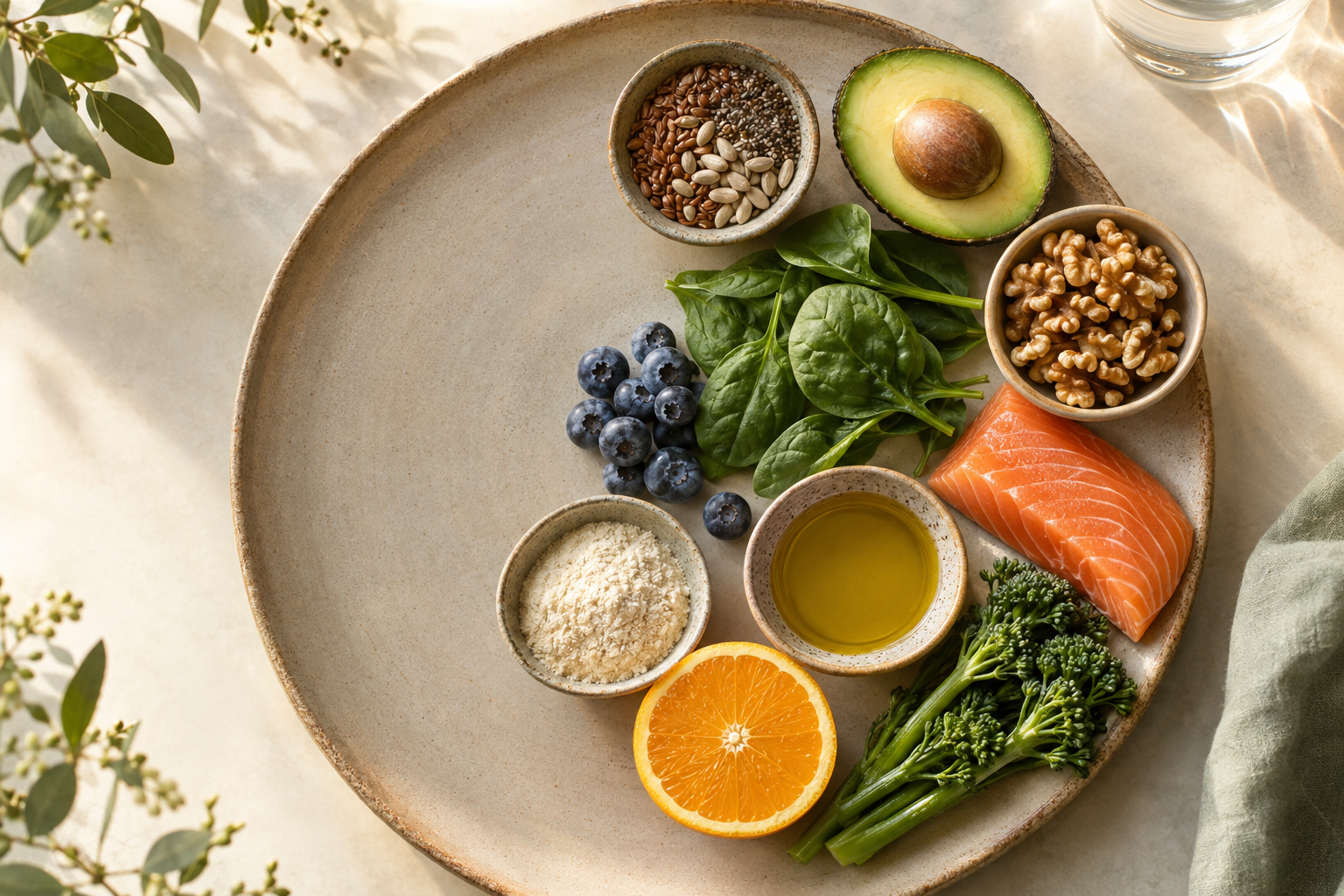
For fat-soluble nutrients, you need actual fat — not just any food. A small handful of nuts, half an avocado, olive oil on a salad, or a meal containing meat or fish all qualify. A bowl of plain oatmeal or a banana does not.
The Full Breakdown: Food, Fat, or Fasted
Here's the specific guidance for common supplements:
Need dietary fat to absorb properly:
- Vitamin D — absorption increases by up to 32% with fat; take with your largest meal
- Vitamin K2 — especially MK-7; fat is essential (see our deep-dive on Vitamin K2: MK-4 vs MK-7 — Which Form Works? for how form affects this)
- Vitamin A — fat-soluble; take with meals containing at least 10–15g of fat
- Vitamin E — absorption roughly doubles with dietary fat versus fasted
- CoQ10 — bioavailability improves significantly with fat; the ubiquinol form is more forgiving but still benefits
Fine with or without food (water-soluble):
- Vitamin C — absorbs efficiently regardless; food may reduce GI upset at doses over 500mg
- B vitamins (B1, B2, B3, B5, B6, B12) — water-soluble, absorb fine; B12 sublingual is best taken away from food
- Folate/folic acid — no fat requirement; consistency of timing matters more than food pairing
Better on an empty stomach (food reduces absorption):
- Iron — peer-reviewed research on iron absorption and food interactions consistently shows calcium, polyphenols, and phytates in food reduce non-heme iron absorption by 50–75%. Take 1 hour before or 2 hours after meals. Pair with vitamin C instead.
- Zinc — phytates in grains and legumes significantly reduce uptake; take between meals if GI tolerance allows
- Magnesium (for sleep/relaxation) — a lighter stomach improves how quickly it reaches peak plasma levels; evening dosing away from large meals works well
Take at a specific time regardless of food:
- Melatonin — best taken 30–60 minutes before sleep on a relatively empty stomach; a heavy meal immediately before blunts the signal. A low-dose product like Foods Plus Melatonin 3mg Tablets 60ct fits this protocol precisely — the 3mg dose is clinically relevant and the tablet form is easy to time correctly.
- Probiotics — stomach acid kills many strains; take 20–30 minutes before a meal or with a cold/room-temperature drink, not a hot one
The Mistakes That Quietly Cut Your Results
Most people make one or more of these errors without realizing it:
- Taking vitamin D with a fat-free breakfast. Black coffee and a piece of toast delivers essentially zero fat. Your vitamin D goes largely unabsorbed. Fix: move it to lunch or dinner.
- Taking iron with calcium. These two minerals use the same intestinal transporter and block each other. This is especially relevant for prenatal supplements — our Prenatal Nutrition Gaps: What Food Can't Fix guide covers this in detail.
- Taking zinc and copper together at the wrong time. High-dose zinc over time depletes copper. Taking them simultaneously with food further muddies absorption ratios.
- Swallowing melatonin immediately after a large dinner. Slowed gastric emptying delays absorption and delays sleep onset — the opposite of what you want.
- Assuming "with food" means any food. A fat-soluble vitamin taken with a fat-free snack is arguably worse than taking it with no food at all, because you've created the false assurance that you've done it right.
The NIH Office of Dietary Supplements vitamin D fact sheet specifically notes that fat-containing meals significantly enhance absorption — a detail many practitioners still underemphasize.
Your Practical Daily Protocol
Here's a simple system that requires no guesswork:
Morning (with breakfast — include fat):
- Vitamin D, Vitamin K2, Vitamin A, Vitamin E, CoQ10, omega-3s
- Use at least one fat source: eggs, nut butter, avocado, olive oil
Midday or between meals:
- Iron (if prescribed) — away from dairy, coffee, and high-fiber foods
- Zinc — at least 1 hour away from calcium-rich foods
Evening:
- Magnesium — with a light meal or small snack is fine; avoid pairing with very large dinners
- B12 sublingual — under the tongue, away from food, let it dissolve fully
- Melatonin — 30–60 minutes before bed, after your last meal has mostly cleared
With any meal, timing flexible:
- Vitamin C, B-complex, folate, probiotics (before meals), water-soluble supplements generally
If your supplement stack requires multiple timing windows, use a weekly pill organizer with AM/PM/evening sections. The NIH Office of Dietary Supplements magnesium fact sheet is a useful reference for confirming dosing and timing guidance straight from primary sources.
Never run out.
Subscribe to any product and save 10% on every order. Pause or cancel anytime.
Subscribe & Save 10%Frequently Asked Questions
Q: Can I take all my supplements at once to make it easier?
A: You can consolidate many of them — but iron and calcium should stay separated by at least 2 hours, and fat-soluble vitamins should go with a fat-containing meal specifically. Grouping everything at breakfast works only if that breakfast contains meaningful fat.
Q: Does coffee or tea affect supplement absorption?
A: Yes, significantly for some. Tannins in tea and coffee reduce iron absorption by up to 60% and can interfere with some B vitamins. Wait at least 30 minutes after coffee before taking iron or a B-complex. Vitamin D and omega-3s are unaffected.
Q: Does taking supplements with a superfood powder or green drink count as "with food"?
A: For stomach tolerance, yes. For fat-soluble absorption, it depends entirely on the product's fat content. A powder like Country Farms Super Celery Superfood Blend Powder 11.3 oz blended into water delivers micronutrients and plant compounds but minimal fat — pair it with a fat source if you're also taking D, K2, or E at the same time.
Find the Right Supplement at Moore Vitamins
If you're refining your timing protocol, start with the supplements where timing makes the biggest difference. Foods Plus Melatonin 3mg Tablets 60ct is an easy win — the 3mg dose hits the clinically studied range and the tablet form makes pre-bed timing simple and consistent.
For daytime nutrition support, Country Farms Super Celery Superfood Blend Powder 11.3 oz works well as a morning addition — just remember to pair your fat-soluble vitamins with an actual fat source alongside it.
Moore Vitamins offers same-day fulfillment on in-stock items and a Subscribe & Save option so your timing protocol never gets interrupted by a shipping gap.
Never miss a dose.
Evidence-based wellness guides like this one, in your inbox. No hype, no spam — unsubscribe anytime.