Spirulina vs. Chlorella: Which Green Superfood Actually Delivers?
Most People Buy the Wrong Green Powder for Their Goals
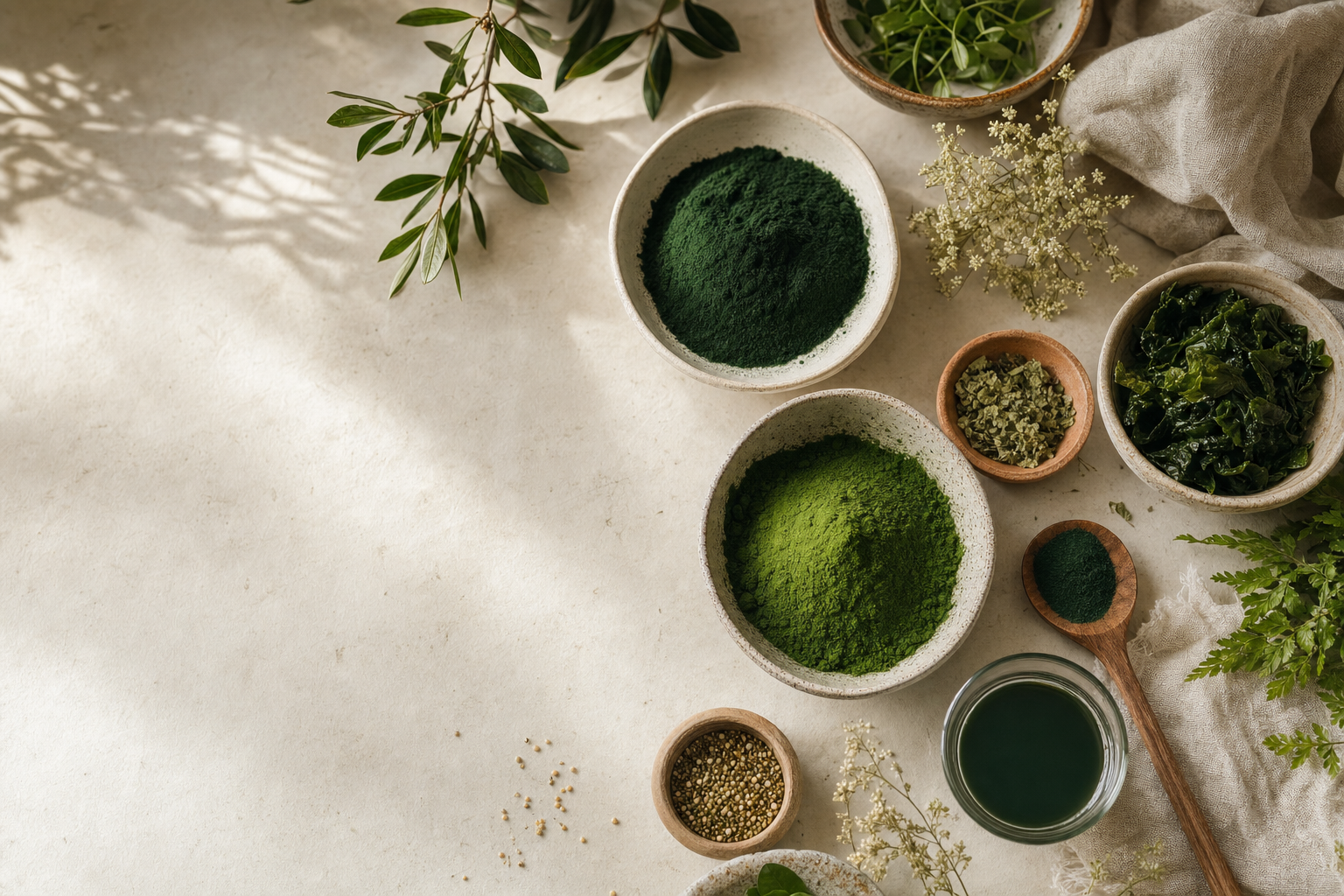
Spirulina and chlorella sit side by side on supplement shelves, wear nearly identical marketing claims, and confuse almost everyone who tries to choose between them.
They're both algae. Both are protein-dense. Both turn your smoothie an alarming shade of green. But they work differently, absorb differently, and the evidence behind their benefits is not equal. Buying the wrong one is a waste of money — and potentially a missed opportunity.
Here's how to choose based on what you actually need.
What the Research Actually Shows
Spirulina is a blue-green cyanobacterium with a longer, more robust research trail. Studies suggest it may support healthy cholesterol levels, with a 2016 meta-analysis in ARYA Atherosclerosis finding meaningful reductions in LDL and triglycerides at doses of 1–8g daily. Research also indicates it may support exercise performance and recovery — a 2010 study found reduced oxidative damage in trained athletes after four weeks of supplementation.
Chlorella is a true green alga with one genuine advantage over spirulina: a fibrous cell wall that appears to bind heavy metals in the digestive tract. Human studies are limited, but some suggest chlorella may support the body's natural excretion of cadmium and other environmental toxins. This is promising, but the evidence is still preliminary.
Both contain meaningful amounts of chlorophyll, B vitamins, and iron. Neither will replace a balanced diet. The evidence for chlorella's immune-modulating effects is intriguing but inconsistent — some studies show benefit, others don't. The honest summary: spirulina has more clinical support across more health areas; chlorella has a specific potential use case in toxin binding that spirulina doesn't match.
The Protein Claim Deserves Scrutiny
Both algae get marketed as complete protein sources. Technically true — but practically misleading.
You'd need 20–30g of spirulina powder to hit 10–12g of protein. That's a lot of green powder, a significant cost, and more heavy-metal exposure than most people want from a single daily supplement. No one is realistically using spirulina as a primary protein source.
Where spirulina's protein content does matter: bioavailability. Its protein is unusually digestible — estimated at 83–90% — because it lacks the tough cell wall that makes chlorella harder to process. This is why raw chlorella is nearly useless; cracked-cell-wall chlorella (more on that below) exists specifically to solve this problem.
For practical purposes, think of the protein in both as a bonus, not a reason to buy.
The Heavy Metal Question No One Wants to Ask
Algae bioaccumulate — they absorb whatever is in the water they're grown in. That's a feature when it comes to chlorella potentially binding toxins in your gut. It's a serious concern when the algae itself is grown in contaminated water.
Contaminated spirulina and chlorella supplements have tested positive for microcystins (liver toxins produced by contaminating cyanobacteria), heavy metals including arsenic and lead, and harmful bacteria. This has happened with real products sold on major retail platforms.
This is not a reason to avoid algae supplements — it's a reason to buy from brands that conduct third-party heavy metal testing and publish results. This single quality check separates safe algae products from risky ones. GMP certification matters here more than with almost any other supplement category.
If a brand isn't transparent about contamination testing, don't buy their algae.
What to Look For When Buying
Form: Powder gives you more flexibility in dosing but has a strong, grassy taste many people find unpleasant. Capsules and tablets are easier to take consistently. For daily maintenance use, tablets win on compliance.
Dosage: Research on spirulina typically uses 1–8g daily. Most benefits in studies appear at 3g or above. Start low (1g) if you're new to algae supplements — digestive sensitivity is common in the first week.
Chlorella specifics: Always buy cracked-cell-wall chlorella. Without cell wall disruption, absorption is poor. The label should state this clearly.
What to avoid: Blended 'superfood greens' products where spirulina or chlorella appears far down the ingredient list — you're getting a fraction of a therapeutic dose. Avoid any product without clear sourcing information or third-party testing documentation.
Quality signals: Third-party heavy metal testing (not just general purity testing), GMP-certified manufacturing, transparent country of origin for the raw algae, and no artificial fillers or binding agents in tablet forms. Japan and the United States are generally considered safer sourcing origins than some other regions — though this changes with individual manufacturers.
Who should be cautious: People on blood thinners (spirulina has vitamin K activity), those with phenylketonuria (PKU), anyone with autoimmune conditions (algae may stimulate immune activity), and anyone with iodine sensitivity should check with their doctor before starting either supplement.
The Honest Verdict
If you want one algae supplement with the strongest overall evidence for energy, cholesterol support, and antioxidant activity, spirulina is the clearer choice. If you have specific concerns about heavy metal exposure from diet or environment, cracked-cell-wall chlorella is worth considering as an addition — not a replacement. Quality control matters more with algae than almost any other supplement category, so where you buy is as important as what you buy.
Never run out.
Subscribe to any product and save 10% on every order. Pause or cancel anytime.
Subscribe & Save 10%Frequently Asked Questions
Q: Can I take spirulina and chlorella together?
A: Yes — many products combine both, and there's no known interaction between them. The practical question is whether you need both, or whether your specific goals are better served by one. Taking both together doesn't produce any additive 'superfood' effect that the research confirms; it mainly increases your cost and your daily pill count.
Q: How long does it take to notice any effects from spirulina?
A: The studies that show meaningful results in cholesterol and exercise recovery typically run 4–8 weeks at consistent dosing. Don't expect to feel noticeably different in week one. If energy is your main goal, the subjective experience varies widely — some people notice increased stamina within 2–3 weeks, others notice nothing. Manage expectations accordingly.
Q: Is spirulina safe during pregnancy?
A: This is one to discuss with your OB or midwife, not answer with a supplement article. The theoretical concern is algae contamination — microcystins and heavy metals pose a higher risk during pregnancy. If you do continue taking it, high-quality, third-party tested products only. Most practitioners will suggest pausing until after delivery.
Where to Find Quality Spirulina and Chlorella Supplements
Moore Vitamins carries a GMP-certified selection of algae supplements — including Spirulina Tablets and Cracked-Cell-Wall Chlorella — sourced from manufacturers that conduct third-party heavy metal testing. Every product ships the same day when ordered before the cutoff, and the Subscribe & Save option makes consistent daily dosing easier on your wallet. If you're choosing between the two and still unsure after reading this, our team can help you match the right product to your specific goals.
Never miss a dose.
Evidence-based wellness guides like this one, in your inbox. No hype, no spam — unsubscribe anytime.