Why Water-Soluble Vitamins Disappear by Noon — And What to Do About It
Quick Answer: Your body processes water-soluble vitamins — vitamin C and all eight B vitamins — in a fundamentally different way than fat-soluble ones, and that difference makes when you take them almost as important as whether you take them. Unlike fat-soluble vitamins (A, D, E, K), water-soluble vitamins are not stored in tissue. Your kidneys filter excess out within 2–4 hours of absorption. A single 1,000 mg vitamin C dose absorbs at roughly 50% efficiency; split across three doses, that rises to around 80–90%. B vitamins follow similar saturation curves — your gut transporters can only move so much at once. If you take everything at breakfast and nothing again until tomorrow, you're running on fumes by early afternoon. People who supplement for energy, immunity, or cognitive performance will get measurably more out of the same pill count by reading this.
So What Actually Happens to Water-Soluble Vitamins in Your Body?
Unlike fat-soluble vitamins that park themselves in your liver and adipose tissue for weeks, water-soluble vitamins dissolve in blood and move through your system fast. They reach peak plasma concentration within 1–2 hours of ingestion and start declining shortly after.
Your kidneys are efficient. Once your blood concentration exceeds what cells can immediately use, the surplus exits in urine. This is why B vitamins turn your urine bright yellow — that's riboflavin (B2) your body couldn't hold onto.
The practical implication: a single large morning dose creates a sharp spike followed by a trough. Splitting the same total dose across morning, midday, and evening flattens that curve and keeps tissue levels elevated throughout the day. The NIH Office of Dietary Supplements vitamin C fact sheet explicitly notes that absorption efficiency drops from ~90% at 180 mg to below 50% at doses above 1,000 mg — a dose-dependent ceiling that applies to most water-soluble vitamins.
The Absorption Ceilings You Need to Know
Each water-soluble vitamin has its own saturation point. Here are the ones that matter most for practical dosing:
Vitamin C
- Below 200 mg per dose: ~90% absorbed
- 1,000 mg single dose: ~50% absorbed
- Above 2,000 mg: GI distress becomes common, absorption continues falling
- Practical ceiling: 250–500 mg per dose, 2–3x daily
Vitamin B12 (Cobalamin)
- Intrinsic-factor-mediated absorption saturates at roughly 1.5–2 mcg per dose
- High-dose supplements (500–1,000 mcg) bypass this via passive diffusion at ~1% efficiency — which is why megadoses are used therapeutically for absorption disorders
- For healthy adults, 25–100 mcg once daily is more than sufficient; peer-reviewed research on B12 absorption and dose consistently shows diminishing returns above this range
Vitamin B1 (Thiamine)
- Active transport saturates around 4–8 mg per dose
- Passive diffusion kicks in above that but is far less efficient
- Most adults need only 1.1–1.2 mg/day; athletes or those with high carbohydrate intake may need more
Folate (B9)
- Food folate absorbs at ~50%; folic acid in supplements absorbs at ~85%
- Methylfolate (5-MTHF) bypasses the MTHFR conversion step entirely — important for the ~40% of people with common MTHFR variants
- The NIH Office of Dietary Supplements folate fact sheet covers the distinction in detail
B6 (Pyridoxine)
- Chronic high-dose supplementation (≥100 mg/day) is associated with peripheral neuropathy — one of the few water-soluble vitamins where toxicity is a real concern
- Keep B6 supplementation under 50 mg/day unless directed otherwise
Common Mistakes People Make With Water-Soluble Vitamins
Most errors come down to the "take everything once and forget it" habit. Here's what actually undermines your results:
Related Product
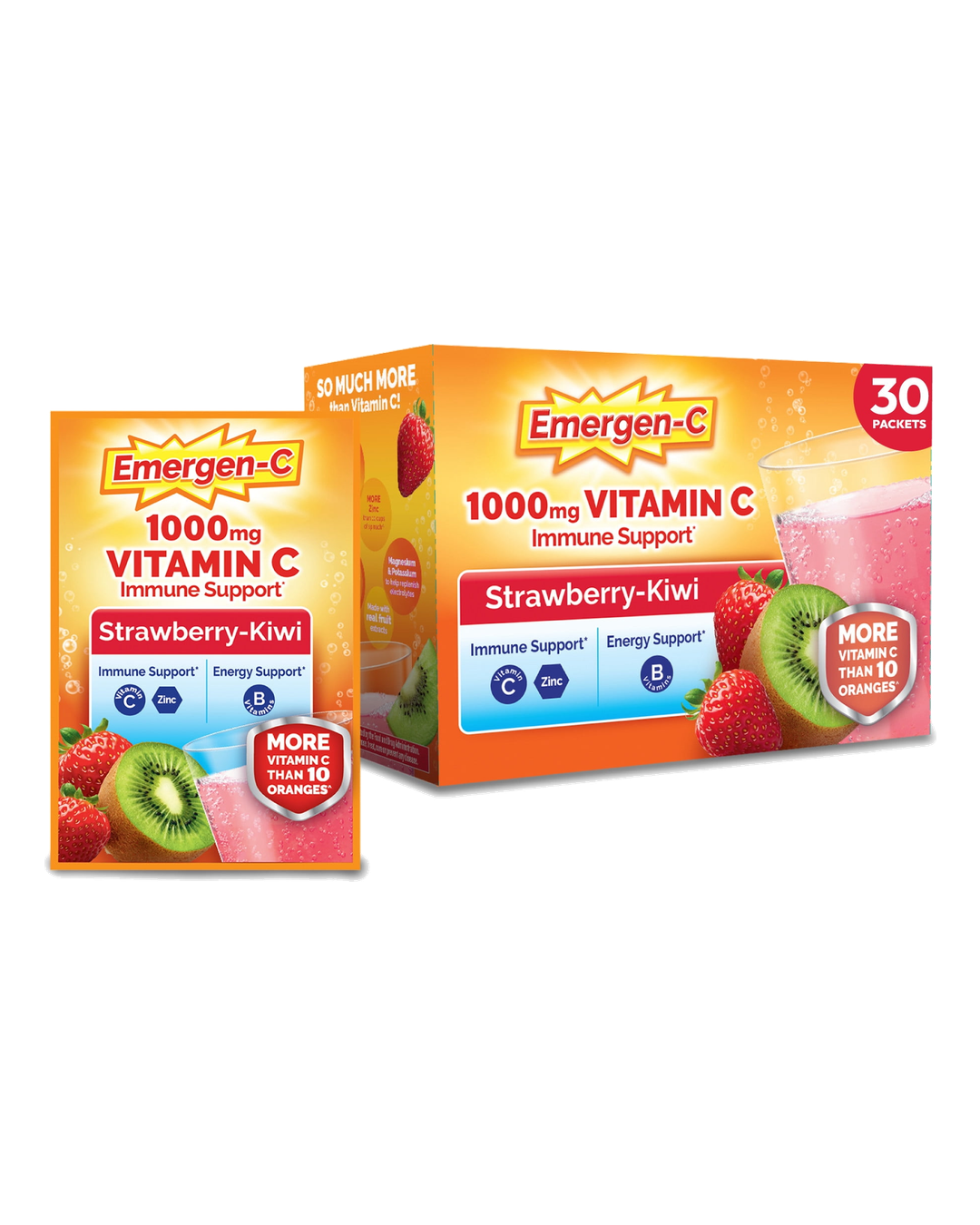
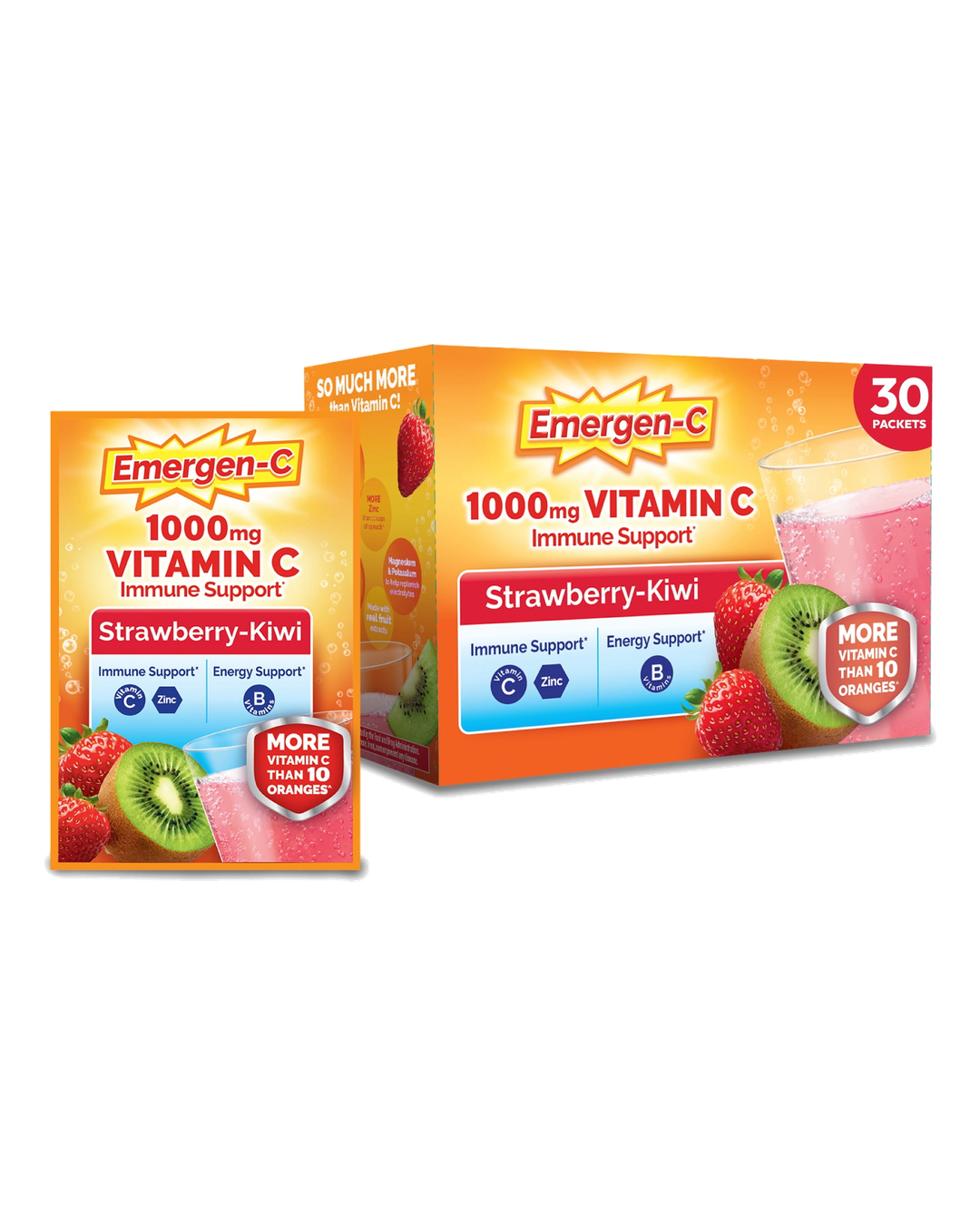
Emergen-C Strawberry-Kiwi 1000mg Vitamin C Drink Mix Packets 30ct
$15.95
- Mega-dosing vitamin C once daily. You're absorbing less than half and excreting the rest. Two 500 mg doses outperform one 1,000 mg dose every time.
- Taking B vitamins on an empty stomach. B vitamins — especially niacin (B3) — are more likely to cause flushing and nausea without food. Take with at least a small meal.
- Confusing "more B12 = more energy" with reality. B12 supports energy metabolism, but only if you were deficient. Healthy people with adequate B12 feel no boost from mega-doses. It's not a stimulant.
- Ignoring the MTHFR variable. Standard folic acid requires enzymatic conversion to the active form. If you have an MTHFR variant, you may be under-methylated despite supplementing. Methylfolate sidesteps this entirely.
- Storing supplements in a humid bathroom cabinet. Water-soluble vitamins degrade faster with heat and moisture. A cool, dry drawer works better.
Practical Timing Strategy You Can Start Today
Here's a simple split-dose protocol that maximizes absorption without complexity:
Morning (with breakfast):
- Vitamin C: 250–500 mg
- B-complex or individual B vitamins
- Folate/methylfolate if supplementing
Midday (with lunch or a snack):
- Vitamin C: 250–500 mg (second dose)
- B12 if taken separately from a B-complex
Evening (optional, with dinner):
- A third vitamin C dose if targeting higher daily intake (e.g., 1,500 mg total)
- Skip additional B vitamins in the evening — B vitamins support energy metabolism and may interfere with sleep for some people
Total daily targets for most healthy adults:
Never run out.
Subscribe to any product and save 10% on every order. Pause or cancel anytime.
Subscribe & Save 10%| Vitamin | Recommended Daily Amount | Upper Tolerable Limit |
|---|---|---|
| C | 75–90 mg (need); 500–1,000 mg (common supplement range) | 2,000 mg |
| B1 | 1.1–1.2 mg | Not established |
| B6 | 1.3–1.7 mg | 100 mg |
| B12 | 2.4 mcg | Not established |
| Folate | 400 mcg DFE | 1,000 mcg (folic acid) |
For anyone with GI conditions, Crohn's disease, or post-bariatric surgery, research on water-soluble vitamin malabsorption suggests even split-dosing may be insufficient — sublingual or IV supplementation may be warranted. Talk to your provider.
Frequently Asked Questions
Q: Can I take too much of a water-soluble vitamin if my kidneys just flush the excess?
A: Mostly yes — but B6 is the critical exception. Chronic intake above 100 mg/day is linked to sensory neuropathy even though B6 is water-soluble. High-dose vitamin C (above 2,000 mg/day) can also cause kidney stones in susceptible individuals. For everything else, toxicity risk is low, but excess is simply wasted money.
Q: Do B vitamins in energy drinks actually work?
A: Only if you're deficient, which most people aren't. Energy drinks typically contain 400–8,000% of the daily value for B vitamins — far beyond what cells can use. The energy effect comes from caffeine and sugar, not the B vitamins. If you're well-nourished, the B content is marketing.
Q: Should I take a B-complex or individual B vitamins?
A: A B-complex covers all eight B vitamins in balanced ratios, which is ideal for general health. Individual B vitamins make sense when you have a specific deficiency (e.g., B12 after 50, or methylfolate for MTHFR variants). Don't take isolated high-dose B6 or B3 without a clinical reason — imbalanced B ratios over time can create secondary deficiencies in the other Bs.
Find the Right Supplement at Moore Vitamins
Never miss a dose.
Evidence-based wellness guides like this one, in your inbox. No hype, no spam — unsubscribe anytime.