Lutein and the Brain: The Eye Health Nutrient That Researchers Are Now Studying for Cognitive Decline
Most people buy lutein to protect their eyes. Researchers are now asking whether they're accidentally protecting their brains too. Lutein is one of two carotenoids that selectively accumulate in the macula of the eye — but it also concentrates in the brain, particularly in regions tied to memory and executive function. Studies measuring macular pigment optical density (a proxy for lutein in brain tissue) have found consistent associations between higher lutein levels and better cognitive performance across multiple age groups. One observational study of older adults found those with the highest lutein concentrations outperformed peers on memory, verbal learning, and processing speed tests. These aren't fringe findings — the NIH Office of Dietary Supplements tracks carotenoid research closely, and interest in lutein's neurological role has grown sharply since 2018. If you're over 45 and thinking about cognitive longevity — not just vision — this changes the supplementation conversation entirely.
Your Brain Hoards Lutein for a Reason
The brain doesn't accumulate nutrients randomly. It selectively pulls lutein — along with its cousin zeaxanthin — from the bloodstream and deposits it in neural tissue. The frontal and temporal lobes, hippocampus, and cerebellum all show measurable lutein concentrations. This selectivity signals biological purpose.
Lutein is a potent antioxidant and anti-inflammatory compound. The brain is roughly 60% fat and runs hot with metabolic activity, making it exceptionally vulnerable to oxidative stress. Lutein appears to quench free radicals in neural membranes, potentially slowing the kind of low-grade neuroinflammation researchers now associate with age-related cognitive decline.
The eye connection matters here. Macular pigment density is the most practical way to estimate lutein status in living people — you can't biopsy a brain to measure it directly. Studies exploiting this proxy have consistently found that people with denser macular pigment score better on cognitive tests, even after controlling for education, cardiovascular health, and lifestyle.
What the Research Actually Shows
The honest framing: this is promising but not yet definitive. Most of the strongest evidence is observational — it shows a relationship between lutein status and cognitive health, not a proven cause-and-effect mechanism.
That said, the pattern is hard to dismiss. Peer-reviewed research on lutein and cognitive function spans over a decade and multiple populations. One frequently cited study from the University of Illinois found that middle-aged adults with higher blood lutein levels showed neural efficiency signatures on brain imaging — their brains worked smarter, not harder, on cognitive tasks.
A 2017 randomized controlled trial supplementing older adults with 10 mg of lutein daily for 12 months showed improvements in complex attention and cognitive flexibility compared to placebo. The effect sizes were modest but statistically meaningful. Larger, longer trials are ongoing.
The evidence is stronger in younger adults than many expect. Studies on children and young adults consistently link dietary lutein intake to better academic performance and faster processing speed — suggesting lutein's brain role isn't just about preventing decline but potentially supporting peak function throughout life.
What the research does NOT show: lutein reversing diagnosed dementia, treating Alzheimer's disease, or guaranteeing protection against cognitive decline. Anyone claiming that is getting ahead of the evidence.
The Dose and Timing Question Most People Miss
If you're supplementing lutein primarily for eye health, the research-supported dose sits between 10–20 mg daily. That range holds for the brain health angle too, based on available trials. There is no established separate "brain dose" — the studies using 10 mg daily are the same ones showing cognitive associations.
Timing matters more than most people realize. Lutein is fat-soluble, which means it requires dietary fat for absorption. Taking it with a meal containing healthy fats — olive oil, avocado, eggs, nuts — meaningfully increases bioavailability. A capsule swallowed with plain water on an empty stomach delivers a fraction of what the label promises.
Consistency also drives outcomes. Lutein accumulates in tissue over time. Studies measuring brain lutein through macular pigment density show that meaningful accumulation takes weeks to months of daily intake. This is not a supplement where you'll feel something in a week. The payoff is long-term, which makes starting earlier — in your 40s or even 30s — more logical than waiting for symptoms.
For those already supplementing for vision, Lutein for Eye Health After 50: What the Dose Research Actually Shows covers the ocular dosing evidence in depth.
What to Look For When Buying
Related Product
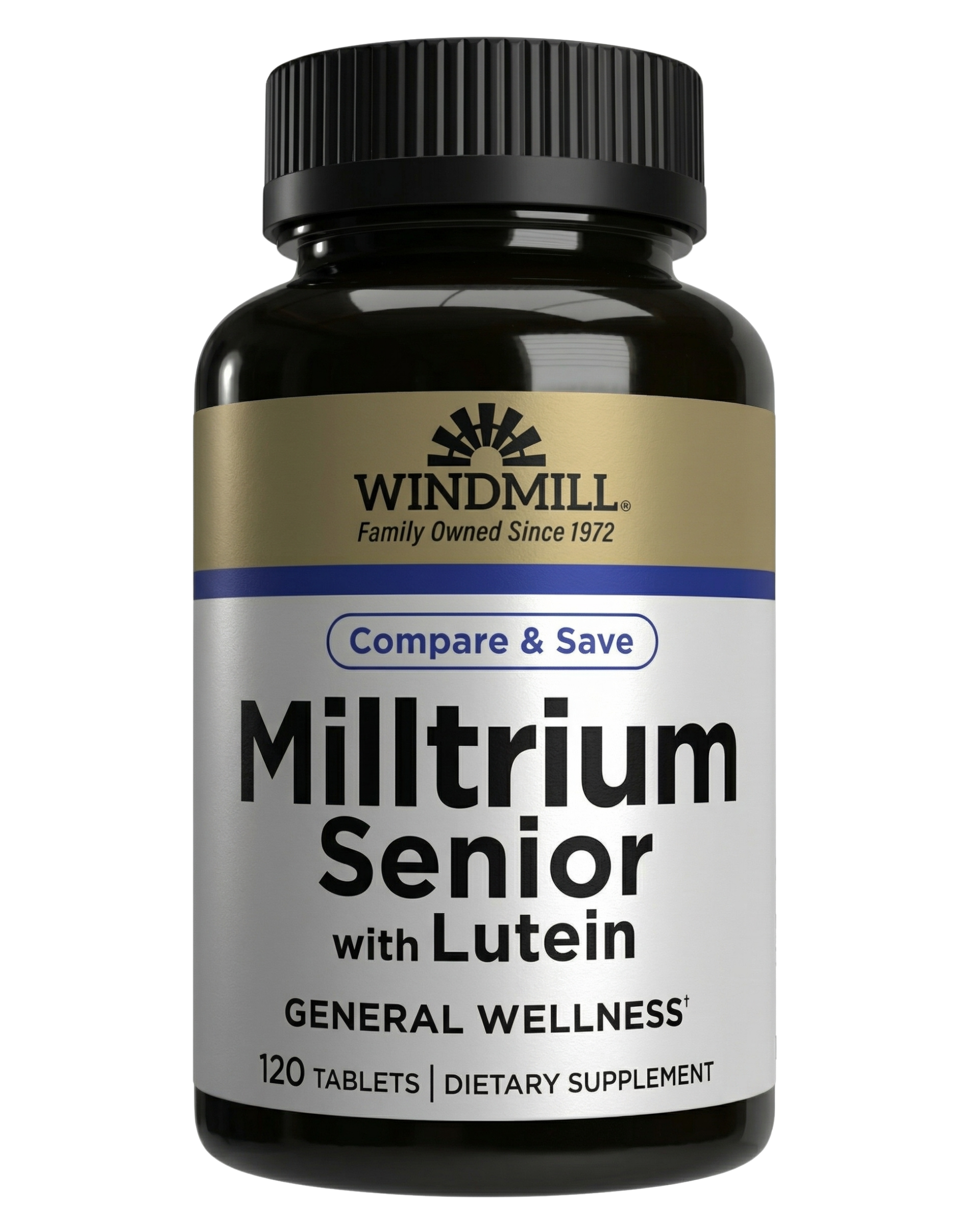
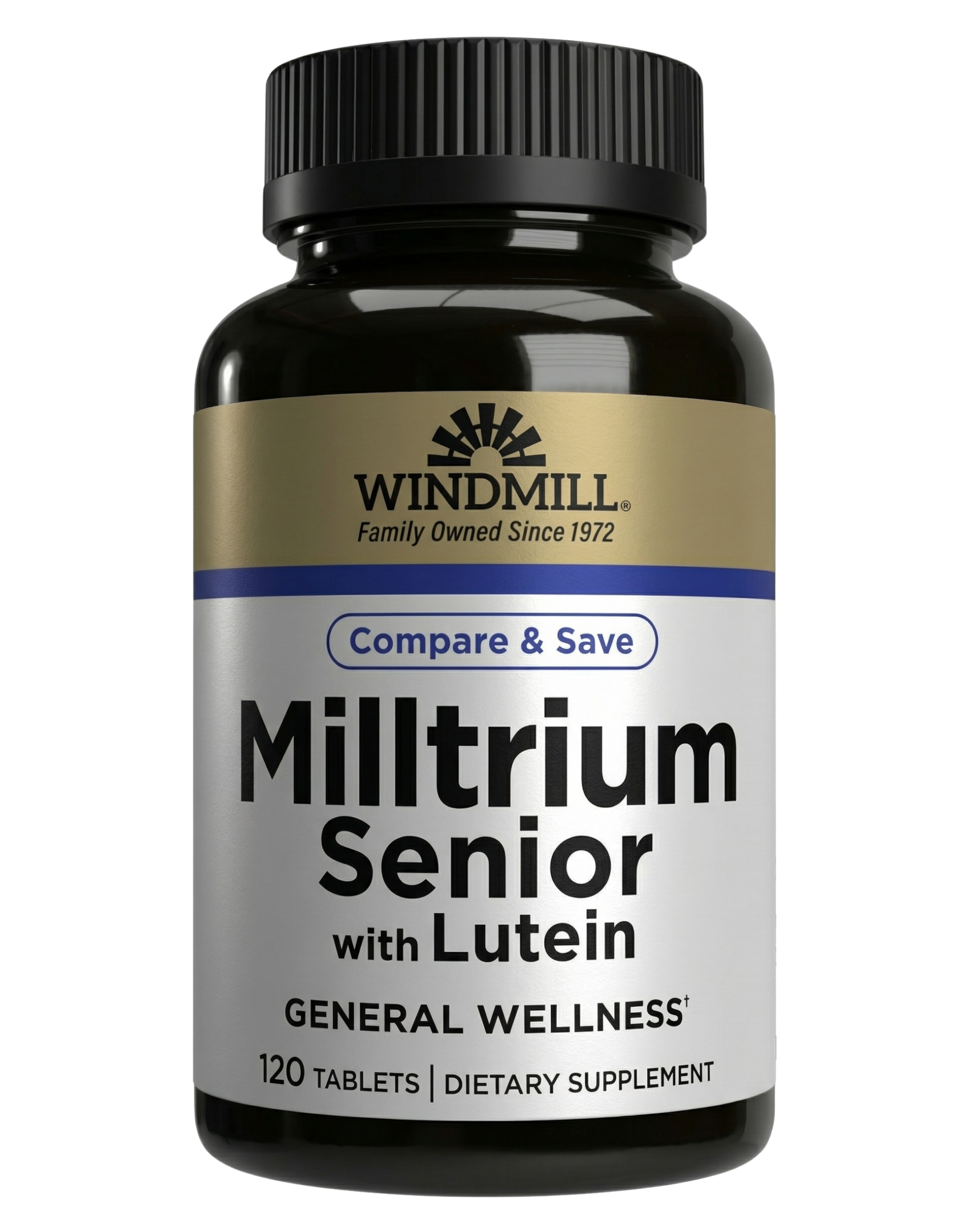
Milltrium Senior Multivitamin with Lutein Tablets 120ct
$11.99
Form matters. Lutein from marigold extract (listed as Tagetes erecta on labels) is the most studied form and the one used in virtually all clinical trials. Synthetic lutein exists but appears in fewer quality products — check the label.
Free lutein vs. lutein esters. Both forms work, but they absorb differently. Free lutein is ready for immediate absorption. Lutein esters must be cleaved by digestive enzymes first — slightly slower, but studies show similar overall bioavailability when taken with fat. Free lutein is marginally preferable if you're optimizing.
Zeaxanthin pairing. Look for products that include zeaxanthin alongside lutein. These two carotenoids work together in both the eye and the brain, and the research supporting cognitive benefits typically involves both. A 5:1 ratio of lutein to zeaxanthin is common in clinical trial formulations.
Quality signals. GMP (Good Manufacturing Practice) certification is non-negotiable. Third-party testing — from organizations like USP, NSF International, or ConsumerLab — adds another layer of verification that what's on the label is actually in the capsule at stated potency.
Avoid: products with unnecessary fillers, artificial colorings, or doses far above 20 mg daily without clinical justification. More is not better with fat-soluble nutrients.
The Honest Verdict
Lutein's brain health story is real, but it's still being written. The evidence is consistent enough to take seriously — especially for adults over 40 investing in long-term cognitive resilience. It is not strong enough to claim lutein prevents dementia or reverses cognitive decline. Think of it as part of a broader strategy, not a standalone solution. At 10–20 mg daily with a fatty meal, the risk is negligible and the upside, based on current evidence, is meaningful.
Frequently Asked Questions
Never run out.
Subscribe to any product and save 10% on every order. Pause or cancel anytime.
Subscribe & Save 10%Q: Can I get enough lutein from food alone to support brain health?
A: Theoretically yes — dark leafy greens like kale and spinach are rich in lutein, and cooked kale delivers 20+ mg per cup. In practice, most adults consistently fall short of even 6 mg daily through diet. Supplements bridge that gap reliably, especially for those who don't eat leafy greens daily.
Q: Does lutein interact with any medications?
A: No significant drug interactions are well-documented for lutein at standard doses. It's fat-soluble, so medications that reduce fat absorption (like orlistat) may reduce lutein absorption as well. Always check with your prescribing physician if you take multiple medications.
Q: How long before I notice any cognitive benefit from lutein supplementation?
A: Realistically, don't expect to "feel" a cognitive boost from lutein — it doesn't work like a stimulant. The benefits appear to be structural and protective over time. Studies showing cognitive associations typically measure outcomes over 6–12 months of consistent supplementation. Think years, not weeks.
Where to Find Quality Lutein Supplements
Moore Vitamins carries GMP-certified options that pair lutein with essential nutrients for aging adults. The Milltrium Senior Multivitamin with Lutein Tablets 120ct delivers lutein alongside a full spectrum of vitamins and minerals formulated for adults over 50 — a practical choice for those who want to consolidate their supplementation without sacrificing quality. Moore Vitamins offers same-day fulfillment and a Subscribe & Save option so you never miss a dose during the months it takes for lutein to do its work.
Never miss a dose.
Evidence-based wellness guides like this one, in your inbox. No hype, no spam — unsubscribe anytime.