Lutein for Eye Health After 50: What the Dose Research Actually Shows
Most people taking lutein for their eyes are getting the wrong dose — and the gap between "some lutein" and "enough lutein" is where real eye protection either happens or doesn't. The landmark AREDS2 trial, which followed over 4,000 adults at risk for age-related macular degeneration (AMD), found that 10 mg of lutein daily — combined with 2 mg of zeaxanthin — reduced the risk of late-stage AMD by about 26% compared to placebo. That's a meaningful number from a rigorous, NIH-funded study. Below that threshold, the protective signal gets murky fast. Adults over 50 lose macular pigment density steadily with age, and that pigment is made almost entirely from dietary lutein and zeaxanthin. If you're in that group and your vision matters to you — which it does — understanding the dose question changes how you shop for supplements entirely.
The Aging Eye Has a Lutein Problem Nobody Talks About
Your macula — the small central region of the retina responsible for sharp, detailed vision — is one of the most metabolically active tissues in the body. It absorbs enormous amounts of blue light and generates oxidative stress constantly.
Lutein and zeaxanthin are the only two carotenoids that concentrate specifically in the macula. They act as a built-in optical filter, absorbing high-energy blue light before it damages photoreceptors. Think of them as the macula's sunscreen.
The problem: the human body cannot synthesize lutein. Every milligram in your macula came from food or supplements. And after 50, macular pigment optical density (MPOD) — the measurable thickness of that protective layer — declines in most adults, particularly in people who smoke, have light-colored irises, or eat low amounts of leafy greens.
A declining MPOD doesn't cause symptoms you'd notice on a Tuesday morning. It quietly increases your vulnerability to AMD over years and decades. That's what makes this a conversation worth having now, not after your optometrist finds something concerning.
What the Research Actually Shows
The AREDS2 trial is the gold standard here, and its findings deserve a straightforward read. Participants supplemented with 10 mg lutein plus 2 mg zeaxanthin daily showed a statistically significant reduction in AMD progression — and the benefit was strongest in people who had the lowest dietary intake of lutein at baseline.
Separate observational studies reinforce this. A large analysis published in JAMA Ophthalmology found that higher dietary lutein and zeaxanthin intake was associated with a significantly lower prevalence of early AMD. A 2022 meta-analysis of randomized controlled trials confirmed that lutein supplementation consistently improves MPOD — the biological marker most directly tied to long-term macular health.
The evidence for preventing cataracts is more modest. Some studies suggest an association between higher lutein intake and reduced cataract risk, but the trial data isn't as clean as it is for AMD. Call that promising but not proven.
One thing the research does not support: mega-dosing. Studies using doses above 20 mg show no additional benefit over 10 mg. More lutein isn't better lutein — what matters is consistency and hitting the clinical threshold.
Why Dose and Form Both Determine What You Actually Absorb
Getting 10 mg of lutein on a label is one thing. Getting 10 mg into your bloodstream is another.
Lutein is a fat-soluble carotenoid, which means it absorbs dramatically better when taken with dietary fat. A study in The American Journal of Clinical Nutrition found that lutein absorbed from a supplement taken with a fat-containing meal was significantly higher than the same dose taken fasted. This is not a minor difference — it can affect absorption by 50% or more.
Free-form lutein (derived from marigold extract) and lutein esters both work, though some research suggests free-form absorbs slightly faster. The practical difference for most users is small if they're consistently taking it with food.
What to avoid:
- Doses below 6 mg — too far from the AREDS2 threshold to be meaningful for eye protection
- Supplements that list lutein without specifying the amount (proprietary blend hiding)
- Formulas without accompanying zeaxanthin — the two carotenoids work synergistically in macular tissue
- Cheap fillers like artificial dyes and titanium dioxide, which add nothing and create unnecessary oxidative exposure
Quality signals to look for:
- GMP-certified manufacturing
- Third-party testing (USP, NSF, or Informed Sport verification)
- Clear milligram disclosure for both lutein and zeaxanthin
- Marigold-derived lutein (Lutemax® or FloraGLO® are well-validated branded forms)
What to Look For When Buying Lutein Supplements
Related Product
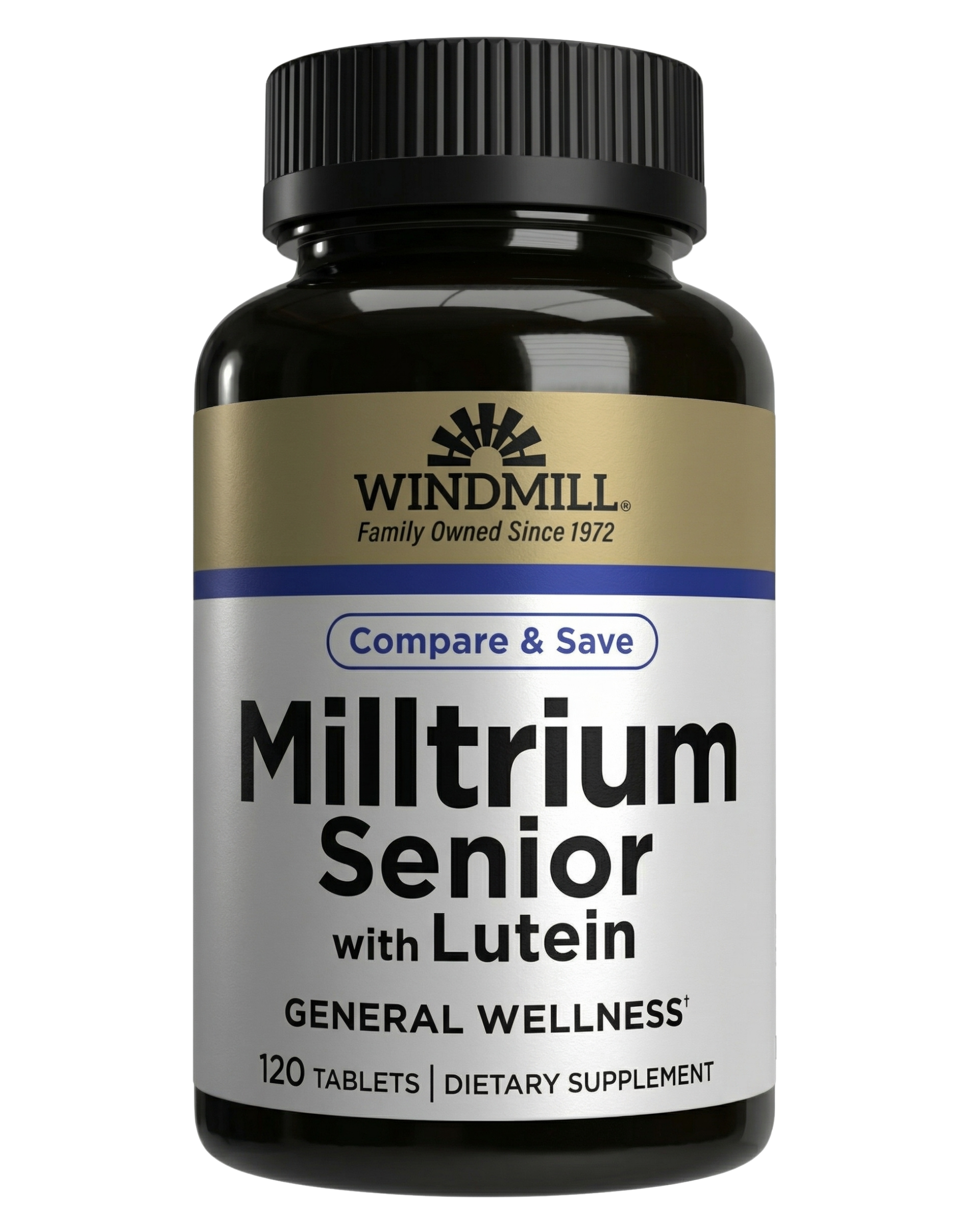
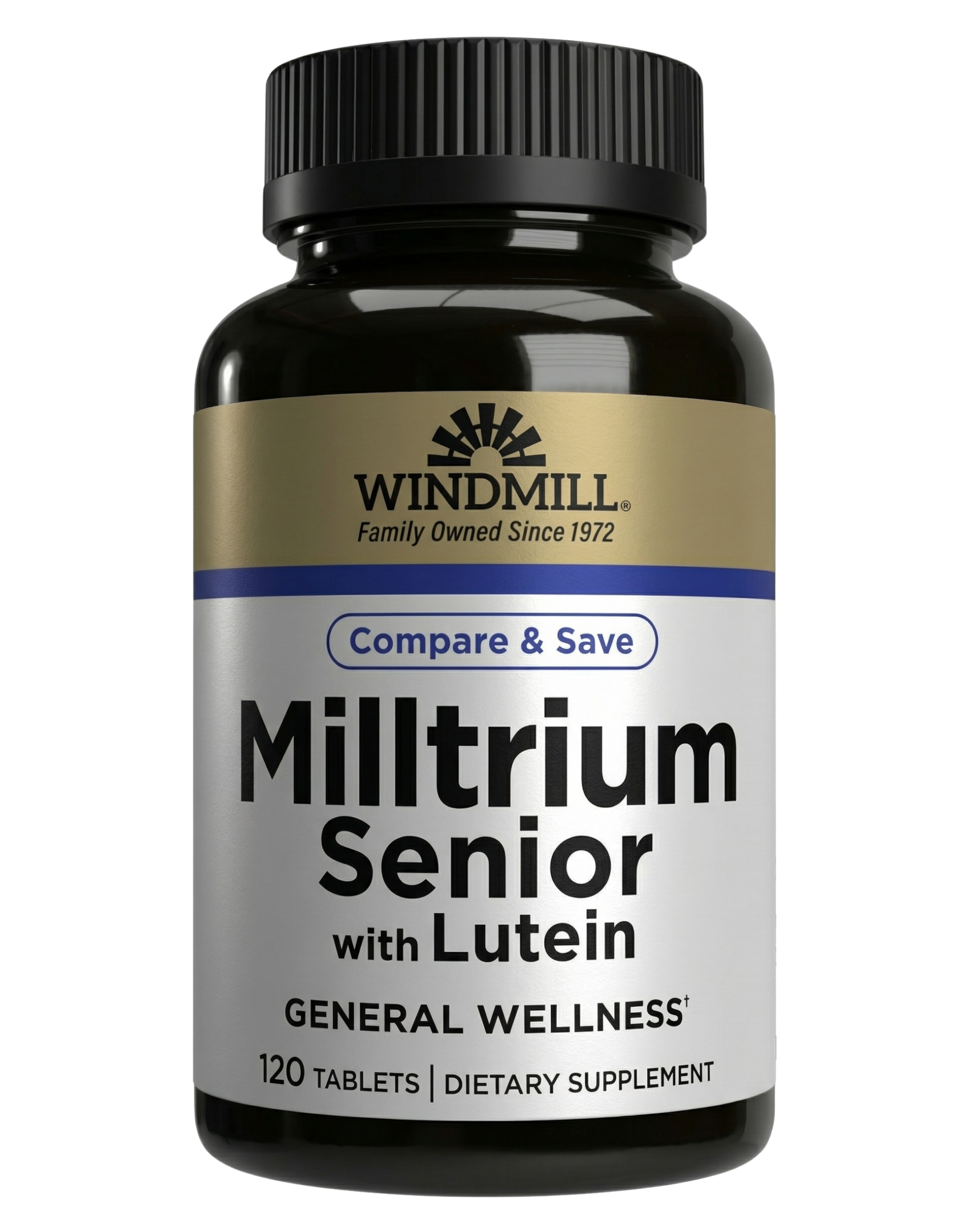
Milltrium Senior Multivitamin with Lutein Tablets 120ct
$11.99
For adults over 50 using lutein primarily for eye support, a multivitamin that includes a clinical dose of lutein is often the most practical approach. It consolidates your supplement routine without adding a separate standalone pill.
The key checklist:
- Lutein dose: 6–10 mg minimum, with 10 mg as the target
- Zeaxanthin: Should be present alongside lutein (1–2 mg)
- Fat-soluble vitamins: A, D, E, and K should be present — they support the same delivery pathway
- Iron-free formula: Most adults over 50 don't need supplemental iron, and excess iron generates free radicals
- GMP certification: Non-negotiable for quality assurance
Take your supplement with your largest meal of the day. If that meal includes avocado, olive oil, eggs, or any fat-containing food, you're optimizing absorption without doing anything complicated.
The Honest Verdict
Lutein is one of the more evidence-backed nutrients for long-term eye health — specifically at the 10 mg dose studied in AREDS2. The research is strong enough that most ophthalmologists now recommend it for patients with early signs of AMD or a family history of the condition. If your diet is low in leafy greens and you're past 50, a consistent daily supplement at the right dose is a reasonable, evidence-supported choice. Don't overthink the form — just take it with food, hit 10 mg, and make it a daily habit.
Frequently Asked Questions
Never run out.
Subscribe to any product and save 10% on your first order, 5% after. Pause or cancel anytime.
Subscribe & Save 10%Q: Can lutein reverse existing macular degeneration?
A: No supplement reverses AMD damage that's already occurred. Lutein supplementation is associated with slowing progression in early-to-intermediate AMD and reducing the risk of advancing to late-stage disease. It protects what's there — it doesn't regenerate lost photoreceptors.
Q: Can I get enough lutein from diet alone?
A: Theoretically yes. Cooked kale delivers roughly 10 mg of lutein per cup. But most adults over 50 don't eat a cup of kale daily, and cooking methods, gut absorption, and food quality all affect how much you actually get. Supplementation closes the gap reliably for people who can't hit that consistently through food.
Q: Does lutein interact with any medications?
A: Lutein has a very low interaction risk and is generally well tolerated at doses up to 20 mg daily. At very high intakes over time, carotenemia (a benign yellowing of skin) is possible but rare at typical supplement doses. If you take blood thinners or lipid-lowering drugs, mention any new supplement to your prescriber as a general precaution — not because lutein is specifically contraindicated, but because comprehensive medication review is good practice.
Where to Find Quality Lutein Supplements
Moore Vitamins carries a GMP-certified selection designed specifically for adults who want lutein at doses that match the clinical research. The Milltrium Senior Multivitamin with Lutein Tablets 120ct delivers lutein alongside a full senior-focused micronutrient profile — including vitamins D and B12 at levels calibrated for adults over 50. It's a practical way to cover both your foundational nutritional needs and your eye-health dose in a single daily tablet.
Moore Vitamins offers same-day fulfillment on in-stock items and a Subscribe & Save option so you never run low on a supplement you're taking consistently. For something like lutein — where the benefit builds over months, not days — consistency is the whole game.