Collagen for Hair, Skin & Nails: Top Questions Answered
Collagen supplements outsell almost every other beauty product on the market, yet most buyers have no idea what dose works, which form absorbs, or how long they need to wait before judging results. Research in this area has grown sharply: randomized controlled trials now show measurable improvements in skin elasticity and hydration at doses as low as 2.5–10 g of hydrolyzed collagen peptides per day, with results typically appearing between four and twelve weeks. Nail brittleness and hair-related outcomes have fewer large trials behind them, so the evidence there is promising but thinner. This overview answers every question Google surfaces most about collagen for hair, skin, and nails — including the ones where the honest answer is "the data doesn't fully support the hype."
Frequently Asked Questions About Collagen, Hair, Skin and Nails
Is collagen good for hair, skin, and nails?
Yes, with the strongest evidence applying to skin. Multiple randomized trials show that 2.5–10 g of hydrolyzed collagen peptides daily may support skin elasticity, hydration, and a reduction in fine lines after 4–12 weeks of consistent use, according to peer-reviewed research on collagen and skin elasticity. Evidence for nails is also reasonably solid — one study found a 12% increase in nail growth rate and reduced brittleness after 24 weeks. Hair outcomes are the least studied; some trials report reduced shedding, but the data are smaller and less consistent. Overall, collagen is well-tolerated and the skin benefits are real for many people.
What are the first signs that collagen is working?
Most people notice skin feeling more hydrated or "plumped" first — this can appear as early as two to four weeks at a daily dose of 5–10 g. Nail hardness and reduced breakage are often the next signal, typically around weeks six to eight. Hair changes, if they occur, tend to show up last — usually after three months or more of consistent use. Changes are subtle at first; a good benchmark is comparing the texture of your skin on the back of your hand before and after four weeks. We go deeper on timing and what to realistically expect in How Long Does It Take Collagen to Work? Timeline for Real Results in 2026.
What's the best collagen for skin, hair, and nails?
Hydrolyzed collagen peptides (also labeled "collagen hydrolysate") are the best-studied and most bioavailable form. Types I and III are most concentrated in skin and nails; Type I is also abundant in hair follicles. Powder forms allow you to hit the clinically studied dose of 5–10 g easily — capsules work but require taking several at once to reach that range. Marine collagen (fish-derived) tends to have a smaller peptide size and may absorb slightly faster than bovine sources, though head-to-head data are limited. Look for a product that lists "hydrolyzed collagen peptides" or "collagen hydrolysate" as the primary ingredient, not gelatin.
What is the downside of taking collagen?
Side effects are uncommon but worth knowing. Some people report mild digestive discomfort — bloating or a feeling of fullness — especially when starting at higher doses. Collagen has a high glycine content, which is generally safe, but people with kidney disease should speak with a doctor before supplementing, as excess protein can be taxing on impaired kidneys. Most collagen is derived from bovine, porcine, or marine sources, so it is not vegan and can be an issue for those with fish or shellfish allergies (marine collagen). Finally, collagen alone won't compensate for poor sleep, smoking, or inadequate vitamin C — your body needs vitamin C to synthesize collagen properly.
Which is better for thinning hair, collagen or biotin?
They work by different mechanisms, and neither is a guaranteed fix. Biotin (vitamin B7) supports the keratin infrastructure of hair and has solid evidence for people with a documented biotin deficiency — though true biotin deficiency is rare. Collagen provides amino acids (particularly proline and glycine) that may support the dermal layer surrounding hair follicles, and some small trials suggest it may reduce shedding. If your thinning is diffuse and diet-related, biotin supplementation is more directly studied. If your concern is scalp skin health or age-related follicle support, collagen may be the better fit. Many people use both; they do not interfere with each other.
What to avoid while taking collagen?
A few practical cautions. Avoid taking collagen with very hot liquids if your powder contains live enzymes or probiotics — heat degrades them, though collagen peptides themselves are heat-stable. Smoking actively degrades collagen in skin tissue, so supplementing while smoking will blunt results. High sugar intake triggers a process called glycation that breaks down collagen fibers; it's worth moderating added sugars alongside supplementing. There are no well-documented drug interactions with collagen peptides, but anyone on blood-thinners or immunosuppressants should mention any new supplement to their pharmacist. If you're also using a topical for your skin, see our guide to Vitamin E Cream for Skin for pairing ideas.
Does collagen shrink belly fat?
No meaningful evidence supports this claim. One small study suggested that collagen protein may be more satiating gram-for-gram than some other proteins, which could theoretically support appetite control — but that's a long way from "shrinks belly fat." Collagen is a protein supplement, not a fat burner or metabolism booster. Any weight effect would come from substituting collagen for higher-calorie foods, not from collagen acting on fat tissue directly. Do not choose or avoid collagen based on fat-loss expectations; the evidence simply isn't there.

Related Product
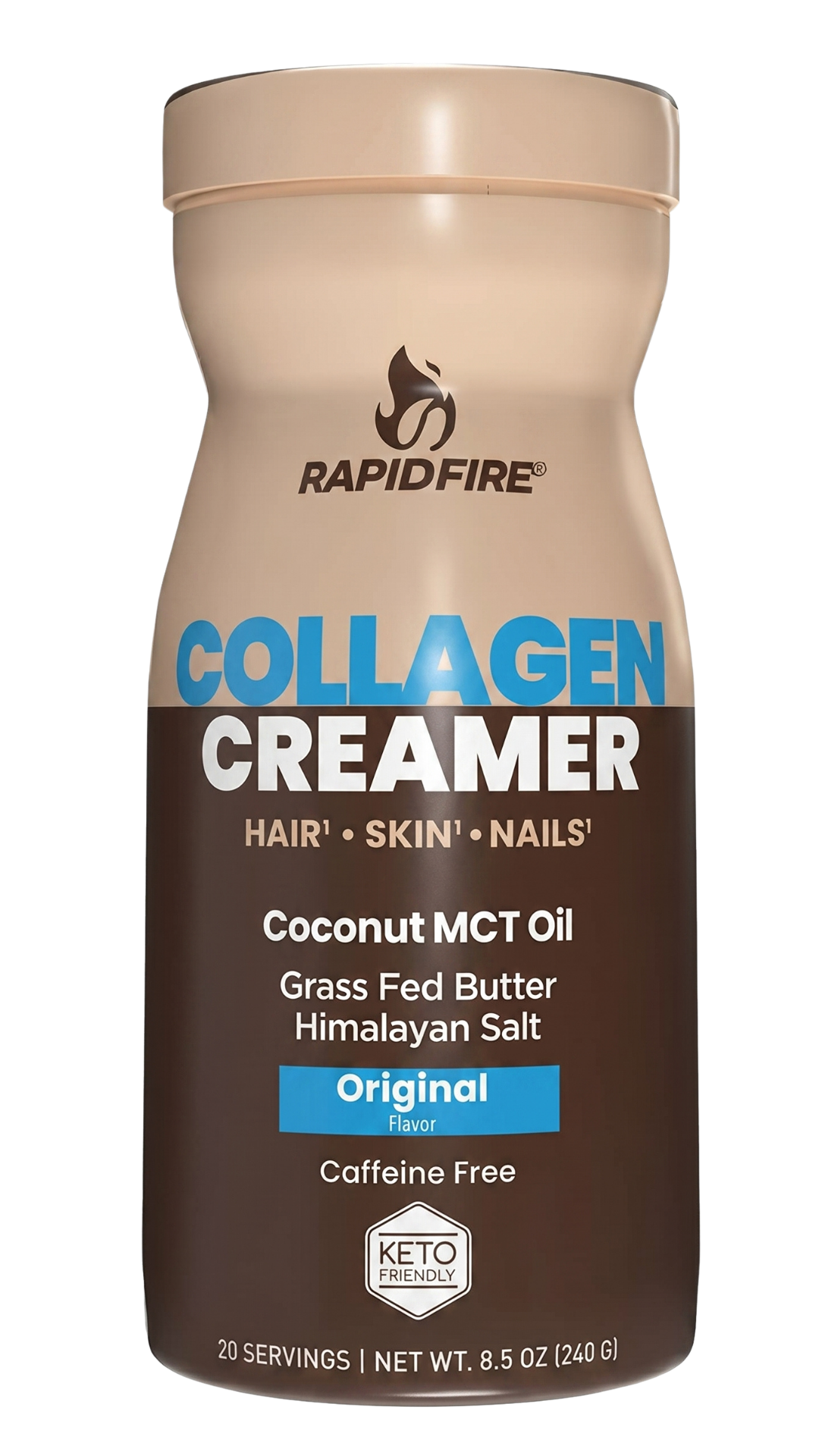
Rapid Fire Collagen Creamer Skin Support 7.55 oz
$14.99
What will happen if I take collagen every day?
For most healthy adults, daily collagen supplementation at 5–10 g is well-tolerated over the long term. Studies running up to 12 months show continued benefits to skin elasticity and hydration without significant adverse events, per peer-reviewed research on long-term collagen supplementation. Your body uses the amino acids from digested collagen peptides as building blocks, but it doesn't automatically redirect them to skin — adequate vitamin C, zinc, and overall protein intake all influence where those building blocks go. Consistency matters more than dose size; 5 g daily for twelve weeks outperforms 15 g for two weeks.
How long does it take for collagen to work?
The short answer: four weeks for early skin hydration changes, eight to twelve weeks for measurable elasticity improvements, and up to six months for nail and hair changes. Individual results vary with age, baseline collagen levels, diet, and the form of collagen used. Older adults and postmenopausal women — who have experienced more natural collagen decline — tend to show more noticeable results than younger users. For a full week-by-week breakdown of what to expect, see How Long Does It Take Collagen to Work? Timeline for Real Results in 2026.
What to Look For When Buying
Form: Powders are easiest to dose accurately. Aim for 5–10 g of hydrolyzed collagen peptides per serving. Capsules are convenient but check how many you need per day to hit that range.
Type: Types I and III are most relevant for skin, hair, and nails. Many products blend them. Marine collagen is predominantly Type I. Bovine collagen covers Types I and III.
Third-party testing: Look for GMP-certified manufacturing and third-party testing (NSF, USP, or Informed Sport seals). These confirm what's on the label is actually in the product.

Subscribe & Save
Never run out.
Subscribe to any product and save 10% on every order. Pause or cancel anytime.
Subscribe & Save 10%What to avoid: Avoid proprietary blends that hide individual ingredient doses. Skip products with excessive fillers, artificial sweeteners, or undisclosed "collagen complexes" without peptide weight listed.
Bonus ingredients: Some formulas add vitamin C, hyaluronic acid, or biotin — these can be genuinely useful companions to collagen, as long as doses are disclosed and sensible.
If you're using collagen primarily for joint and bone support rather than beauty, our guide Collagen, Glucosamine, or Calcium: Which Joint and Bone Supplement Actually Matches Your Problem? will help you choose the right fit.
The Bottom Line
Collagen peptides have the strongest evidence for skin hydration and elasticity, solid but thinner evidence for nails, and modest evidence for hair. Dose consistently at 5–10 g daily of hydrolyzed peptides, give it at least eight weeks, and pair it with adequate vitamin C for best results.
Where to Find Quality Collagen Supplements
Moore Vitamins carries a curated range of GMP-certified collagen products with same-day fulfillment and Subscribe & Save pricing for consistent daily use.
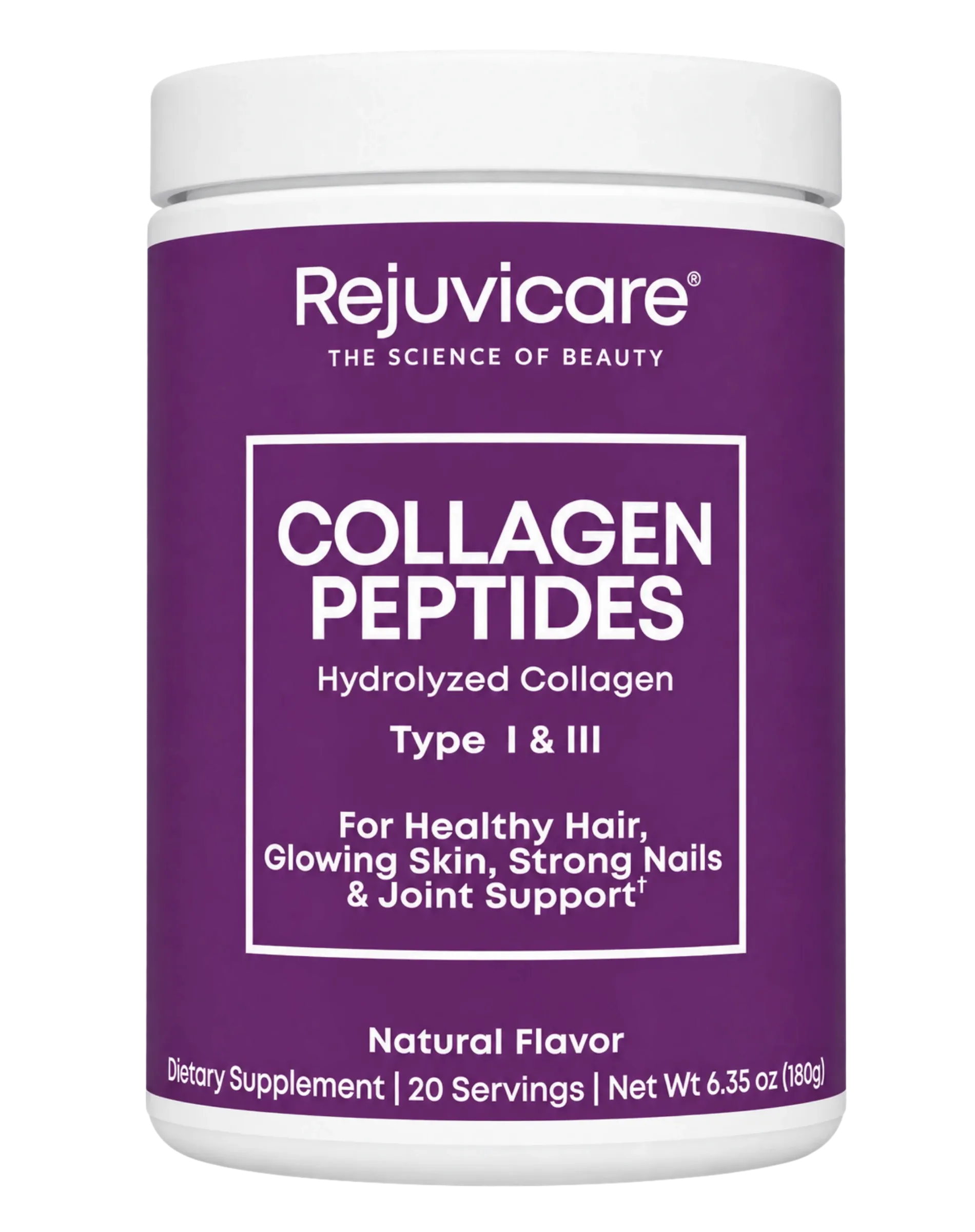
- Rejuvicare Collagen Peptides Skin & Joint Support Powder 6.35 oz — a versatile hydrolyzed peptide powder that hits the clinically studied dose range easily; a strong everyday choice.
- Rapid Fire Collagen Creamer Skin Support 7.55 oz — ideal if you want to blend your collagen into morning coffee without a separate scoop.
- Rejuvicare Super Collagen Capsules 90ct — for those who prefer a no-mix capsule format on the go.
- Country Farms Collagen + Greens Powder 10.6 oz — pairs collagen peptides with a greens blend for broader daily wellness support.
- Windmill Super Vitamin E Collagen Skin Support Cream 2 oz — a topical option to complement your internal collagen routine, combining vitamin E and collagen for surface skin support.
Never miss a dose.
Evidence-based wellness guides like this one, in your inbox. No hype, no spam — unsubscribe anytime.