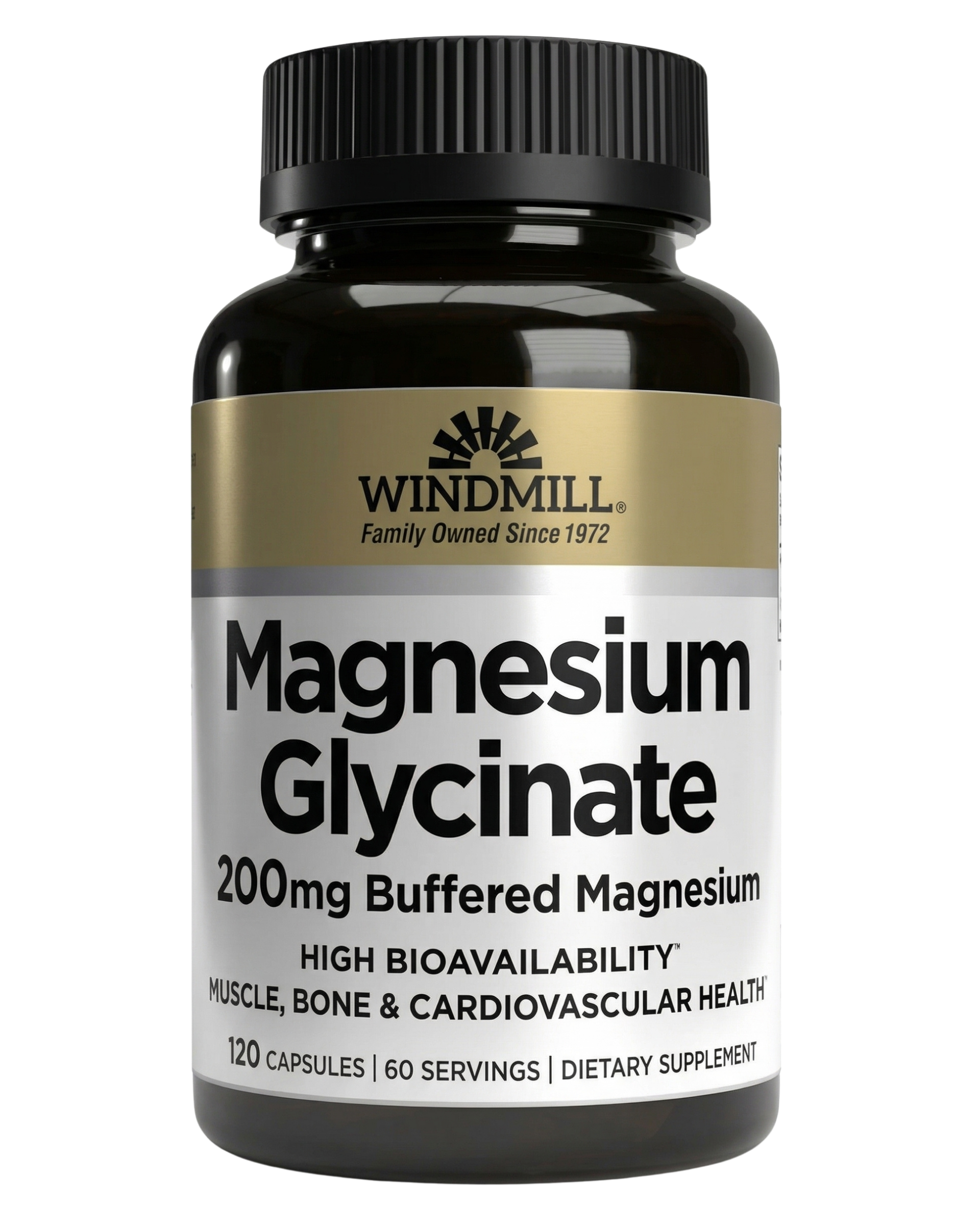
Magnesium Glycinate vs. Other Forms: Why the Form You Take Determines How Much You Actually Absorb
> Quick Answer: The form of magnesium you take matters more than the dose on the label. Magnesium glycinate is chelated — bound to the amino acid glycine — which allows it to absorb through a completely different intestinal pathway than cheaper forms like magnesium oxide. The result: significantly more magnesium actually enters your bloodstream, and far less ends up causing digestive distress.
Does the Form of Magnesium Really Change How Much You Absorb?
Yes — dramatically. Bioavailability varies from as low as 4% (magnesium oxide) to roughly 80% (magnesium glycinate) depending on the compound. That means two products with identical "200 mg magnesium" labels can deliver wildly different amounts to your cells.
The reason comes down to chemistry. Inorganic magnesium salts like oxide and carbonate must be broken down by stomach acid before magnesium ions can be absorbed across the intestinal wall. That process is inefficient. Chelated forms like glycinate skip this step — the magnesium is already bonded to an amino acid, and amino acid transporters in your small intestine pull the whole molecule through intact.
This isn't a minor difference. If you're taking magnesium oxide at 200 mg and absorbing 4%, you're getting roughly 8 mg of usable magnesium. The same dose as glycinate at ~80% bioavailability delivers closer to 160 mg. That's a 20x difference.
The Absorption Breakdown: Every Major Magnesium Form Ranked
Here's what the research shows across the most common forms:
| Form | Estimated Bioavailability | GI Side Effects | Best For |
|---|---|---|---|
| Magnesium Oxide | ~4% | High (laxative effect) | Constipation relief only |
| Magnesium Carbonate | ~30% | Moderate | Budget supplementation |
| Magnesium Citrate | ~25–35% | Moderate | General use, bowel prep |
| Magnesium Malate | ~50–60% | Low | Energy, muscle soreness |
| Magnesium Glycinate | ~70–80% | Very low | Daily supplementation, sleep, calm |
| Magnesium L-Threonate | High (brain-specific) | Very low | Cognitive support |
Glycinate's edge over citrate often surprises people. Citrate is water-soluble and popular, but it still relies heavily on passive diffusion. Glycinate uses active transport — a dedicated carrier system — making it more efficient even when stomach acid is low (common in adults over 50 and anyone on acid-reducing medication).
What People Get Wrong About Magnesium Absorption
Mistake #1: Judging a supplement by the mg on the label.
The number shown is elemental magnesium before accounting for bioavailability. Always check the form, not just the dose.
Mistake #2: Assuming more magnesium = more benefit.
Higher doses of poorly absorbed forms mostly reach the large intestine unabsorbed — and pull water in, causing loose stools. That's not therapeutic, it's just waste.
Mistake #3: Taking magnesium on an empty stomach.
Food slows gastric emptying, giving magnesium more contact time with the intestinal wall. Taking it with a meal may support absorption by 10–20%.
Mistake #4: Taking it with calcium at the same time.
Calcium and magnesium compete for the same intestinal transporters. If you take both, space them at least 2 hours apart. Take calcium in the morning, magnesium in the evening.
Mistake #5: Ignoring vitamin D status.
Vitamin D upregulates the TRPM6 and TRPM7 channels responsible for active magnesium transport. Low vitamin D means impaired magnesium absorption, regardless of the form you take.
How to Actually Maximize Your Magnesium Absorption: A Practical Protocol
Follow this step-by-step approach starting today:
Step 1: Choose glycinate form specifically.
Look for "magnesium glycinate" or "magnesium bisglycinate" on the label. These are the same chelated compound. Avoid oxide for anything beyond occasional constipation relief.
Related Product
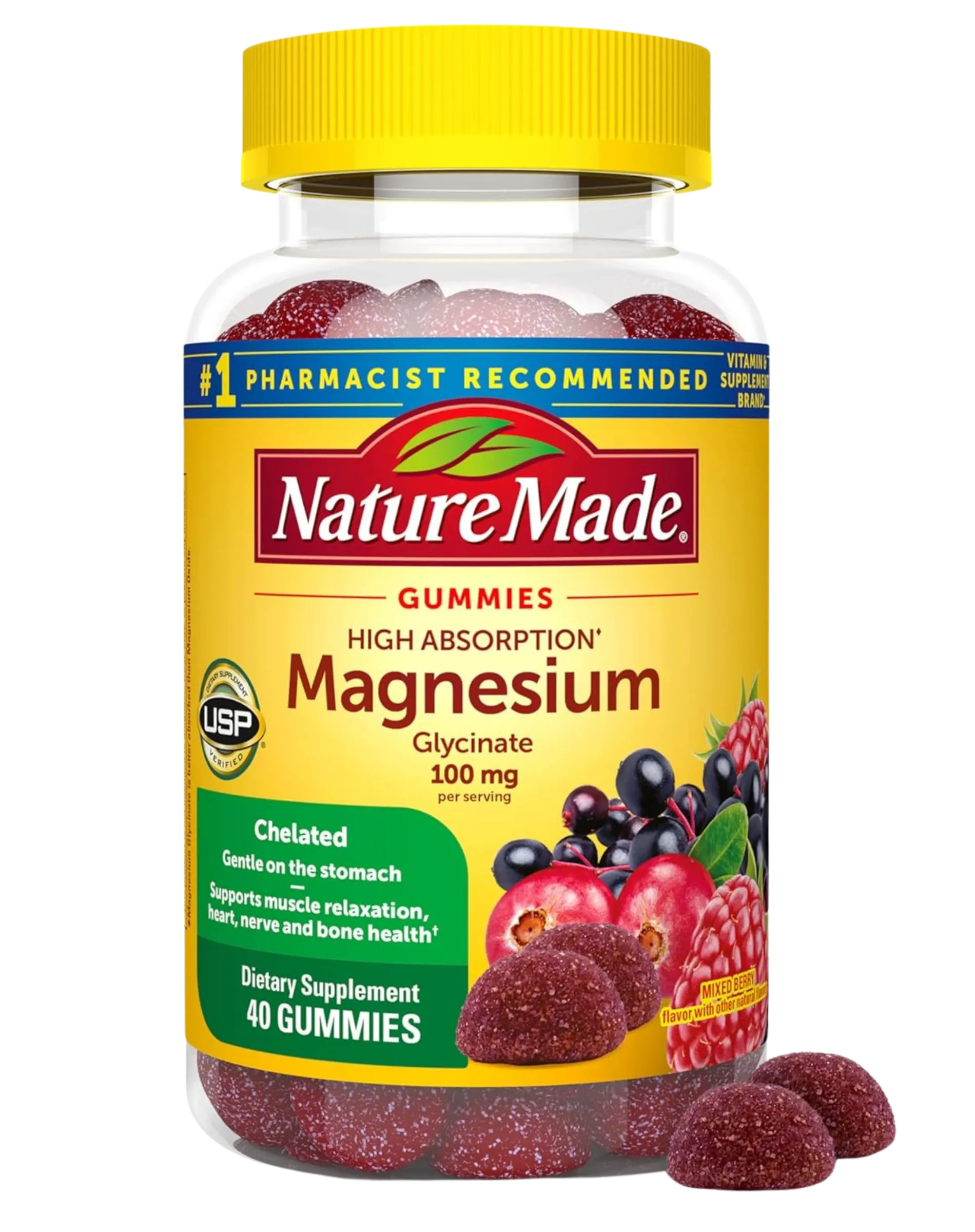
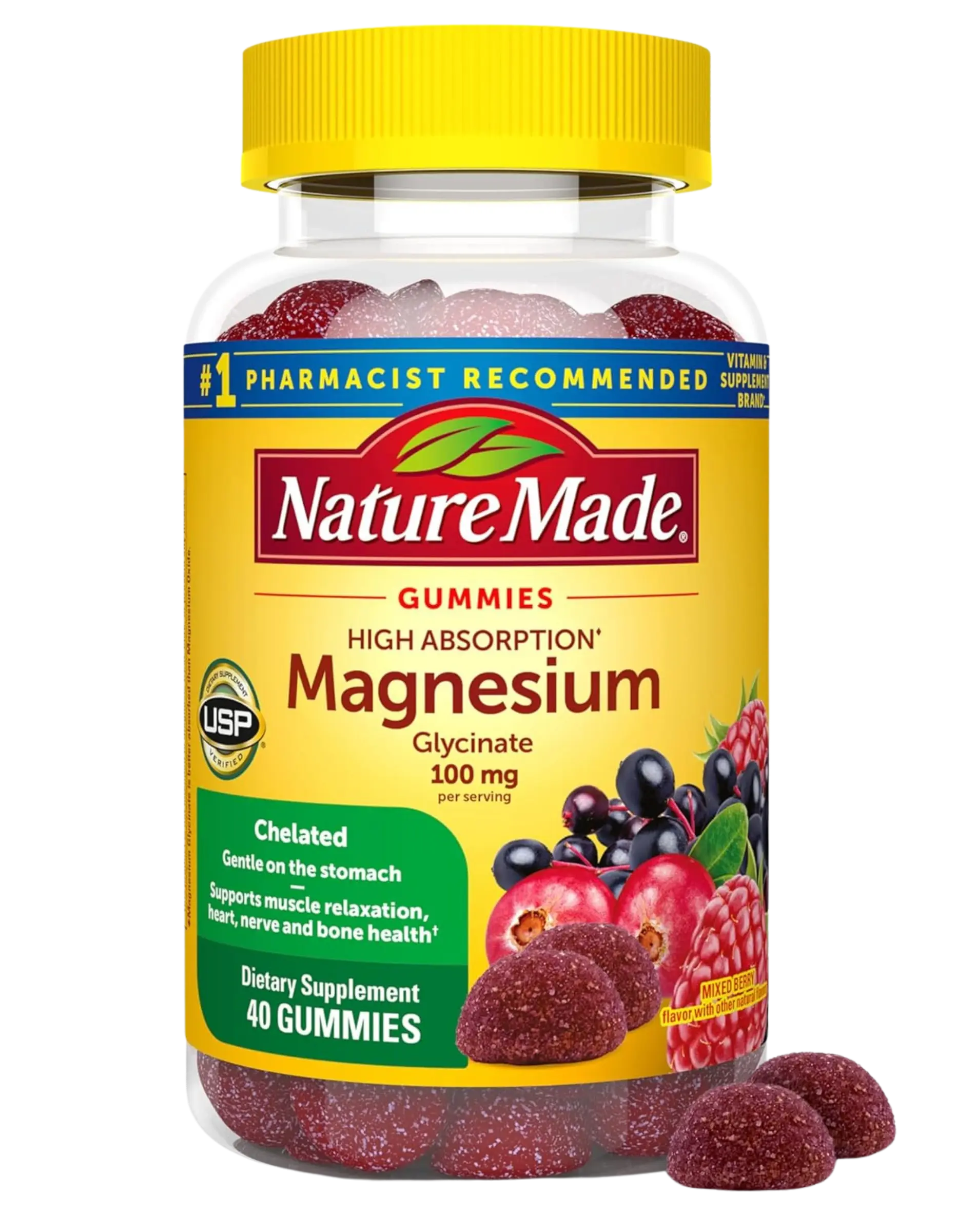
Nature Made Magnesium Glycinate High Absorption Gummies 40ct
$14.99
Step 2: Take it with your evening meal.
Evening is ideal for two reasons — food enhances absorption, and magnesium glycinate may support relaxation and sleep quality. The glycine component is associated with calming neurological effects.
Step 3: Keep the dose under 350 mg elemental magnesium at once.
Absorption becomes less efficient at high single doses. If you're taking more than 350 mg daily, split it into two doses — morning and evening.
Step 4: Check your vitamin D level.
If your 25-OH vitamin D is below 30 ng/mL, your magnesium absorption is likely impaired regardless of form. Address both together.
Step 5: Space away from calcium, zinc, and iron.
All four minerals share overlapping transporter pathways. Take magnesium at least 2 hours away from these other minerals for best results.
Step 6: Be consistent for 4–6 weeks.
Intracellular magnesium levels take time to replenish. Most benefits — including sleep improvement, muscle recovery, and stress response — become noticeable after 4 weeks of consistent use, not 4 days.
Frequently Asked Questions
Q: Can I switch from magnesium citrate to glycinate without changing my dose?
Never run out.
Subscribe to any product and save 10% on your first order, 5% after. Pause or cancel anytime.
Subscribe & Save 10%A: Yes, but you may want to start with a slightly lower dose of glycinate. Because glycinate absorbs more efficiently, the same elemental magnesium amount will have a greater effect. Start at 75% of your previous dose and adjust from there.
Q: Is magnesium glycinate safe to take every day long-term?
A: Research suggests daily use is well-tolerated for most adults. The tolerable upper intake level for supplemental magnesium is 350 mg/day for adults — doses above this may cause loose stools even with glycinate, though it's far less likely than with other forms. Always consult your healthcare provider if you have kidney disease, as impaired kidneys cannot regulate magnesium excretion normally.
Q: Do gummy forms absorb as well as capsules?
A: For glycinate specifically, gummy delivery can maintain comparable absorption because the chelate bond remains intact through digestion. The key is that the form listed is still magnesium glycinate — the delivery vehicle (gummy vs. capsule) matters less than the chemical compound itself.
Find the Right Supplement at Moore Vitamins
If you're ready to switch to a high-absorption form, Nature Made Magnesium Glycinate High Absorption Gummies 40ct delivers magnesium in the chelated glycinate form — the same high-bioavailability compound discussed throughout this article, in a convenient gummy format that's easy to build into an evening routine.
Moore Vitamins offers same-day fulfillment and a Subscribe & Save option so you never break your supplementation streak mid-month. Consistency is everything with magnesium — your absorption protocol only works if you actually take it.
Keep Reading
Never miss a dose.
Evidence-based wellness guides like this one, in your inbox. No hype, no spam — unsubscribe anytime.