Ashwagandha in 2026: Why This Ancient Root Is Now the Go-To for Modern Stress
Why Everyone Is Talking About Ashwagandha Right Now
Stress in 2026 looks different than it did a decade ago. It's not just deadline pressure or financial anxiety — it's the low-grade, always-on cortisol load that comes from hyper-connected work schedules, fragmented sleep, and news cycles that never stop. More people than ever are searching for something that actually takes the edge off without sedating them, fogging their brain, or requiring a prescription.
Ashwagandha has become the supplement category answer to that search. Google Trends data shows sustained, not spiking, interest — the kind that signals a trend becoming a habit. And unlike a lot of wellness darlings, this one has clinical trials behind it, not just influencer endorsements.
What's driving the 2026 conversation specifically is a shift in who is using it. It's no longer just the yoga-and-Ayurveda crowd. Athletes are using it for recovery and performance under pressure. Corporate professionals are using it for sustained focus. Parents are using it to flatten the anxiety curve that builds through the week. The use case has broadened because the evidence has deepened.
What Ashwagandha Actually Is
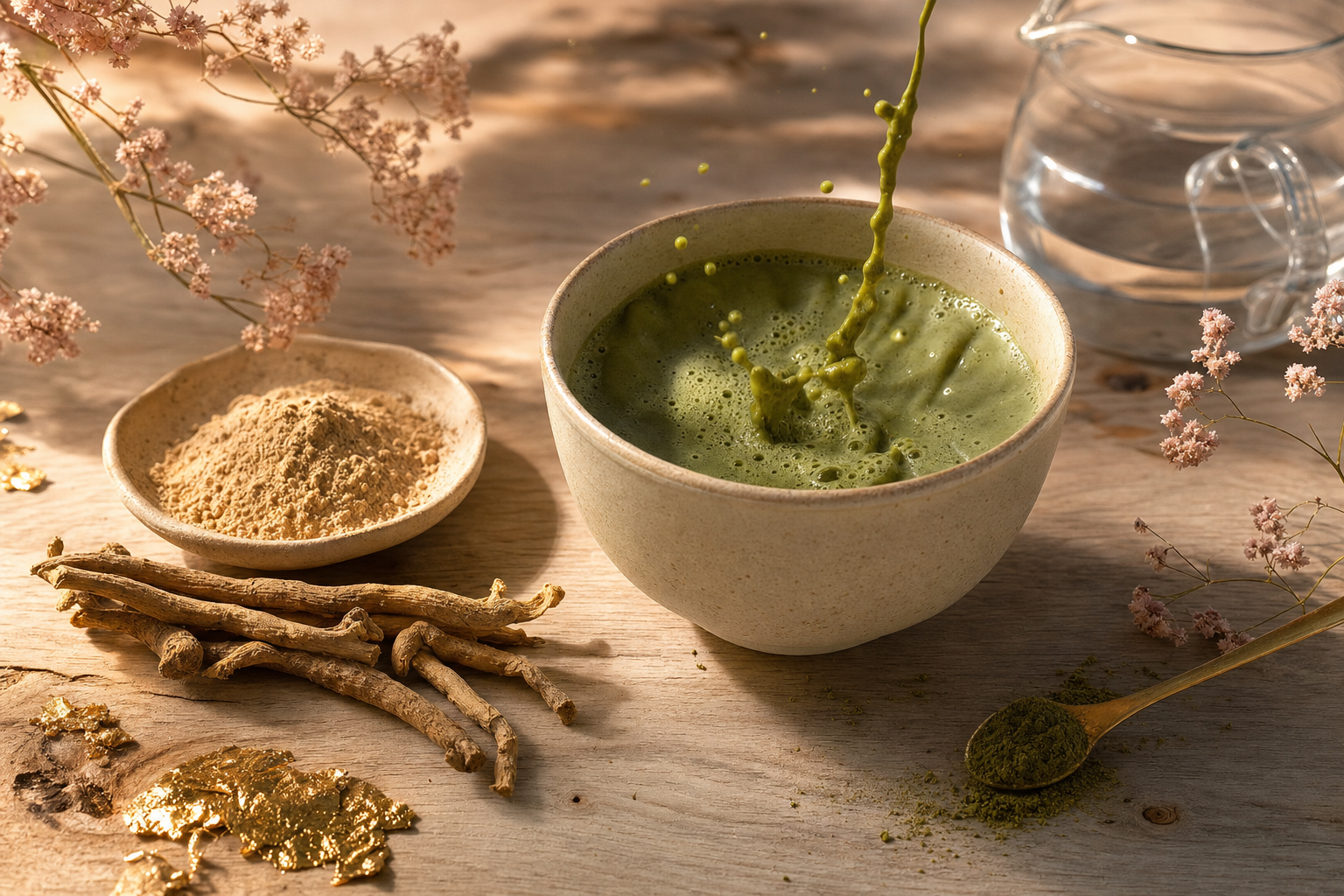
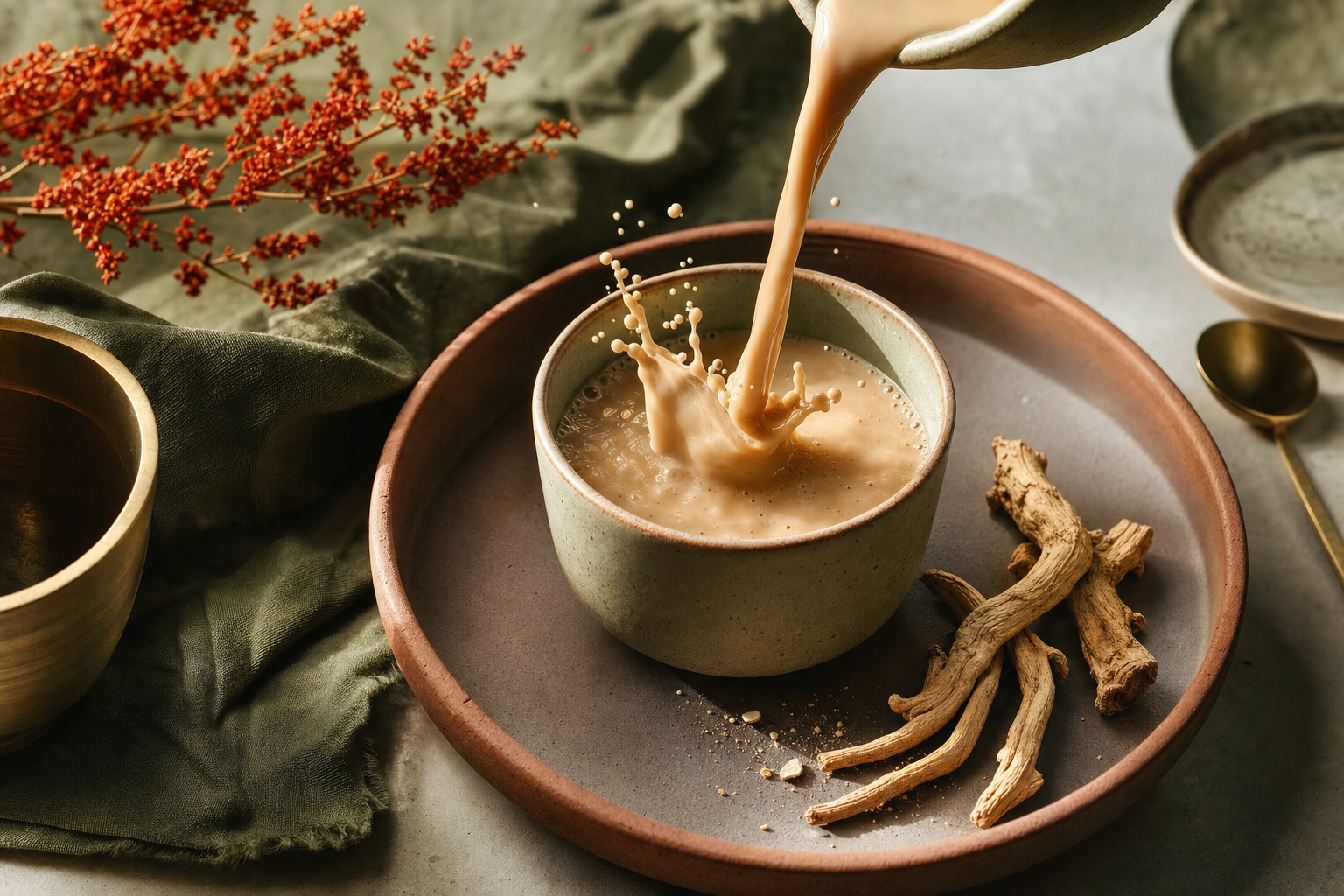
Ashwagandha (Withania somnifera) is a root used for over 3,000 years in Ayurvedic medicine — India's traditional health system. Its name translates roughly to "smell of horse," which is either a dealbreaker or irrelevant once you understand what it does.
It belongs to a class of herbs called adaptogens — compounds that may support the body's ability to regulate its stress response rather than simply suppressing it. The active compounds are withanolides, a group of steroidal lactones concentrated primarily in the root. These compounds are what researchers focus on when studying ashwagandha's effects on cortisol, the brain, and the adrenal system.
The mechanism is not sedation. Ashwagandha doesn't knock you out or blunt your emotions. Research suggests it works by modulating the HPA axis — the hypothalamic-pituitary-adrenal system that governs how your body ramps up and winds down its stress response. That's a meaningful distinction from something like valerian root or melatonin, which primarily target sleep.
What the Current Research Shows
The evidence for ashwagandha and stress is among the strongest in the adaptogen category — and that's not hype, that's a direct reading of the literature.
Cortisol reduction: Multiple double-blind, placebo-controlled trials — the gold standard — have found that ashwagandha supplementation is associated with measurable reductions in serum cortisol. A widely cited 2012 study published in the Indian Journal of Psychological Medicine found participants taking 300mg of root extract twice daily showed significantly lower cortisol levels and self-reported stress scores at 60 days compared to placebo.
Anxiety and perceived stress: A 2019 randomized controlled trial in Medicine found that 240mg daily of ashwagandha extract was associated with significant reductions in anxiety and morning cortisol levels. The effect sizes were clinically meaningful, not just statistically significant — an important distinction.
Sleep quality: Stress and sleep are inseparable. Research suggests ashwagandha may support sleep onset and quality, likely through the same HPA axis modulation. A 2020 study in PLOS ONE found notable improvements in sleep efficiency and total sleep time over 8 weeks.
What remains unclear: Most studies run 8–12 weeks. Long-term data (12+ months) is still limited. Dosing is not fully standardized across the research, which makes direct comparisons tricky. And like all supplements, individual response varies — genetics, baseline cortisol levels, and lifestyle factors all influence outcomes.
Bottom line: ashwagandha has more rigorous human trial data than almost any other stress supplement. It's not a cure. But the signal is real and consistent.
Who Benefits Most From Ashwagandha
Ashwagandha is not for everyone, but it is for a broader group than most people realize.
High-cortisol, high-output professionals — If your stress is chronic and low-grade rather than acute and episodic, ashwagandha's cortisol-modulating profile fits that pattern well. It's designed for the long game, not the panic attack.
People struggling with stress-related sleep disruption — If anxiety is why you can't wind down at night, this is a more targeted option than a generic sleep supplement.
Athletes and active people — Exercise itself is a stressor. Research suggests ashwagandha may support recovery, muscle endurance, and the hormonal resilience needed to train consistently without burning out.
Related Product
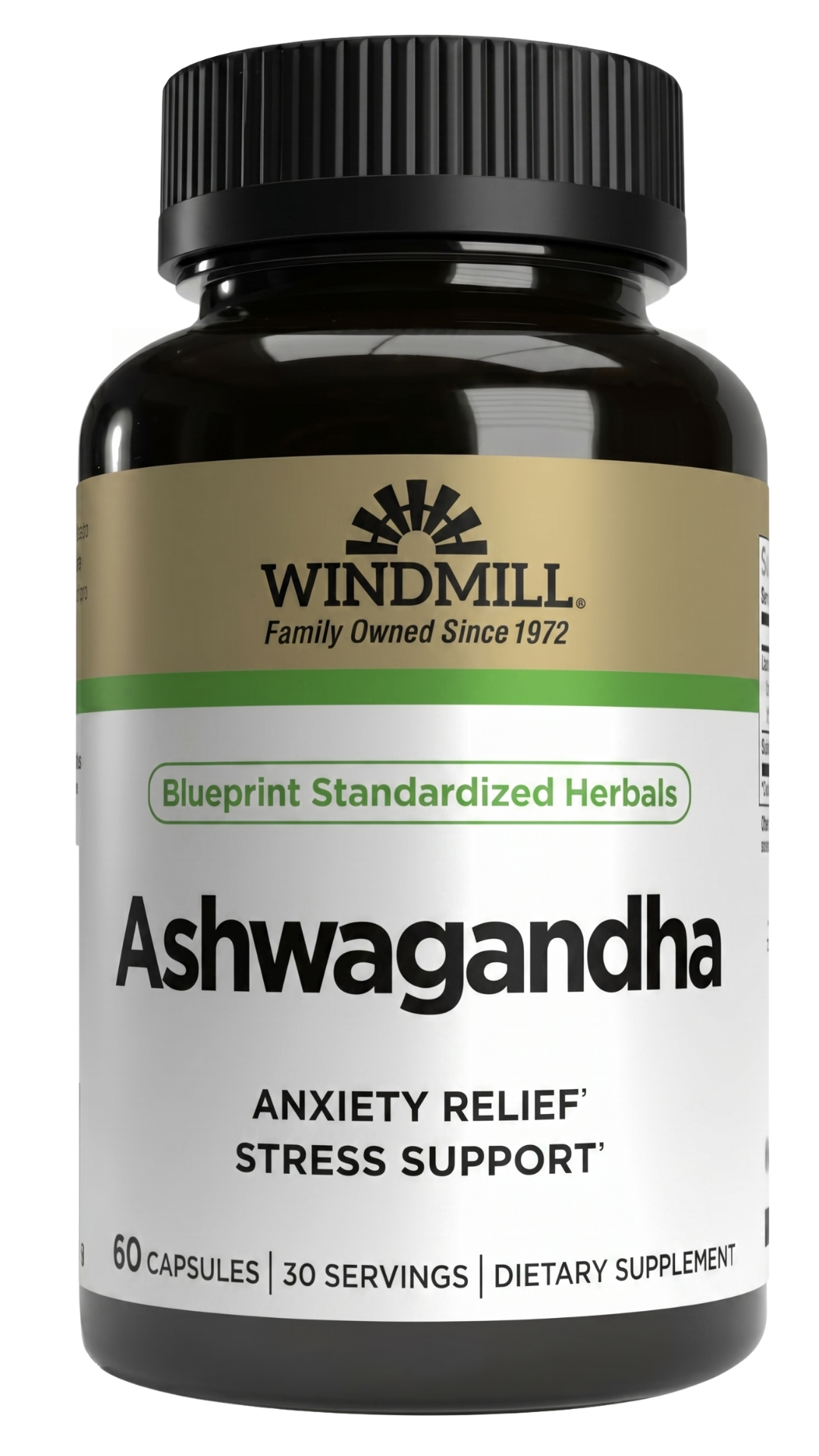
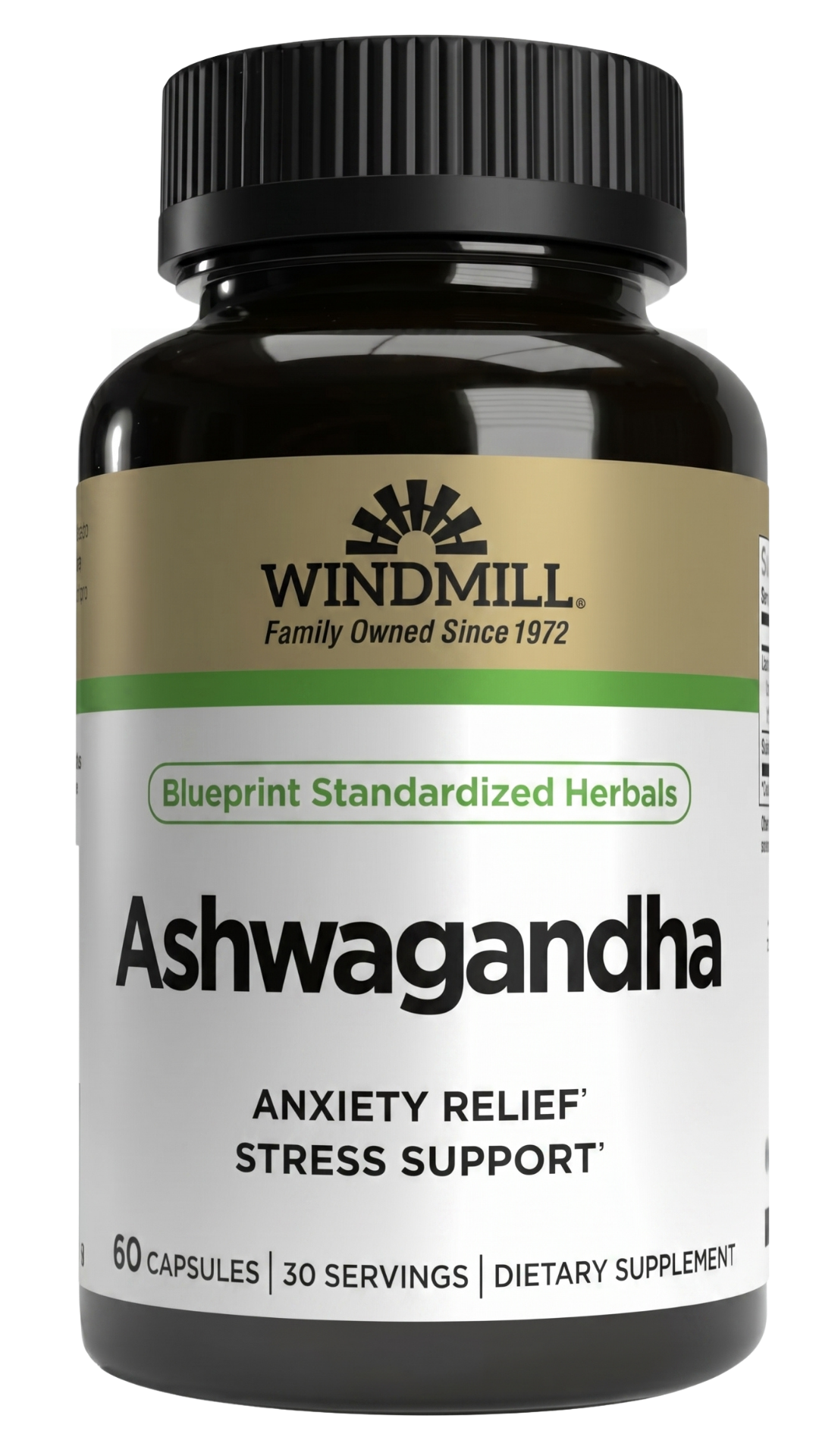
Windmill Ashwagandha Stress & Mood Support Capsules 60ct
$12.99
Adults 35 and older — Cortisol regulation tends to become less efficient with age. This is also when stress-related fatigue becomes more noticeable and harder to bounce back from.
Who should approach with caution: People with thyroid conditions (ashwagandha may influence thyroid hormones), those who are pregnant or breastfeeding, and anyone on immunosuppressants or sedative medications should consult a healthcare provider before starting.
How to Choose a Quality Ashwagandha Supplement
This is where the market gets murky. Not all ashwagandha is equal — and given the popularity surge, the number of low-quality products has grown alongside the good ones.
Form matters: Root extract is more potent and better studied than whole root powder. Look for a standardized extract that specifies withanolide content — typically 2.5%–5% withanolides signals a quality product.
Dosage range: Clinical trials have generally used 240mg–600mg of root extract daily. Products that don't disclose the amount of actual extract (not just the weight of the capsule contents) are a red flag.
What to look for on the label:
- Standardized withanolide percentage
- Root extract (not just "ashwagandha powder")
- GMP-certified manufacturing
- Third-party testing or verification
What to avoid: Proprietary blends that obscure actual dosing, products that combine ashwagandha with 15 other adaptogens at trace doses, and any product making disease treatment claims.
Timing: Most research dosed ashwagandha twice daily with meals. Consistency over 6–8 weeks matters more than timing precision.
Never run out.
Subscribe to any product and save 10% on every order. Pause or cancel anytime.
Subscribe & Save 10%Frequently Asked Questions
Q: How long does ashwagandha take to actually work for stress?
A: Most clinical trials show measurable effects at 6–8 weeks of consistent daily use. Some people notice a shift in baseline stress levels within 2–3 weeks, but expect the full benefit to build over time — this is not an acute anxiety remedy like magnesium or L-theanine. Think of it as recalibrating your stress response system, not switching it off.
Q: Can I take ashwagandha every day long-term?
A: The available research supports daily use for periods of 8–12 weeks, and many practitioners recommend cycling — such as 8–10 weeks on, 2–4 weeks off — though this is precautionary rather than evidence-based. Long-term safety data beyond one year is limited. At typical supplement doses, it is generally well tolerated, but ongoing use warrants periodic check-ins with your healthcare provider.
Q: Does ashwagandha make you drowsy or affect your ability to focus?
A: Unlike sedatives or heavy anxiolytics, ashwagandha does not typically cause daytime drowsiness at standard doses. The mechanism is cortisol and HPA axis modulation — not GABAergic sedation. Many users report feeling calmer but clearer, which aligns with what the research on HPA regulation would predict. If anything, reducing excessive cortisol load may actually support cognitive clarity.
Explore Ashwagandha Supplements at Moore Vitamins
If you're ready to try ashwagandha with a formulation built for both stress and mood support, Windmill Ashwagandha Stress & Mood Support Capsules 60ct is a focused option worth considering. It delivers ashwagandha root extract in a straightforward capsule format — no unnecessary fillers, no buried dosing — manufactured to GMP standards and available with Moore Vitamins' same-day fulfillment.
Consistency is what makes ashwagandha work. Having a 60-count supply on hand removes the friction that breaks the habit. Start there.