Biotin 5,000 vs 10,000 mcg: Which Dose Do You Need?
Most people grab the highest biotin dose on the shelf — because more must be better, right? The research doesn't support that logic, and your kidneys flush most of it before it ever reaches your hair follicle. The Adequate Intake for biotin set by the NIH Office of Dietary Supplements is just 30 mcg per day for adults — a number that makes 10,000 mcg look almost comically large. Studies using supplemental biotin for hair and nail concerns have mostly tested doses in the 2,500–5,000 mcg range, with no convincing evidence that doubling to 10,000 mcg doubles any benefit. Biotin is water-soluble, which means your body excretes what it can't use. If you're healthy, have no diagnosed deficiency, and take biotin mainly for general hair or skin support, the dose decision matters more for your wallet than your biology. If you have a specific condition — or if you've read conflicting advice across product labels — this breakdown tells you exactly where each dose fits.
Why the Dose Gap Between 5,000 and 10,000 mcg Is Bigger Than It Sounds
Jumping from 5,000 to 10,000 mcg sounds like a modest step up. In reality, you're doubling a dose that already sits 166 times above the daily Adequate Intake. That doesn't mean it's dangerous — biotin has a strong safety record with no established tolerable upper limit — but it does mean the gap is physiologically meaningful only in narrow circumstances.
Biotin works as a coenzyme for five carboxylase enzymes that regulate fat, carbohydrate, and amino acid metabolism. Once those enzymes are saturated, additional biotin circulates until it's filtered out. Most people eating a varied diet already have functional biotin levels. Supplementing at any dose above deficiency correction is essentially speculative territory, which is worth keeping in mind before upsizing your bottle.
What the Research Actually Shows
Evidence linking high-dose biotin supplements to measurable hair or nail improvements is limited and mostly small-scale. A handful of case reports and small studies suggest benefit — but primarily in people with underlying biotin deficiency, brittle nail syndrome, or certain metabolic disorders.
A 2017 case series in the Journal of Clinical and Aesthetic Dermatology reported improvements in hair and nail quality with 2,500 mcg doses over several months. Research hasn't reliably extended those findings to the 10,000 mcg tier with better outcomes. As we covered in depth in Does Biotin Actually Grow Hair? The Science Behind the Hype, the evidence for biotin in people without a deficiency is genuinely weak — at any dose.
One clinical scenario where higher doses appear in the literature: biotinidase deficiency, a rare inherited condition. People with this enzyme disorder may require pharmacological doses, but that's always physician-directed — not a shelf-shopping decision.
When 5,000 mcg Makes More Sense
For the vast majority of supplement users, 5,000 mcg is the smarter starting point. Here's why:
- It matches the doses most studied in the limited clinical literature on hair and nail support.
- It's easier to adjust. If you see no benefit after 90 days, you can step up. Starting at 10,000 mcg leaves you nowhere to go.
- Lower cost over time. If you're supplementing long-term, the savings compound.
- Reduced lab interference risk. This matters more than most people realize (see below).
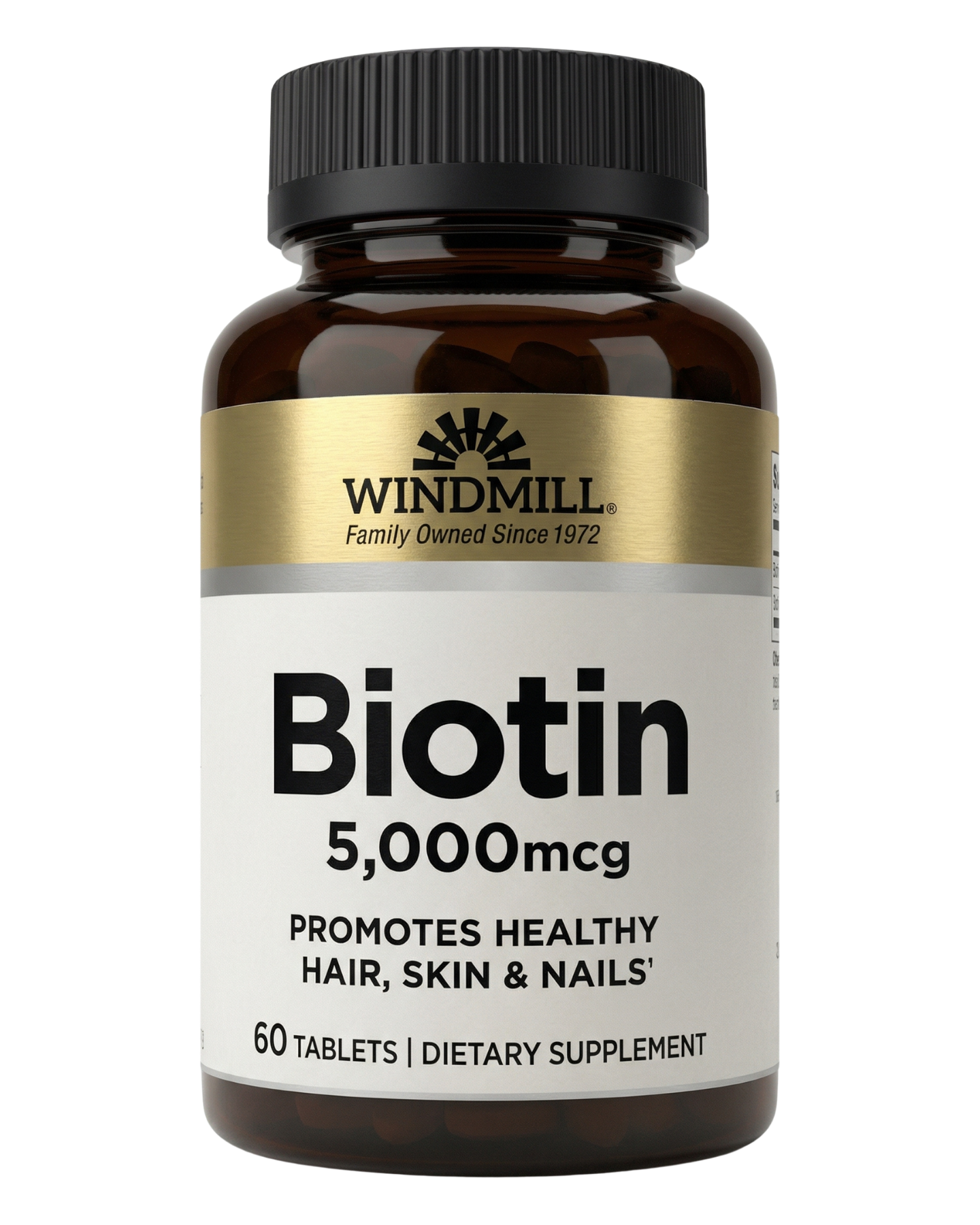
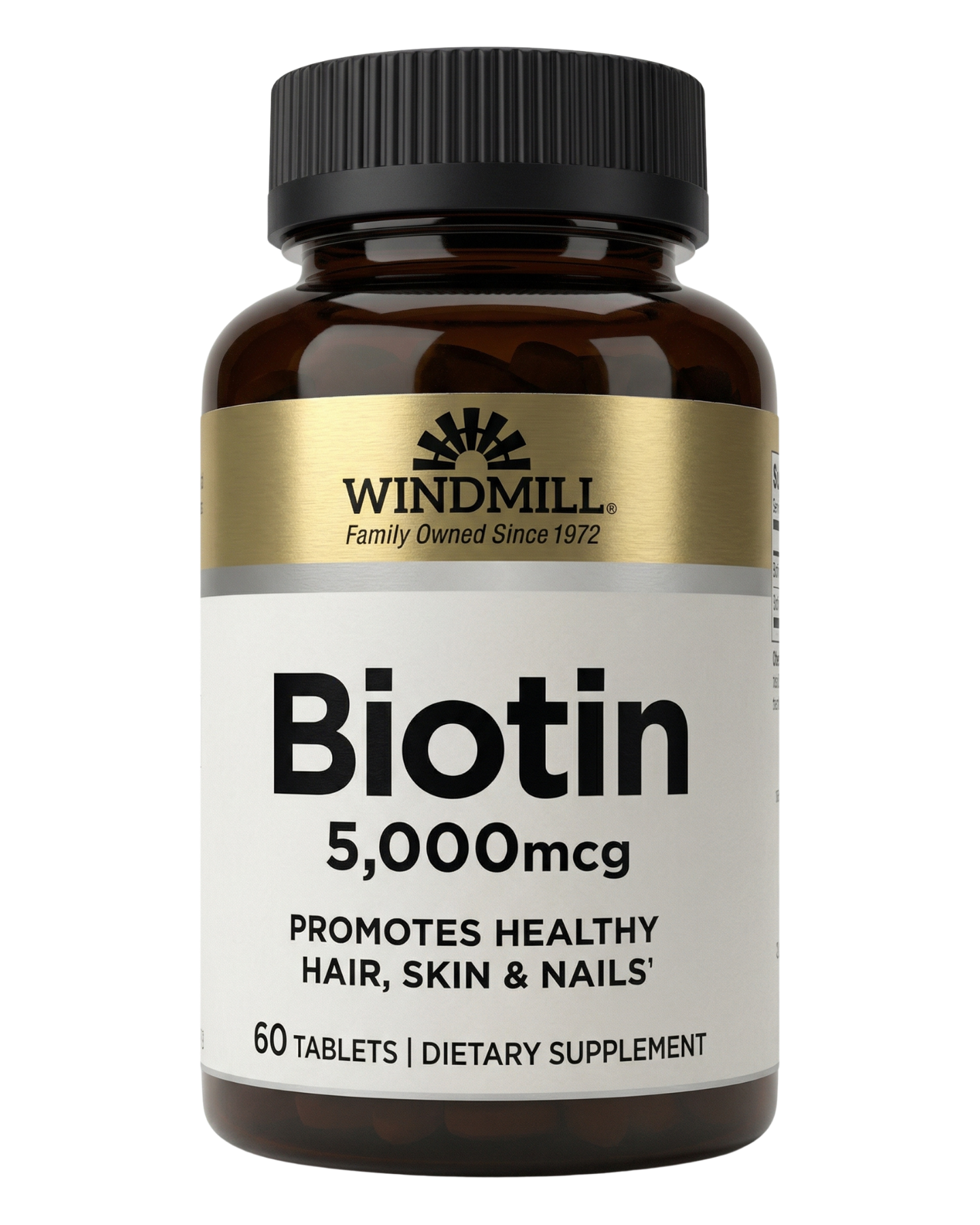
The Biotin 5000mcg Hair & Skin Support Tablets 60ct is a straightforward, no-frills option that delivers a clinically relevant dose without overshoot.
When 10,000 mcg Has a Real Argument
There are situations where 10,000 mcg isn't just marketing:
Brittle nails specifically. Some dermatology literature suggests higher doses may be more consistently effective for nail plate integrity than for hair. The nail matrix has different keratin production dynamics, and some practitioners recommend 5,000–10,000 mcg for documented brittle nail syndrome.
Malabsorption conditions. Crohn's disease, chronic alcohol use, and prolonged antibiotic use can deplete biotin absorption. Someone dealing with gut-level absorption issues may need a higher dose to achieve the same functional result as a healthy absorber at 5,000 mcg.
Persistent deficiency symptoms. If you show symptoms — thinning hair, scaly rash around the mouth, fatigue, neurological tingling — that haven't responded to a lower dose after a full supplement cycle, stepping up (ideally with a doctor's sign-off) is reasonable.
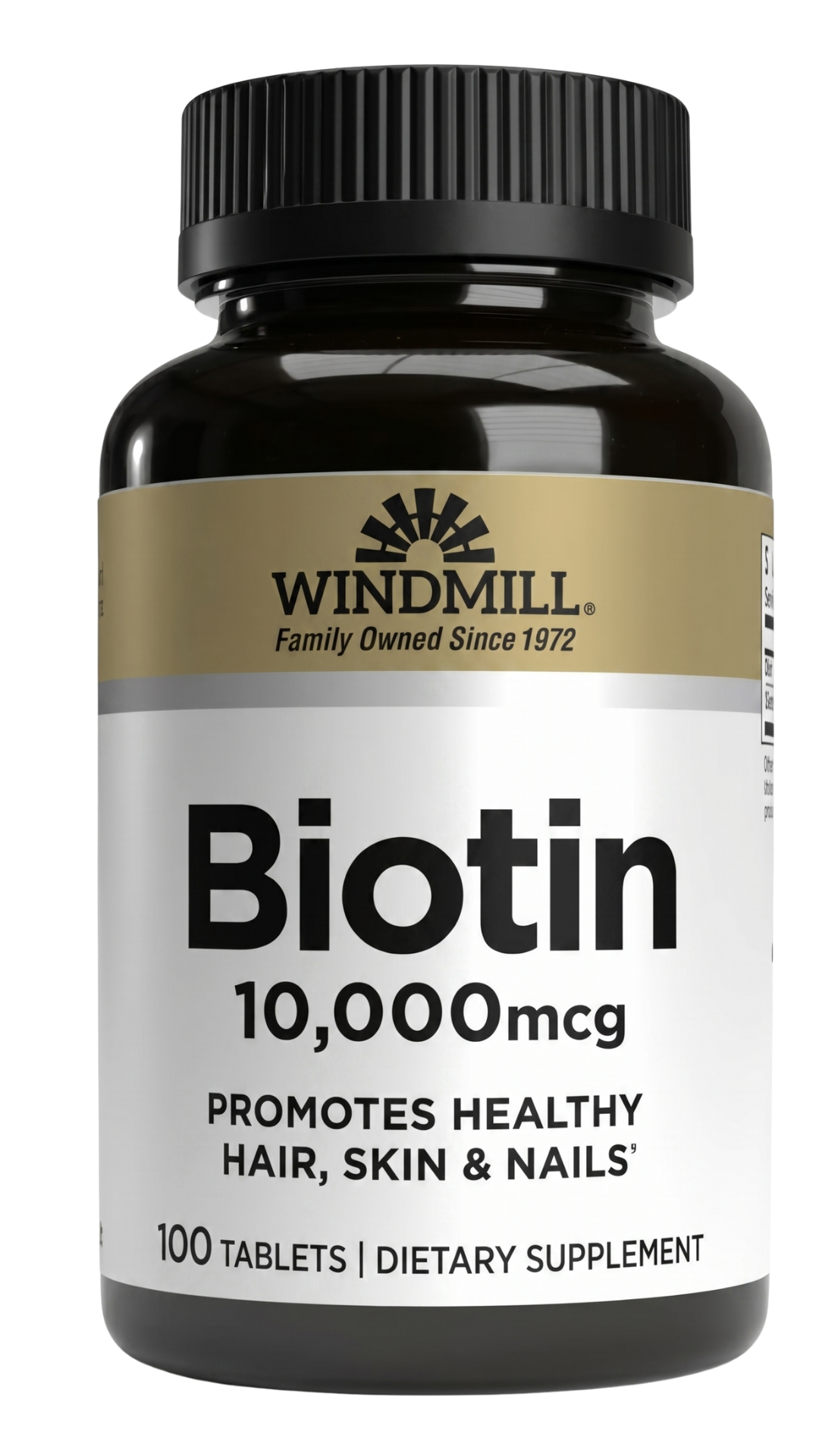
The Windmill Biotin 10,000mcg Hair & Skin Support Tablets 100ct is worth considering if you fall into one of these categories and want a larger supply for sustained use.
The Lab Interference Problem — Read This Before You Dose Up
This is the most under-discussed issue in the biotin conversation. The FDA issued a safety communication warning that high-dose biotin supplements interfere with dozens of common lab tests — including thyroid panels, troponin (cardiac) tests, hormone assays, and vitamin D measurements.
The interference occurs because many immunoassays use a biotin-streptavidin reaction. Excess circulating biotin from supplements competes with the assay's own biotin, producing falsely high or falsely low results. At 5,000 mcg, the risk is lower. At 10,000 mcg, it's significant enough that most labs now ask patients to stop biotin supplementation 48–72 hours before bloodwork.
If you get regular bloodwork — especially thyroid or cardiac panels — this is a practical reason to prefer the lower dose unless you have a specific medical reason for the higher one. Timing your supplements wisely, as explored in Which Supplements Absorb Better at Night?, can also affect how you structure your routine around lab appointments.
Related Product
Biotin 5000mcg Hair & Skin Support Tablets 60ct
$9.99
What to Look For When Buying
Form: Tablets are fine for biotin. Unlike some fat-soluble nutrients, biotin doesn't require special delivery formats. Gummies often contain sugars and lower confirmed doses — tablets give you better dose control.
Dose transparency: The label should state the exact mcg of biotin (not a "hair blend" that buries the actual amount). Both 5,000 and 10,000 mcg products should state it plainly.
What to avoid: Proprietary blends that obscure individual ingredient amounts. Fillers like artificial dyes or high-fructose sweeteners in gummy formats. Vague "supports growth" language with no dose listed.
Quality signals: GMP-certified manufacturing. Third-party testing or Certificate of Analysis availability. Clear expiration dating. Both products in Moore Vitamins' biotin lineup meet GMP standards — that's the baseline you should require from any brand.
Standalone vs. complex: If you're already taking a B-complex, check whether it already contains biotin. Stacking a B-complex with a 10,000 mcg standalone biotin tablet pushes your total intake even higher without clear benefit.
The Honest Verdict
Start at 5,000 mcg unless you have brittle nails, a diagnosed malabsorption issue, or a clear deficiency picture. The evidence doesn't justify 10,000 mcg as a default, and the lab interference risk alone is a practical reason to stay lower unless you have specific cause to go higher. Give either dose a genuine 90-day trial — hair growth cycles are slow, and two-week experiments tell you nothing.
Frequently Asked Questions
Q: Can I take biotin every day long-term at 10,000 mcg?
Never run out.
Subscribe to any product and save 10% on your first order, 5% after. Pause or cancel anytime.
Subscribe & Save 10%A: Biotin has no established upper tolerable limit and is generally considered safe at high doses. That said, daily 10,000 mcg use does meaningfully increase your risk of lab test interference. If you get regular bloodwork, inform your doctor and stop supplementing 48–72 hours before testing.
Q: How long before I see results from biotin supplementation?
A: Hair growth cycles run approximately 3–6 months. Nail turnover is similarly slow. Most honest practitioners recommend a minimum 90-day trial before evaluating results. Anyone promising visible changes in days or weeks is overselling.
Q: Does taking biotin with food improve absorption?
A: Biotin absorbs well with or without food, but taking it with a meal is associated with fewer reports of nausea at higher doses. There's no strong evidence that food significantly changes biotin bioavailability the way it does for fat-soluble vitamins.
Where to Find Quality Biotin Supplements
Moore Vitamins carries GMP-certified biotin in both key dose formats, with same-day fulfillment and a Subscribe & Save option for long-term users.
- For most people starting out: Biotin 5000mcg Hair & Skin Support Tablets 60ct
- For brittle nails, malabsorption, or higher-dose needs: Windmill Biotin 10,000mcg Hair & Skin Support Tablets 100ct
Pick the dose that matches your situation — not the one with the biggest number on the label.
Never miss a dose.
Evidence-based wellness guides like this one, in your inbox. No hype, no spam — unsubscribe anytime.