The Cortisol-First Approach: Why Managing Your Stress Hormone Is the Missing Piece in Anxiety Relief
Why Everyone Is Talking About Cortisol Right Now
Search "cortisol" on any social platform in 2026 and you'll find millions of posts — morning routines designed around it, diets built to lower it, wearables that claim to track it. The conversation has exploded beyond fitness circles and into mainstream wellness. And for good reason: people are exhausted, wired, and not sleeping. They've tried "stress relief" supplements before and felt nothing. Now they're asking a smarter question: what is actually driving the stress response in my body?
The answer, almost always, is cortisol.
This matters because the supplement market is flooded with generic "calm" formulas that address symptoms — jitteriness, racing thoughts, tension — without touching the underlying hormonal loop that causes them. When you understand cortisol's role, you stop shopping for vague relaxation and start choosing tools that actually interrupt the cycle. That shift in thinking is what makes the cortisol-first approach different.
What the Cortisol-Anxiety Connection Actually Is
Cortisol is your primary stress hormone, released by the adrenal glands in response to perceived threats — real or imagined. In short bursts, it's essential. It sharpens focus, mobilizes energy, and helps you respond to pressure. The problem is modern life keeps that threat signal switched on. Work deadlines, phone notifications, financial pressure, poor sleep — your adrenal glands don't distinguish between a deadline and a predator. They just keep releasing cortisol.
Chronically elevated cortisol does measurable damage. It disrupts sleep architecture, blunts mood-regulating neurotransmitters like serotonin and dopamine, promotes fat storage around the abdomen, and — critically — sensitizes the nervous system so you become more reactive to stress over time, not less. That's the vicious loop. Stress raises cortisol. Elevated cortisol makes the brain more stress-reactive. Repeat.
Anxiety, in many cases, is not a standalone condition. It's a downstream symptom of a dysregulated HPA axis — the hypothalamic-pituitary-adrenal system that governs cortisol output. Treating anxiety without addressing HPA dysregulation is like mopping the floor without turning off the tap.
What the Current Research Shows
The science on cortisol modulation has matured significantly in the last few years. Here's where the evidence stands:
Adaptogens are the most researched category. Specifically, Withania somnifera — better known as ashwagandha — has accumulated the strongest clinical dataset of any stress-related botanical. Multiple double-blind, placebo-controlled trials have demonstrated that standardized ashwagandha extracts may support healthy cortisol levels already within normal range, with participants in key studies reporting statistically significant reductions in perceived stress scores, improved sleep quality, and better mood stability compared to placebo groups.
The KSM-66 and Sensoril distinction matters. Not all ashwagandha extracts are equal. Root-based extracts (like KSM-66) and full-spectrum root-and-leaf extracts (like Sensoril) are the forms used in clinical research. Both are standardized to withanolide content — the active compounds believed responsible for cortisol-modulating effects. Research suggests 300–600 mg daily of a standardized extract is the effective range.
What's still emerging: Longer-term effects beyond 12-week study windows, optimal timing of dosing (morning vs. evening), and how ashwagandha interacts with individual cortisol patterns across different demographics. The foundational evidence is solid; the nuance is still being mapped.
What's mostly hype: "Stress-busting" blends loaded with B-vitamins and passionflower at sub-therapeutic doses, marketed with clinical-sounding language but built around ingredient decks that wouldn't move the needle in any published study.
Who Benefits Most From a Cortisol-First Approach
This approach is specifically useful for people who recognize themselves in one or more of these patterns:
- The wired-but-tired profile. You're exhausted but can't fall asleep. You feel mentally "on" even when your body is depleted. This is a textbook sign of dysregulated evening cortisol.
- High-output professionals. Sustained cognitive demand — managing teams, making high-stakes decisions, long hours — keeps the HPA axis chronically activated. The stress isn't episodic; it's structural.
- People with physical stress loads. Intense training, irregular sleep schedules, shift work, or extended travel all elevate cortisol. Athletes in particular often overlook adrenal load as a recovery factor.
- Anyone who's tried "relax" supplements and felt nothing. If magnesium glycinate and chamomile tea haven't touched your anxiety, you may be dealing with a cortisol pattern that requires a more targeted adaptogenic approach.
This is not a substitute for professional mental health support. If anxiety is significantly impairing your daily function, that warrants clinical evaluation. Supplements work best as part of a comprehensive strategy — good sleep, consistent movement, and stress management practices included.
Related Product
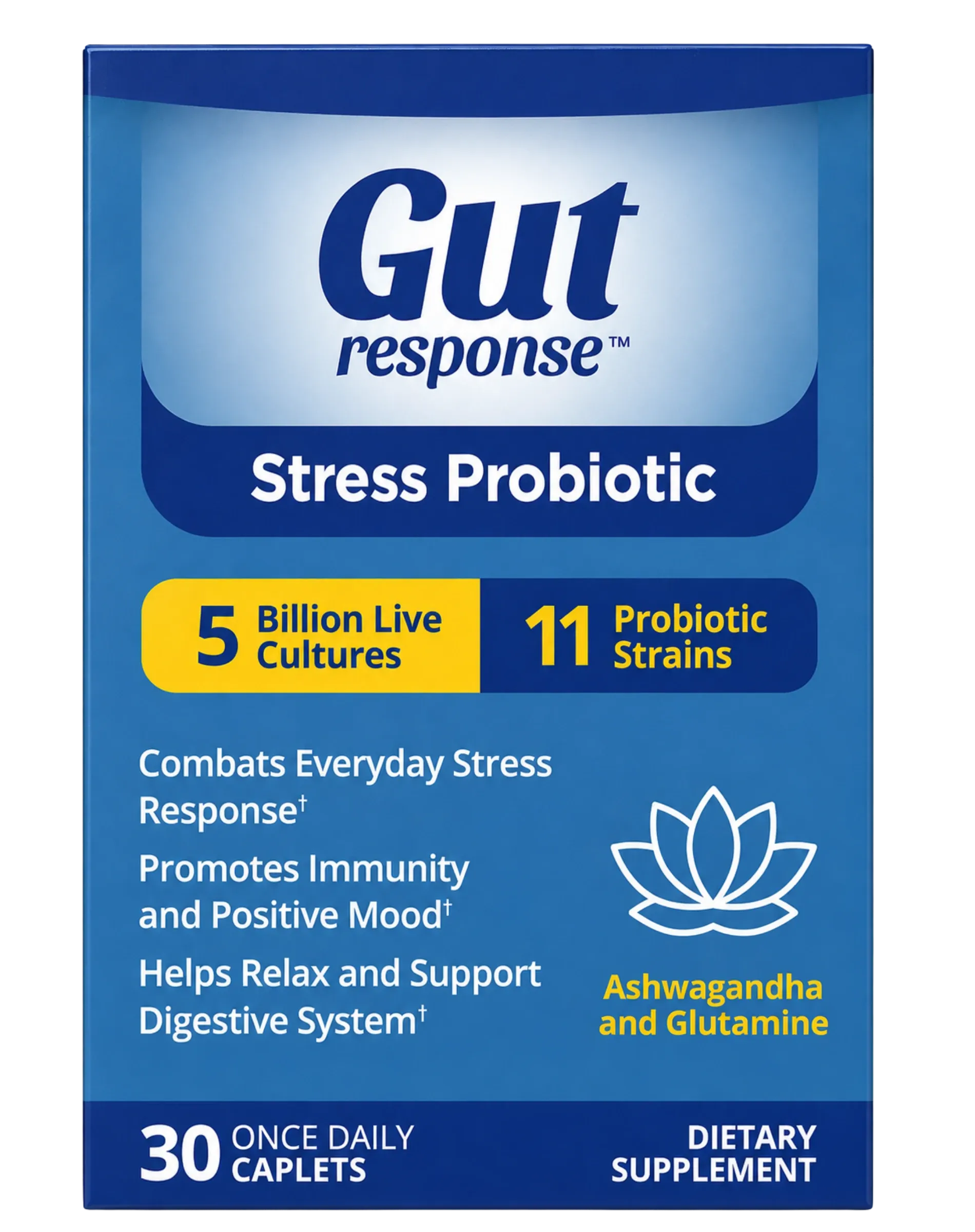
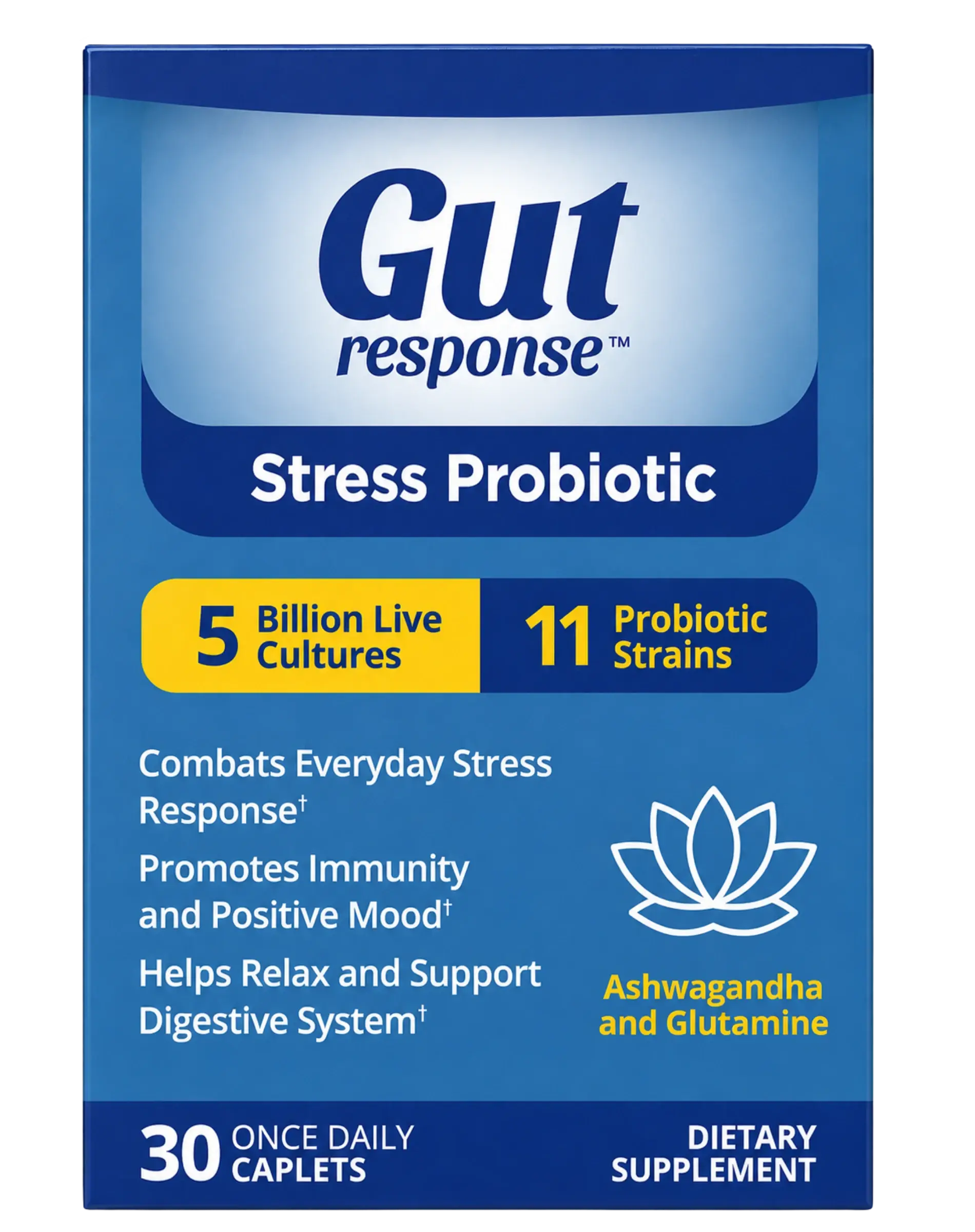
Gut Response Stress Probiotic Mood & Digestive Support Caplets 30ct
$9.99
How to Choose a Quality Ashwagandha Supplement
The market is crowded. Here's how to cut through it:
Form matters first. Look for root extract or full-spectrum root-and-leaf extract, standardized to at least 5% withanolides. Unstandardized powders or proprietary blends with undisclosed ashwagandha content are a gamble.
Dose with intention. Clinical research has used 300–600 mg of standardized extract daily. Below 300 mg, you're unlikely to see meaningful results. Formulas that list ashwagandha as one ingredient among twenty, without disclosing per-ingredient amounts, should raise a flag.
Look for GMP certification. Good Manufacturing Practices certification means the product is produced in a facility with verified quality controls. It's the baseline standard for supplement safety and label accuracy.
Additional mood-support ingredients can be synergistic — but only when dosed appropriately. Compounds like L-theanine, lemon balm, or rhodiola have their own evidence bases. A formula that combines ashwagandha with complementary adaptogens at real doses can be worth considering.
What to avoid: Proprietary blends that hide individual ingredient amounts, products without third-party testing information, and anything promising to "eliminate" stress — that's not how biology works.
Frequently Asked Questions
Never run out.
Subscribe to any product and save 10% on your first order, 5% after. Pause or cancel anytime.
Subscribe & Save 10%Q: How long does ashwagandha take to work for stress and anxiety?
A: Most clinical studies show measurable changes in perceived stress and cortisol markers after 4–8 weeks of consistent daily use. Some people notice improved sleep quality within the first two weeks, but meaningful mood and anxiety benefits typically require sustained use. It's not an acute remedy — it's a hormonal recalibration tool.
Q: Can I take ashwagandha if I'm already on anxiety medication?
A: Always consult your prescribing physician before adding any supplement alongside prescription medications. Ashwagandha may have mild interactions with sedative medications or thyroid drugs given its influence on hormone pathways. It's a conversation worth having — not a reason to automatically avoid it.
Q: Is it better to take ashwagandha in the morning or at night?
A: Current evidence doesn't definitively favor one timing over the other for all users. Those using it primarily for stress resilience and cognitive performance often prefer morning dosing. Those targeting sleep quality and evening cortisol elevation often find nighttime dosing more effective. Some formulas are split across both. Experiment within a consistent routine and give it at least four weeks before evaluating.
Explore Stress & Mood Support at Moore Vitamins
If the cortisol-first approach resonates with you, your starting point should be a well-formulated, standardized ashwagandha supplement — not a grab-bag relaxation blend.
Windmill Ashwagandha Stress & Mood Support Capsules 60ct delivers ashwagandha in a dedicated stress and mood support formula, produced under GMP-certified manufacturing standards. Moore Vitamins ships same-day on qualifying orders, so you're not waiting weeks to begin a protocol that rewards consistency.
Start with the biology. The stress relief follows.
Never miss a dose.
Evidence-based wellness guides like this one, in your inbox. No hype, no spam — unsubscribe anytime.