The Gut-Brain Axis: Why Your Stress Lives in Your Stomach (and What to Do About It)
Your stomach is not just reacting to your stress — it is helping create it. Roughly 95% of your body's serotonin is produced in the gut, not the brain, and disruptions to your gut microbiome can trigger measurable anxiety responses through what researchers now call the gut-brain axis. Peer-reviewed research on the gut-brain axis and anxiety has accumulated rapidly: multiple clinical trials now show that targeted probiotic strains reduce cortisol output and self-reported stress scores in healthy adults under psychological stress. At the same time, the adaptogen ashwagandha (KSM-66 and Sensoril extracts) has been validated in double-blind trials to lower serum cortisol by 14–30% over 60 days. If your current stress strategy only targets the brain — through breathing exercises, therapy, or sleep hygiene — you may be leaving the gut half of this equation completely unaddressed. People dealing with chronic stress, stress-related bloating, or mood that tanks after illness will find the most actionable takeaways here.
Why Everyone Is Talking About the Gut-Brain Axis Right Now
Three forces converged in 2025 and 2026 to push gut-brain research from academic journals onto mainstream wellness radar. First, long-COVID data revealed that post-viral microbiome disruption was strongly correlated with anxiety and depression outcomes — forcing gastroenterologists and psychiatrists into the same research conversations for the first time at scale. Second, wearable stress-tracking technology gave millions of people objective cortisol-pattern data, which repeatedly showed stress spikes aligning with gut disturbance events. Third, the FDA's accelerating interest in psychobiotics — probiotic formulations with documented mental health endpoints — signaled that this is no longer fringe science.
The result: a wave of people who previously treated gut health and mental health as completely separate categories are now asking whether there is a smarter, integrated approach. The answer, increasingly, is yes.
What the Gut-Brain Axis Actually Is
The gut-brain axis is a bidirectional communication network linking your central nervous system to your enteric nervous system — the 500 million neurons embedded in your gastrointestinal tract. The vagus nerve is the primary highway: it carries signals from gut microbes up to the brain and stress signals from the brain back down to the gut. This is why chronic anxiety causes digestive problems and why a destabilized gut microbiome can worsen anxiety — causation flows in both directions simultaneously.
Your gut microbiome produces and modulates neurotransmitters directly: GABA, serotonin, dopamine precursors, and short-chain fatty acids that influence brain inflammation. When your microbial balance is disrupted — by antibiotics, poor diet, chronic stress itself, or illness — neurotransmitter production becomes erratic. Your brain registers this as threat. Cortisol rises. The stress response deepens.
Understanding this loop matters because it completely reframes what "managing stress" means. It is not just a psychological challenge. It is a biological systems problem with two addressable nodes.
What the Current Research Shows
The evidence base here is strong enough to take seriously, but nuanced enough to require careful reading.
On the probiotic side, peer-reviewed trials on probiotics and cortisol reduction consistently show that multi-strain formulations containing Lactobacillus and Bifidobacterium species reduce perceived stress and salivary cortisol in adults under acute and chronic psychological stress. Effect sizes are modest but reproducible. The mechanism appears to involve GABA receptor modulation and vagal nerve signaling, not placebo. What is still unclear: optimal strain combinations, minimum effective doses, and whether benefits persist after supplementation ends.
On the adaptogen side, the NIH Office of Dietary Supplements ashwagandha fact sheet notes that ashwagandha root extract has been studied in multiple randomized controlled trials showing reductions in stress and anxiety scores. The most replicated finding: 300–600 mg of standardized root extract daily for 8–12 weeks produces statistically significant drops in cortisol and self-reported anxiety. This is one of the better-evidenced adaptogens — the data quality here is genuinely higher than for most botanical supplements.
What is hype: the idea that either approach works overnight, or that fixing your gut alone resolves clinical anxiety disorder. These are wellness-level interventions, not replacements for psychiatric care.
Who Benefits Most From This Dual Approach
This integrated strategy is particularly relevant for four groups.
Chronic stress with digestive symptoms. If your anxiety regularly comes with bloating, IBS-type symptoms, or nausea, you are already experiencing the gut-brain loop in its most obvious form. Targeting gut microbiome health alongside cortisol management makes direct biological sense.
People whose mood tanks after illness or antibiotics. Antibiotic use causes significant microbiome disruption. Post-antibiotic anxiety and low mood are well-documented and likely microbiome-mediated. Probiotic restoration during and after antibiotic courses is one of the strongest-evidenced uses of this category.
High-performers under sustained pressure. Elevated cortisol over months — not days — is what depletes the system. Ashwagandha's cortisol-lowering effect specifically accumulates over 8–12 weeks, making it suited for people navigating sustained professional or life stress, not acute crises.
Adults who have tried magnesium and melatonin without enough relief. Those are downstream interventions. Addressing the cortisol-gut axis is upstream — closer to the root cause for many people.
Related Product
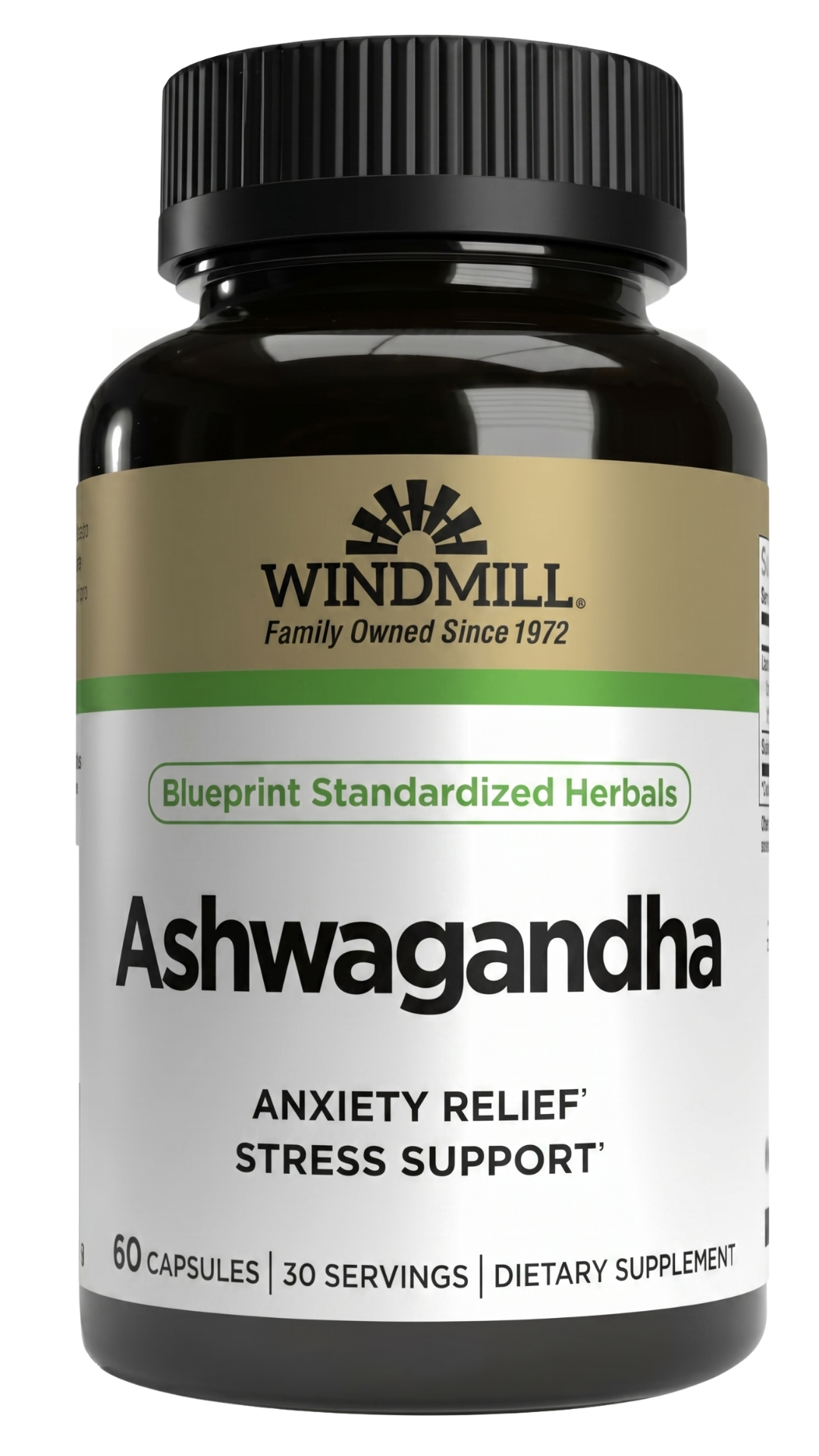
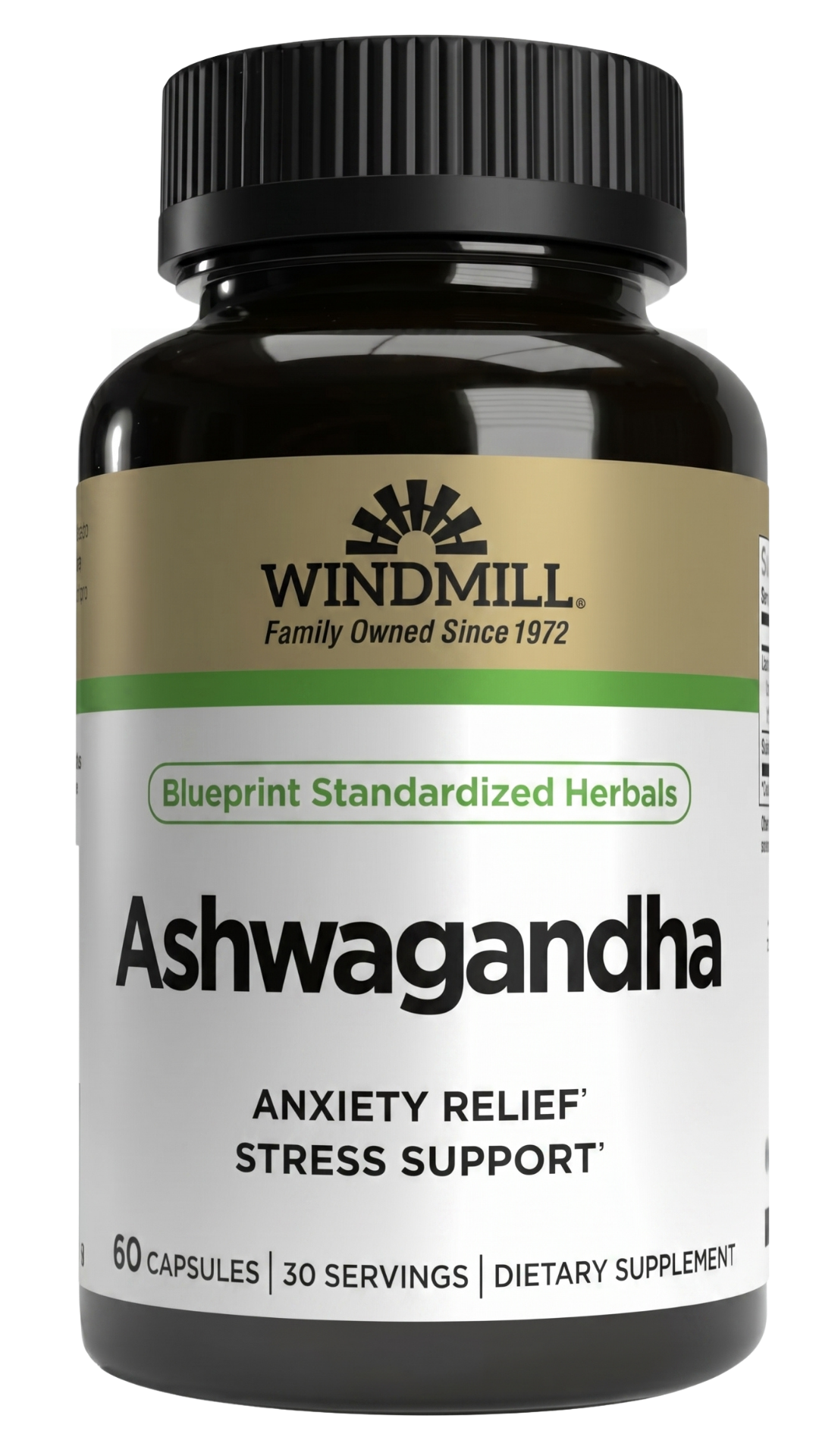
Windmill Ashwagandha Stress & Mood Support Capsules 60ct
$12.99
How to Choose Quality Stress Supplements
For adaptogens (ashwagandha): Look for standardized extracts specifying withanolide content — the active compounds responsible for cortisol modulation. Root extract is preferred over leaf. Dose matters: trials use 300–600 mg daily. Products without standardization claims or withanolide percentages on the label are essentially unverifiable.
For stress-targeted probiotics: Generic "gut health" probiotics are not the same as formulations designed around the gut-brain axis. Look for products that specify strains linked to mood and stress outcomes — particularly Lactobacillus helveticus and Bifidobacterium longum, the most studied combination for stress endpoints. CFU count matters less than strain specificity and formulation stability.
Quality markers for both: GMP certification, third-party testing, clear dosage disclosure, and no proprietary blends that obscure individual ingredient amounts.
What to avoid: Products blending 15+ ingredients at sub-therapeutic doses each, extravagant "immediate relief" claims, and anything that lists "ashwagandha" without specifying the extract form or standardization.
Frequently Asked Questions
Q: Can probiotics actually reduce anxiety, or is that just marketing?
A: The evidence is more robust than most people expect, but more limited than aggressive marketing suggests. Specific strains — particularly Lactobacillus helveticus R0052 and Bifidobacterium longum R0175 — have shown statistically significant reductions in anxiety scores in clinical trials. Generic probiotics marketed for gut health have not demonstrated the same effect. Strain specificity is everything in this category.
Never run out.
Subscribe to any product and save 10% on every order. Pause or cancel anytime.
Subscribe & Save 10%Q: How long does ashwagandha take to work for stress?
A: Most double-blind trials show measurable cortisol reduction and improved stress scores at the 8-week mark, with stronger effects at 12 weeks. Some users report subjective improvement in sleep quality within 2–3 weeks, but the cortisol-lowering mechanism requires consistent daily dosing over time to build. Do not judge this supplement by a two-week trial.
Q: Should I take ashwagandha and a stress probiotic together?
A: There is no known interaction between the two, and they target different nodes of the same stress-cortisol-gut loop — ashwagandha modulates the HPA axis (your cortisol system) while stress-specific probiotics work through vagal and neurotransmitter pathways. Using both addresses the problem from both ends. That said, start one at a time if you want to clearly identify what is working for you.
Explore Stress Support Supplements at Moore Vitamins
If you want to take a two-system approach to stress, these formulations are built for exactly that.
Windmill Ashwagandha Stress & Mood Support Capsules 60ct delivers standardized ashwagandha extract in the dose range validated by clinical research — designed for the sustained, cortisol-lowering effect that requires consistent daily use over 8–12 weeks.
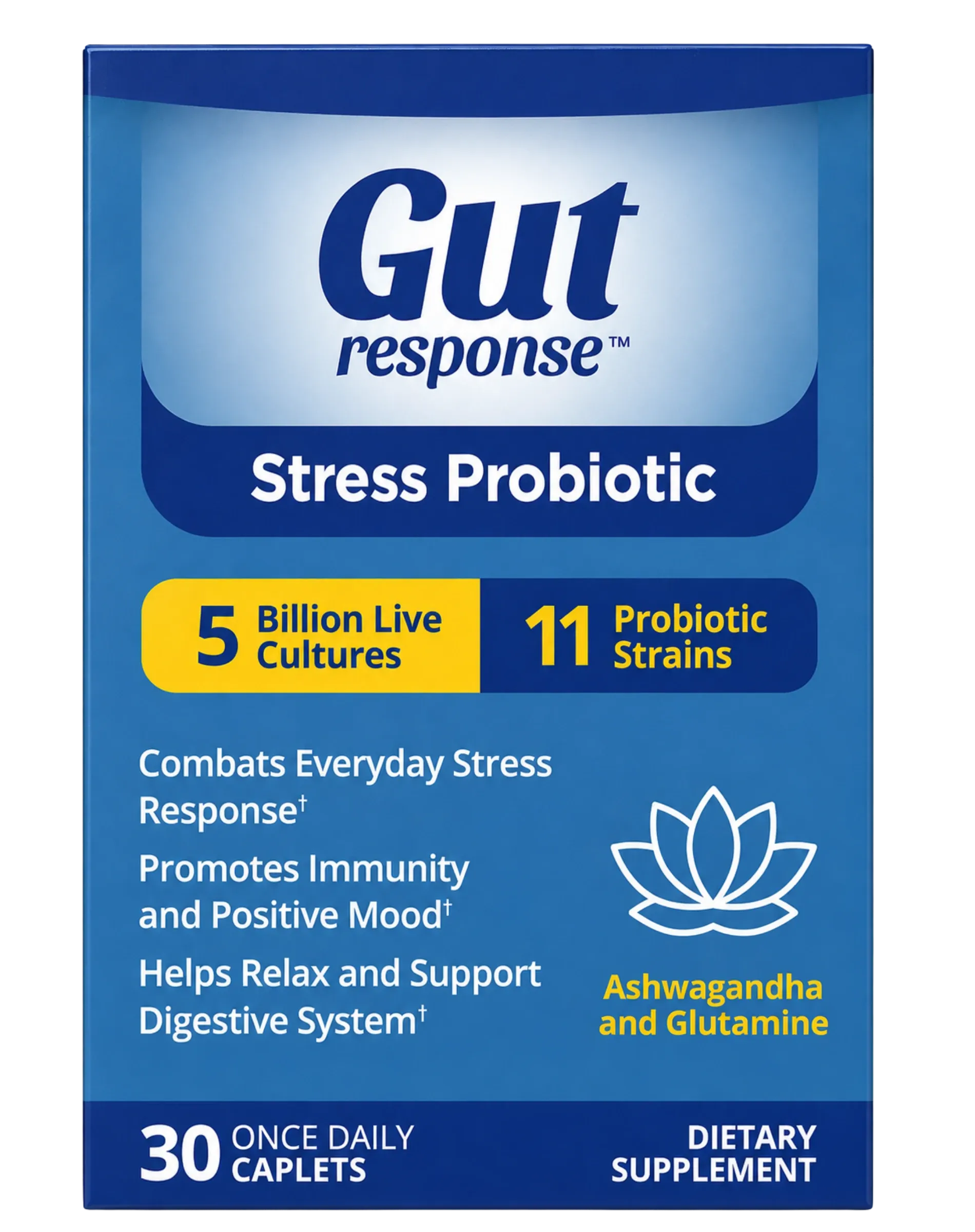
Gut Response Stress Probiotic Mood & Digestive Support Caplets 30ct is formulated with the gut-brain axis specifically in mind, combining digestive support with strains targeted at mood and stress outcomes — addressing the gut half of the equation that most stress supplements miss entirely.
Both are sourced through Moore Vitamins' GMP-certified quality standards and ship same day, so you can start building your protocol without delay.
Never miss a dose.
Evidence-based wellness guides like this one, in your inbox. No hype, no spam — unsubscribe anytime.