Can You Actually Rebuild Mitochondria After 40?
Mitochondrial decline isn't a future problem — it's already happening, and the rate accelerates sharply after 40. Research published in the last three years confirms that mitochondrial density in skeletal muscle drops measurably between ages 35 and 55, directly correlating with the fatigue, slower metabolism, and reduced exercise recovery that millions of people chalk up to "just aging." The good news is that mitochondria are not static — they are highly responsive to specific nutritional inputs. Compounds like CoQ10, NAD+ precursors (specifically NMN and NR), PQQ, and alpha-lipoic acid have each generated peer-reviewed evidence for supporting mitochondrial biogenesis — the process of building new mitochondria, not just protecting existing ones. The difference matters. This article is for anyone over 35 who has hit a wall with energy, body composition, or workout recovery and wants to know what the science — not the marketing — actually supports in 2026.
Why Mitochondrial Decline Is the 2026 Conversation in Longevity Science
The longevity research world has spent the last decade chasing senolytics, telomere length, and mTOR pathways. In 2025, the conversation shifted. A growing body of work from the Buck Institute and the National Institute on Aging is zeroing in on mitochondrial dysfunction as the upstream driver of nearly every other hallmark of aging — not just a downstream symptom. That reframing changes everything about how we approach supplementation.
The practical trigger for most people isn't a research paper. It's noticing that the same workout that felt manageable at 35 wrecked them at 44. Or that their resting energy expenditure dropped despite no change in diet. Mitochondria are the proximate cause of both. Every cell in your body that needs energy runs on ATP produced in the mitochondria. When their number and efficiency decline, the energy deficit touches everything: cognition, metabolism, immune response, and muscle repair.
What's new in 2026 is the precision. We're no longer just talking about antioxidants generally "supporting cellular energy." Specific pathways — particularly the NAD+/SIRT1 axis and PGC-1α activation — have been mapped well enough that targeted supplementation is a genuinely rational strategy, not wishful thinking.
What Mitochondrial Biogenesis Actually Means
Most people have heard that mitochondria are "the powerhouse of the cell." What that framing misses is that mitochondria are dynamic organelles — they divide, fuse, and are culled through a quality-control process called mitophagy. Biogenesis is specifically the creation of new mitochondria, triggered primarily by a master regulator protein called PGC-1α.
Exercise activates PGC-1α powerfully — this is why endurance training increases mitochondrial density. But certain nutritional compounds activate the same pathway through overlapping mechanisms. NAD+ (nicotinamide adenine dinucleotide) is central here: it activates sirtuins, particularly SIRT1 and SIRT3, which in turn upregulate PGC-1α. NAD+ levels decline roughly 50% between ages 20 and 60, which is one of the most robust and replicable findings in aging biology, supported by the NIH Office of Dietary Supplements research on B-vitamin precursors and cellular metabolism.
PQQ (pyrroloquinoline quinone) takes a different route — it directly signals mitochondrial biogenesis even independently of exercise or caloric restriction, which is why it has attracted serious research attention as a stand-alone compound.
What the Current Research Shows
The evidence splits into three tiers, and being honest about which tier each compound occupies is essential.
Tier 1 — Strong human evidence:
CoQ10 is the most established. It is a direct participant in the electron transport chain (the final step of ATP production), and its synthesis in the body declines with age and is actively depleted by statin medications. Multiple randomized controlled trials show CoQ10 supplementation improves exercise tolerance, reduces fatigue markers, and supports cardiac function in populations with documented deficiency. The peer-reviewed evidence on CoQ10 and mitochondrial function now spans decades.
Tier 2 — Promising human trials, more needed:
NMN and NR (both NAD+ precursors) have completed Phase 1 and Phase 2 human trials showing they reliably raise blood NAD+ levels. A 2023 trial in older adults showed NMN improved muscle insulin sensitivity and physical performance. The mechanism is clear; the long-term clinical outcomes in healthy aging populations are still accumulating.
PQQ has demonstrated in human studies that it supports memory and reduces a biomarker of oxidative stress on mitochondrial DNA. Doses used in trials are typically 20 mg/day.
Tier 3 — Animal/mechanistic evidence, human data limited:
Alpha-lipoic acid and urolithin A show compelling mitochondrial effects in cell and animal studies. Urolithin A in particular — a postbiotic produced from pomegranate — has early human data on mitophagy activation that has generated real excitement among longevity researchers.
The honest summary: CoQ10 has the deepest evidence base. NAD+ precursors have the most compelling mechanism story and enough human data to act on. PQQ fills a biogenesis niche that neither covers.
Who Benefits Most From Mitochondrial Support
This is not a universal supplement stack. The ROI is highest for specific groups.
Adults over 40 experience the most linear benefit because their baseline NAD+ and CoQ10 levels have fallen furthest from peak. The intervention corrects a real deficit rather than optimizing an already-efficient system.
Statin users are a critical subgroup. Statins block the mevalonate pathway, which synthesizes both cholesterol and CoQ10. This is not a fringe concern — it is biochemistry. Anyone on a statin should have a serious conversation with their physician about CoQ10 supplementation.
People experiencing post-viral fatigue have generated a wave of new interest in mitochondrial support. Mitochondrial dysfunction has been proposed as a mechanism in long COVID fatigue, and while the research is still early, the overlap with classic mitochondrial insufficiency symptoms is hard to ignore.
High-output athletes over 35 notice the gap between training load and recovery capacity first. Mitochondrial support can shorten the recovery window — not by masking fatigue, but by improving the efficiency of energy restoration.
If you're also working on sleep quality and recovery as part of this, it's worth noting that some mitochondrial support supplements time well with evening routines, as explored in our guide to which supplements absorb better at night.
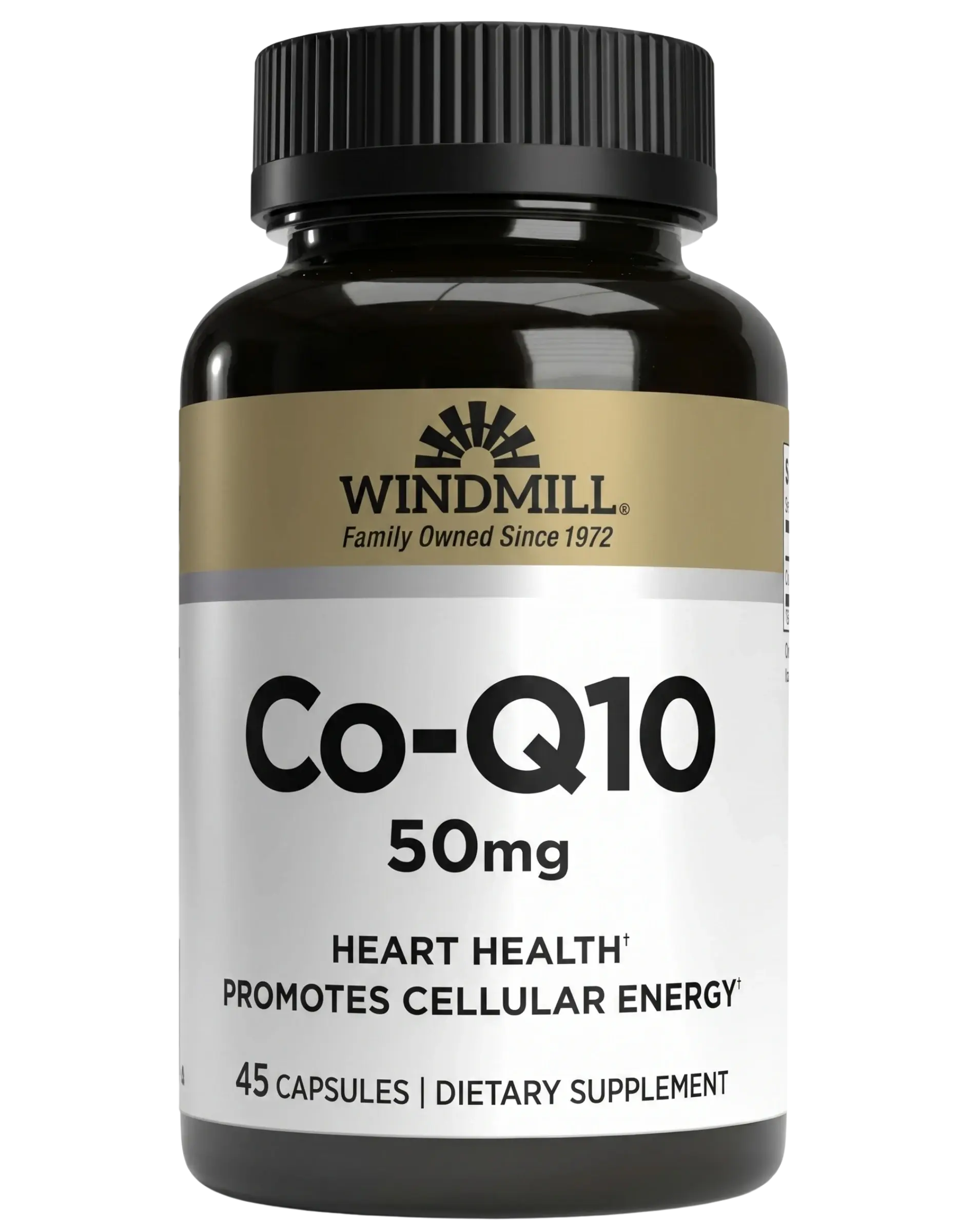
Related Product
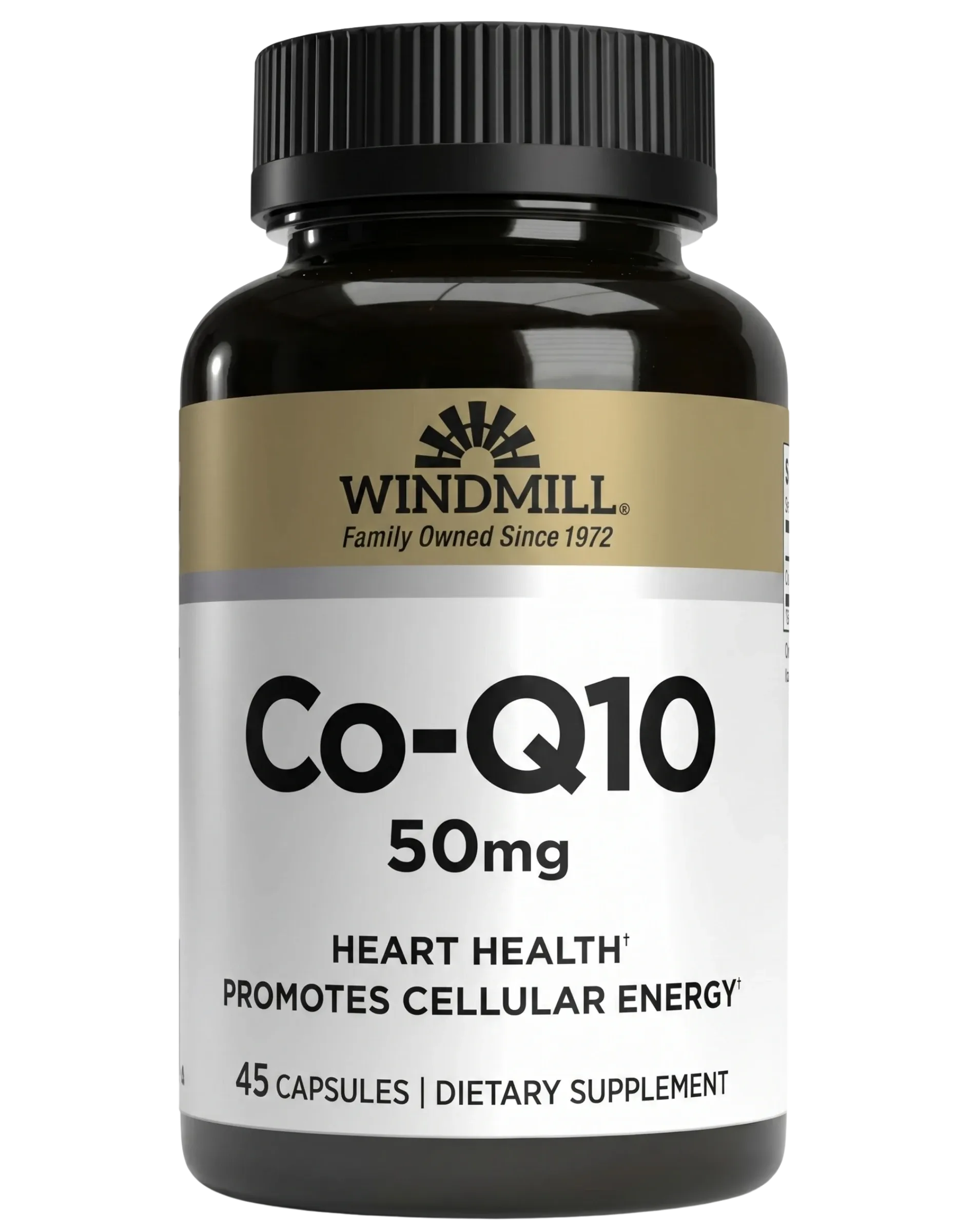
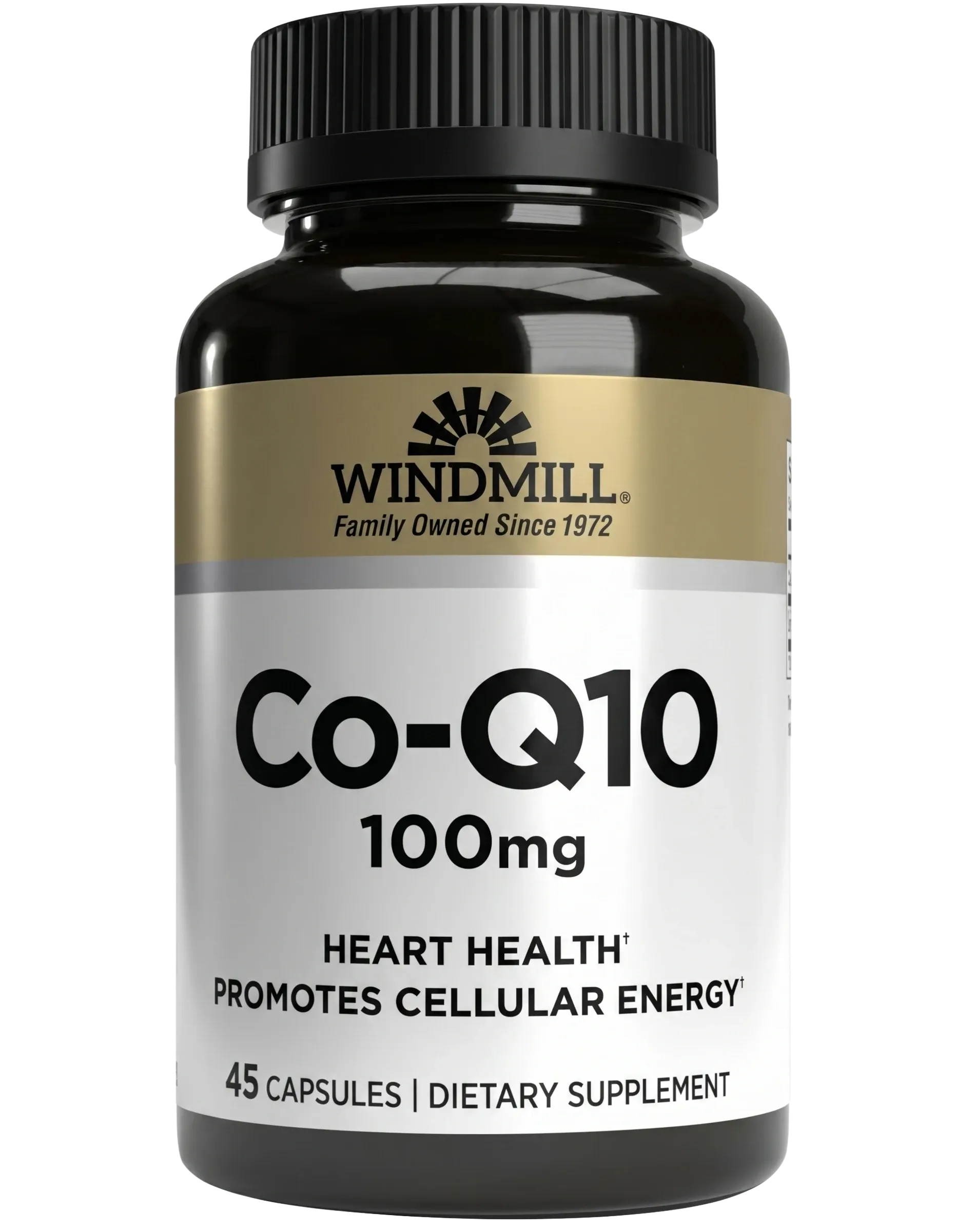
Windmill CoQ10 50mg Capsules 45ct
$11.19
How to Choose a Quality Mitochondrial Supplement
Forms matter enormously. For CoQ10, the ubiquinol form (the reduced, active form) absorbs significantly better than ubiquinone — particularly in adults over 50, whose conversion efficiency from ubiquinone declines. For NAD+ precursors, both NMN and NR raise blood NAD+ levels; NMN has more recent human trial data, but the jury is genuinely still out on which is superior.
Dosage benchmarks from clinical research:
- CoQ10 (ubiquinol): 100–200 mg/day for general support; up to 300 mg for statin users
- NMN: 250–500 mg/day (doses up to 1,200 mg have been used in trials)
- PQQ: 20 mg/day
- These are research reference points, not prescriptions — consult your healthcare provider.
Quality markers to look for:
- GMP (Good Manufacturing Practice) certification — non-negotiable
- Third-party tested for label accuracy and contaminants
- Ubiquinol specifically labeled (not just "CoQ10") if you're over 50
- No proprietary blends that hide individual doses
What to avoid:
- Megadose "mitochondrial blends" that underdose every ingredient to keep costs down
- Products claiming to "reverse aging" — that language is a regulatory red flag and a credibility signal
- Cheap ubiquinone sold as equivalent to ubiquinol for older adults
Fat-soluble compounds like CoQ10 absorb best taken with a meal containing healthy fats — timing that pairs naturally with the evening supplement strategy many people already use. Men over 40 managing energy and body composition alongside mitochondrial health may also find our magnesium after 40 guide relevant, since magnesium is a required cofactor in over 300 enzymatic reactions, including ATP synthesis itself.
Frequently Asked Questions
Never run out.
Subscribe to any product and save 10% on your first order, 5% after. Pause or cancel anytime.
Subscribe & Save 10%Q: How long does it take to feel a difference from CoQ10 or NMN?
A: Most clinical trials measuring subjective energy outcomes see meaningful changes at 8–12 weeks. CoQ10 replenishment in statin users can produce noticeable fatigue improvement in as few as 4 weeks. Don't assess results in the first month — mitochondrial biogenesis is a slow biological process, not a stimulant response.
Q: Can I get enough mitochondrial support from diet alone?
A: Dietary CoQ10 (found in organ meats, sardines, and beef) contributes meaningfully, but typical dietary intake is 3–6 mg/day — far below the 100–200 mg used in research. NAD+ precursors from food are similarly insufficient to compensate for age-related decline. Diet matters, but it cannot close the gap that supplementation targets.
Q: Is it worth combining NMN with resveratrol, as some protocols recommend?
A: The NMN-plus-resveratrol combination was popularized by Dr. David Sinclair's research in mice, where resveratrol activates SIRT1 and NMN provides the NAD+ that SIRT1 needs to function. The synergy is mechanistically plausible. Human trial data specifically on the combination is still limited, so the evidence is stronger for each compound individually than for the stack as a whole. It is not unreasonable, but treat it as promising rather than proven.
Explore Mitochondrial Health Supplements at Moore Vitamins
For a research-aligned starting point, CoQ10 — specifically in ubiquinol form — remains the most evidence-supported mitochondrial supplement available:
Moore Vitamins manufactures under GMP-certified conditions and ships same-day, so the product you order reflects current lot quality — not warehouse stock sitting since last year. If you're building a mitochondrial support protocol, start with the compound that has the deepest evidence base and the clearest mechanism, then layer from there.
Never miss a dose.
Evidence-based wellness guides like this one, in your inbox. No hype, no spam — unsubscribe anytime.