Magnesium After 40: The Men's Health Gap
Nearly half of American men over 40 are not getting enough magnesium — and most of them have no idea it's quietly dismantling their sleep, strength, and hormonal health.
The NIH Office of Dietary Supplements puts the recommended daily intake for adult men at 420 mg, yet average dietary intake in men over 40 hovers around 310–350 mg. That gap doesn't sound dramatic until you understand what magnesium actually does: it participates in over 300 enzymatic reactions, including those that regulate testosterone synthesis, muscle protein repair, and deep sleep architecture. A 2022 meta-analysis across six studies found that men with higher circulating magnesium had measurably better free testosterone levels — not a marginal difference, a statistically significant one. Absorption also gets harder with age; gastric acid production declines after 40, reducing the gut's efficiency at pulling minerals from food. If you're a man over 40 who exercises, sleeps poorly, or feels like recovery is taking longer than it used to, this article explains exactly what's happening and what to do about it.
Why This Is the Men's Health Story Nobody Is Telling in 2026
The conversation around men's health over 40 tends to fixate on testosterone replacement therapy, protein intake, and cardiovascular risk. Those are real concerns. But a foundational micronutrient deficiency is quietly making all three of those problems worse — and it costs about $10 a month to address.
What changed the conversation recently is better biomarker testing. Standard blood panels measure serum magnesium, which reflects only about 1% of the body's total magnesium. Most of that mineral lives inside cells. Functional medicine labs are now offering red blood cell (RBC) magnesium tests, which give a far more accurate picture — and they're revealing subclinical deficiency in a much larger population of middle-aged men than previously understood.
At the same time, peer-reviewed research on magnesium and testosterone has accelerated. The cumulative picture is compelling enough that sports medicine clinicians and men's health physicians are increasingly treating magnesium as a foundational intervention before anything else.
What Magnesium Deficiency Actually Does to a Man After 40
Magnesium is not a single-purpose nutrient. Think of it as a master regulator — a cofactor that unlocks biological processes your body cannot perform without it.
For men specifically, it operates on three interconnected systems that tend to degrade together after 40: hormonal regulation, neuromuscular function, and sleep quality. The frustrating reality is that the symptoms of deficiency — fatigue, muscle cramps, poor sleep, reduced motivation — are almost universally attributed to "just getting older." They're not inevitable. They're often fixable.
What's less discussed is how these systems feed on each other. Poor sleep suppresses testosterone. Low testosterone impairs muscle recovery. Impaired muscle recovery means harder workouts feel less productive, which reduces the motivation to train, which further tanks testosterone. Magnesium sits at the hinge of that entire cycle.
What the Current Research Shows
The evidence here separates into three well-supported areas:
Testosterone and hormonal health. Multiple studies — and a growing body of clinical research on magnesium and male hormones — show that magnesium status correlates positively with free and total testosterone, particularly in men who exercise. The association is strongest in physically active men, suggesting that high training demands accelerate magnesium depletion and that replenishing it has a more pronounced effect.
Sleep architecture. Magnesium regulates the NMDA receptor and activates GABA receptors — the two primary mechanisms that drive deep, restorative sleep. Men over 40 naturally spend less time in slow-wave sleep than they did at 25. Magnesium supplementation has been shown in randomized trials to increase sleep efficiency, reduce nighttime cortisol, and extend time spent in deep sleep stages. As detailed in Sleep Is When You Actually Get Stronger, the anabolic window during sleep is the single most underrated recovery tool available — and magnesium is directly tied to how well that window functions.
Muscle function and recovery. Magnesium is required for ATP synthesis — the fundamental energy currency of every muscle contraction. Deficient men show reduced grip strength, increased post-exercise muscle soreness, and slower recovery times. These aren't subjective complaints; they've been replicated in controlled trials with measurable endpoints.
What is less proven: magnesium as a direct cure for clinical hypogonadism or diagnosed insomnia. It is not a pharmaceutical substitute. But as a foundational support for men whose numbers are suboptimal without hitting clinical thresholds, the evidence is genuinely strong.
Who Benefits Most
This matters most for men who check two or more of these boxes:
- Age 40–65, particularly if physically active or formerly active
- High-stress careers — cortisol depletes magnesium rapidly
- Regular alcohol consumption — alcohol accelerates urinary magnesium excretion
- Proton pump inhibitor (PPI) use — this drug class significantly impairs magnesium absorption
- Type 2 diabetes or prediabetes — insulin resistance is associated with lower intracellular magnesium
- Poor sleep quality — especially difficulty staying asleep or feeling unrestored despite 7+ hours
- Heavy exercise load — sweat losses are meaningful; athletes can lose up to 15% more magnesium than sedentary individuals
If you're unsure whether your supplement dose is calibrated correctly for your body, the guide on Why Your Supplement Dose Might Be Wrong for Your Size is worth reading alongside this one — body weight meaningfully affects how much magnesium you actually need.
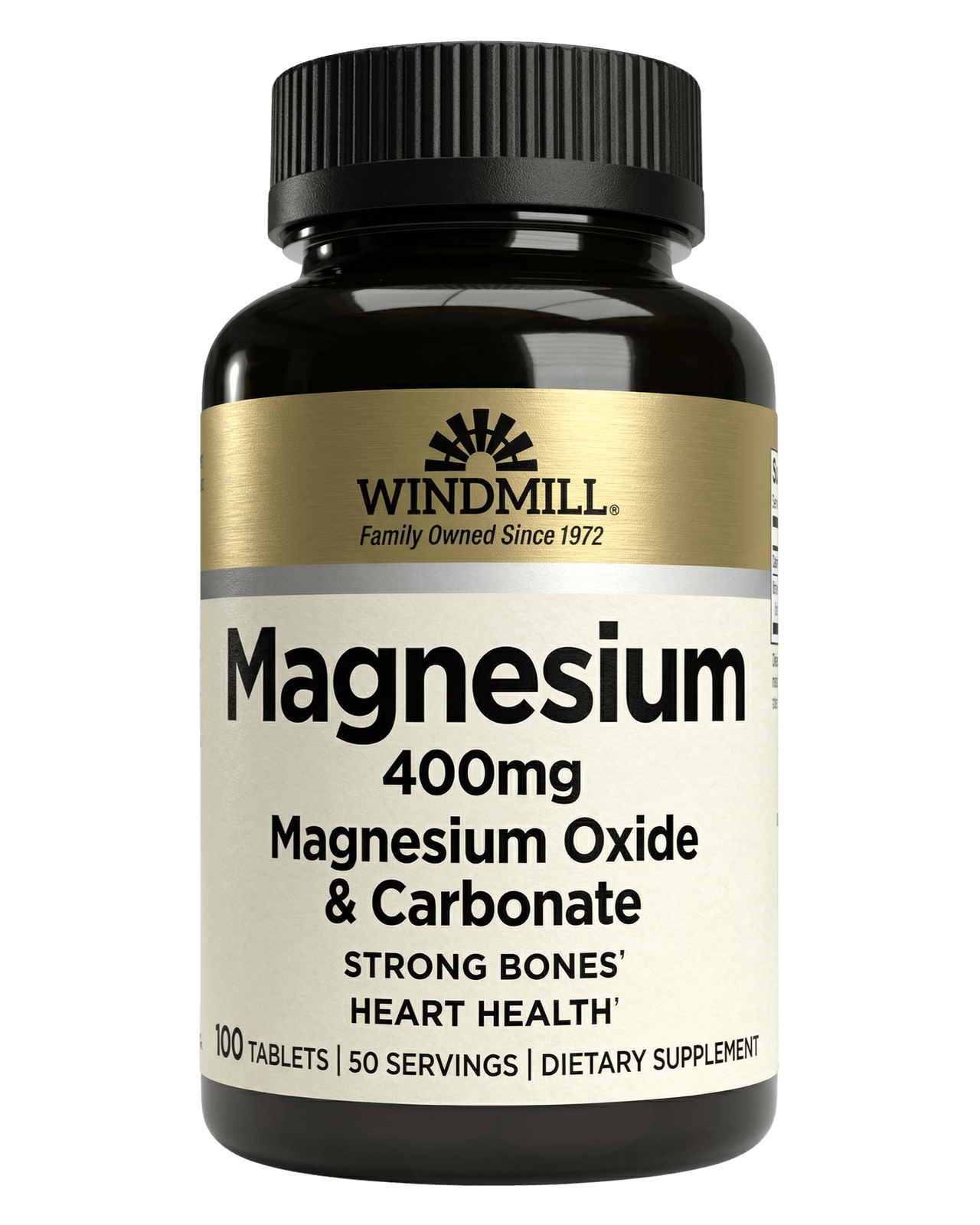
Related Product
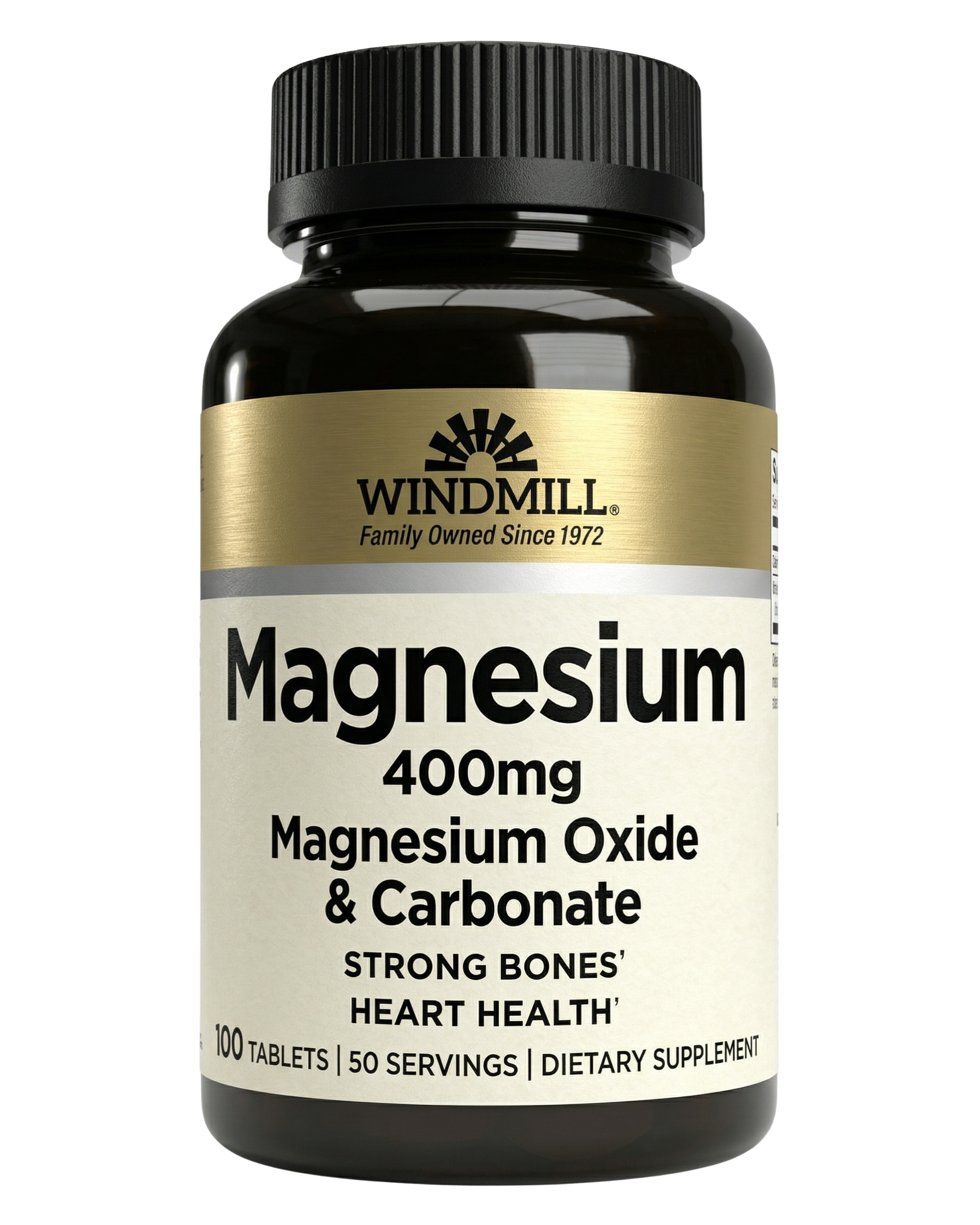
Magnesium 400mg Muscle & Nerve Support Tablets 100ct
$9.99
How to Choose the Right Magnesium Form
Not all magnesium supplements are equal, and this is where most men make a costly mistake by defaulting to whatever is cheapest.
Magnesium oxide is the most widely sold form. It's inexpensive and contains a high percentage of elemental magnesium by weight. It absorbs less efficiently than chelated forms, but for men whose primary goal is bone support and who have no GI sensitivity, it is a viable, cost-effective starting point. The Magnesium Oxide 400mg Bone & Muscle Support Tablets delivers a straightforward 400 mg dose at an accessible price.
Magnesium citrate binds magnesium to citric acid, which significantly improves bioavailability. It's the better choice for men targeting sleep quality and muscle recovery, where getting more magnesium into cells — not just into the gut — is the priority. The Windmill Magnesium Citrate 400mg Tablets delivers this form at a therapeutic dose.
General muscle and nerve support formulas, like Magnesium 400mg Muscle & Nerve Support Tablets, are designed around the neuromuscular use case and are a solid option for men focused on training recovery and cramping.
Dosage guidance: The 420 mg RDA is your floor, not your ceiling, if you're active or deficient. Most clinical trials showing meaningful testosterone and sleep benefits use 400–500 mg of elemental magnesium daily. Split your dose — half in the morning with food, half at night — to improve absorption and reduce any GI sensitivity.
What to avoid: Formulas with excessive fillers, magnesium sulfate (low bioavailability), or blends that bury the magnesium dose inside a proprietary mix where you can't verify the amount. GMP certification is non-negotiable — it ensures what's on the label is actually in the capsule.
Pair thoughtfully: Magnesium competes with calcium for absorption. Don't take them at the same time. And if you're exploring the broader anti-aging angle, research on compounds like resveratrol — covered in Resveratrol and Aging: What the Science Says in 2026 — suggests complementary support for the mitochondrial health that magnesium also underpins.
Frequently Asked Questions
Q: Will magnesium raise my testosterone if my levels are already normal?
Never run out.
Subscribe to any product and save 10% on your first order, 5% after. Pause or cancel anytime.
Subscribe & Save 10%A: Probably not dramatically. The testosterone-magnesium relationship is most pronounced in men who are deficient or borderline deficient. If your levels are optimal and your magnesium intake is adequate, additional supplementation is unlikely to produce a significant hormonal shift — but it will still support sleep, muscle function, and cardiovascular health.
Q: How long before I notice a difference?
A: Most men report improved sleep quality within 2–3 weeks of consistent supplementation. Muscle recovery improvements typically become noticeable at the 4–6 week mark. Hormonal changes, if they occur, take longer — expect 8–12 weeks before drawing conclusions.
Q: Can I just get enough magnesium from food?
A: Theoretically yes — dark leafy greens, pumpkin seeds, black beans, and dark chocolate are all high in magnesium. In practice, men over 40 rarely hit 420 mg consistently through diet alone, especially with declining absorption efficiency. A supplement bridges the gap reliably without requiring a perfectly engineered diet every single day.
Explore Magnesium Supplements at Moore Vitamins
For men over 40 prioritizing sleep, muscle recovery, and hormonal health, the right magnesium form makes a measurable difference:
- Windmill Magnesium Citrate 400mg Tablets 60ct — high bioavailability, best for sleep and recovery goals
- Magnesium Oxide 400mg Bone & Muscle Support Tablets 60ct — cost-effective daily support, strong for bone health
- Magnesium 400mg Muscle & Nerve Support Tablets 100ct — built for neuromuscular performance and active men
All products are sourced from GMP-certified manufacturers and ship same day. If you're stacking magnesium with a daily multivitamin, the Multivitamin Men's Daily One Complete Tablets 60ct is formulated specifically for men's micronutrient needs and makes a logical foundation to build on.
Never miss a dose.
Evidence-based wellness guides like this one, in your inbox. No hype, no spam — unsubscribe anytime.